

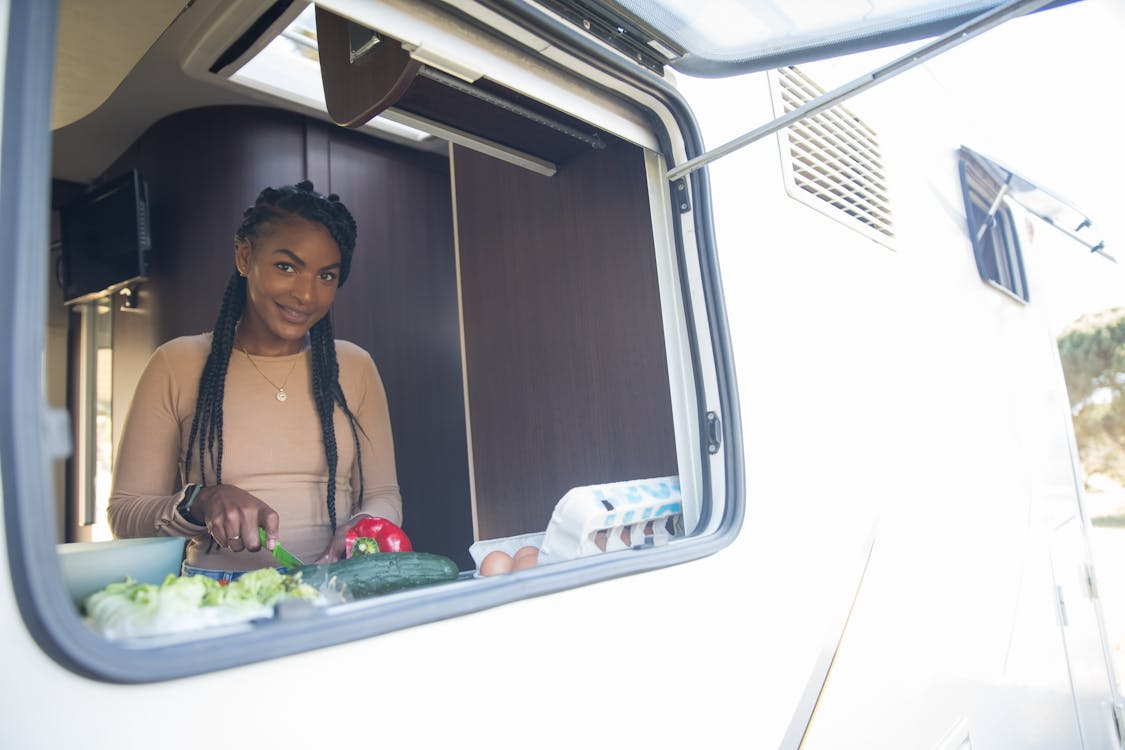
Ready to cook delicious meals on the road without all the bulky stuff?
Ah, the dreaded RV kitchen setup. One of those things that should be so simple…and then becomes insanely complicated. There are now 11.2 million households in the U.S. that own RVs, meaning more folks are traveling for weeks… even MONTHS at a time.
The upside?
With the right RV kitchen setup, you can easily save money, keep your belly full of good eats, and enjoy your trip more overall. It just takes a little forethought and planning.
What you’ll discover:
- Why Your RV Kitchen Setup Is Important
- Propane System 101: Common Cylinder Valve Types
- Cooking Gear You Should Pack
- Storage and Organization
- Safety Stuff Everyone Should Do
Time to dive in!
Why Your RV Kitchen Setup Is Important
Here’s the deal…
Driving all day and eating out at restaurants can get pricey. Real pricey. When you’re spending weeks or months away from home on the road, meals add up to HUNDREDS (maybe even THOUSANDS) of dollars.
That’s why your RV kitchen setup matters.
Not only does cooking your own meals keep you eating healthier, but it allows you the freedom to eat when you want without breaking the bank.
Unless your kitchen isn’t set up right.
Just like your home kitchen, the RV version requires some basic appliances to work. And almost all of them run on propane.
Propane System 101: Common Cylinder Valve Types
This is where most RV owners run into issues…
Propane is like the lifeblood of your RV kitchen. From the stove top to the oven, fridge, and water heater – if it cooks or heats something up, it’s probably powered by propane.
But not all propane tanks are created equal.
Here’s the breakdown…there are several different cylinder valve types used by propane tanks. Depending on the age and brand of your RV, you may run into one or more of these during your travels.
They are:
- OPD valves (Overfill Prevention Device) – This is the standard valve that you’ll find on most tanks these days. This valve features a safety mechanism that makes it impossible to overfill. It also minimizes leak risks.
- POL valves – These are older left-hand threads being phased out of most modern rigs.
- ACME valves – This newer style of valve only requires tightening by hand. No wrench needed.
Understanding the differences between propane cylinder valve types will allow you to outfit your RV with proper fittings, regulators and even know which adapter you’ll need to exchange tanks along the way. It’s also important to learn how to manage propane tank values when resupplying.
Propane tanks should never be filled more than 80% full. That allows for enough space at the top of the tank for the liquid propane to expand should temperatures rise. Overfilling a propane tank is dangerous. Knowing your cylinder valve types will ensure you’ll only use tanks that can be filled safely.
Cooking Gear You Should Pack
Alright – now that the serious stuff is out of the way…
Time to load up the kitchen with goodies!
The mistake most RVers make when thinking about what cooking gear to bring is packing too much stuff. You don’t need it.
RV kitchens are small and you’ll quickly realize that counter space is at a premium. Every pot, pan, utensil, and dish has gotta earn its place in your cabinets.
Here are the essentials:
- Cast iron skillet – a good ol’ fashioned skillet will last you a lifetime. It can cook anything on any heat source.
- Pot and pan set – get something that nests together to save space.
- Chef’s knife and cutting board – Grab something lightweight.
- Kettle – Bring one for boiling water for coffee or oatmeal in the morning.
- Basic utensils – You’ll want a spatula, pair of tongs, can opener, peeler, etc.
Really, that’s about it.
Whenever possible, ditch the specialty cooking gadgets. Unless you’re planning on frying a steak, you really don’t need a grill pan. A cast iron skillet can bake, fry, sear, and even cook a dessert if you’re careful.
Keep kitchen tools simple, versatile, and things that will save you space. The less clutter in your kitchen, the easier it will be to clean up after cooking.
Storage and Organization
This is the last newbie camping mishap to cover…
Okay moving on!
Everything shifts and bounces when you drive. Plates slide, glasses bang into one another and if not properly stored can turn into dangerous projectiles during a sharp turn or sudden stop.
Storage in an RV is different from normal homes too. You have to think vertically and use all available space wisely.
Follow these tips to keep kitchen stuff stored and organized:
- Add non-slip shelf liners to every cabinet and drawer in your RV kitchen.
- Place heavy items as low as possible. Keep your center of gravity low while driving.
- Store dry goods in stackable containers. It saves space versus having a bunch of bulky boxes.
- Secure any loose spices with tension rods or magnetic spice storage strips.
- Always keep a small cooler for day-trip snacks so you don’t have to continually open the fridge.
Another tip is to make a meal plan for every 3-4 days of travel. Make a menu, hit the local grocery store and stock up on fresh ingredients. Not only will you save money by avoiding prepackaged meals, but you’ll also eliminate food waste.
Safety Stuff Everyone Should Do
Kitchen fires. Running out of propane. Forgetful travelers who leave the stove on.
Believe it or not, there are over 4,000 RV fires every year in the United States. Don’t become a statistic – KNOW your RV kitchen equipment!
Before you roll out on your next adventure, double check that:
- Your Carbon Monoxide detector is working
- Your propane leak detector is functional
- You have a fire extinguisher handy and know how to operate it
- There is proper ventilation when using the stove
Ventilation gets mentioned a lot, but that’s because it’s important! RV kitchens don’t have a lot of space and poor airflow can cause disasters. When using the stove or oven, always open a window or run the overhead exhaust fan. This is especially true when using propane appliances.
Ventilation isn’t the only thing you should check before every trip though.
Make sure to do a thorough inspection on your propane lines, hose connections, and any cylinder valve types you run into on your rig. Look for cracks in hoses, connection points, and signs of corrosion or wear and tear. Take 10 minutes before your next trip to inspect and you could save yourself a huge headache down the road.
Also, check your regulator. Replacing your propane regulator every 10 years is something manufacturers suggest due to normal wear and tear of the internal components.
Wrapping Everything Up
If you’ve followed along with this guide, you’re now ready to tackle the open road with a fantastic RV kitchen setup!
Don’t forget your tips:
- Know how the propane system works and familiarize yourself with the common cylinder valve types.
- Bring versatile cooking gear that saves space.
- Store and organize everything so it doesn’t shift while driving.
- Triple check your safety equipment to ensure nothing breaks while you’re on vacation.
Extended road trips are the best way to see the country. Don’t spend your hard earned vacation money eating at restaurants.
With the right RV kitchen setup, you can eat like a king (or queen) on the road without spending your life savings.


