


Among the treacherous mountains of the Upper Himalayan region of Nepal, the mixed culture of the Terai, and the customs of the historical city of Kathmandu, Pokhara stands as the most modernized city in Nepal. Pokhara seems to be completely ‘new’ from the rest of its counterparts, for its modernity and being the most touristic destination in all of Nepal.
The centre of Pokhara is the nucleus of cafes and restaurants, around the circulars of Phewa Lake. Considered to be the base of the majority of the treks of Nepal, Pokhara attracts hiking enthusiasts from all over the world. The roads around the lakeside are little boulevards for romantic strolls, and the lake without any railing is free to swim in.
Here is the ultimate guide for the best things to do in Pokhara.
Things to Do in Pokhara
1. Take a Breezy Walk Around Phewa Lake
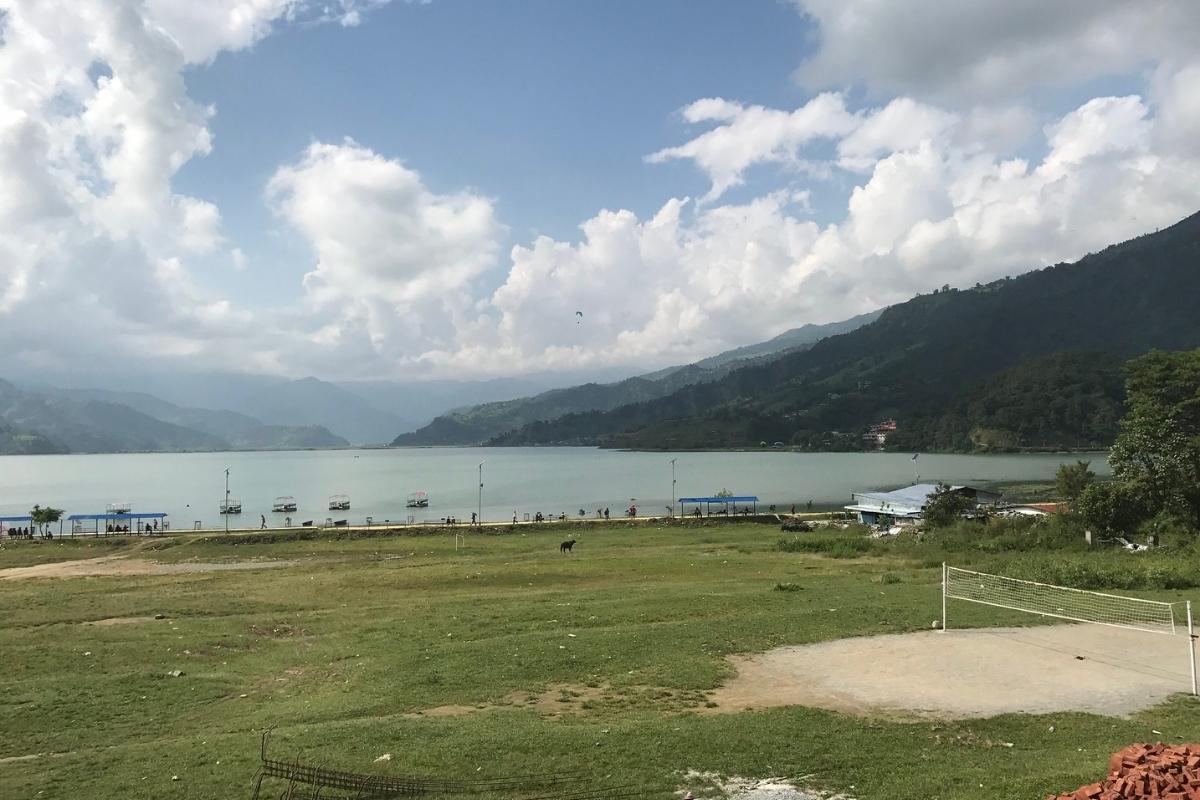
Previously known as Baidam Tal, Phewa Lake is a semi-natural freshwater lake in Pokhara, and the central frame of this touristic town. The lake is partially stream-fed and partially dam-regulated.
Being the second largest lake in Nepal, around Phewa Lake, many locals have found their livelihood through the stream of tourists. Local boatmen will offer you a tour of the lake and also to the island where Tal Barahi Temple is the primary establishment.
Canoes of red-blue-yellow shades cut through the water of Phewa Lake at the golden hour. If you visit Pokhara in any season except the monsoons, Annapurna Range can be documented reflecting on the lake.
2. Go Sightseeing Around Pokhara – Davi’s Falls and Tibetan Refugee Camp

Pokhara is surrounded with various caves and lakes, and the closest tourist attraction to Pokhara is Davis Falls. On July 31, 1961, a Swiss couple, Davi visited this waterfall for a swim. With the flow of the current, the wife drowned in water, and supposedly her husband too fell in the same force.
At the request of Davi’s father, the fall was named Davi’s Falls.
Davi’s Fall has created a 500-feet-long underground tunnel from its bottom. The cliff is bordered by metal fences all around, as at some point, the cliff witnessed too many suicides! Today, Davi’s Fall is one of the most crowded tourist destinations in Pokhara.
Tibetan Refugee Camps in Pokhara are the settlements of Tibetan refugees who fled to Nepal after the Chinese takeover. It is a Tibetan colony only a few meters away from Davi’s Fall.
Authentic Tibetan food (various kinds of Momo, Tibetan salt tea, laphing) and Tibetan handicrafts are sold by the inhabitants near the monastery.
Timings for Davi’s Fall – 5 am to 7 pm
3. Paragliding in Sarangkot
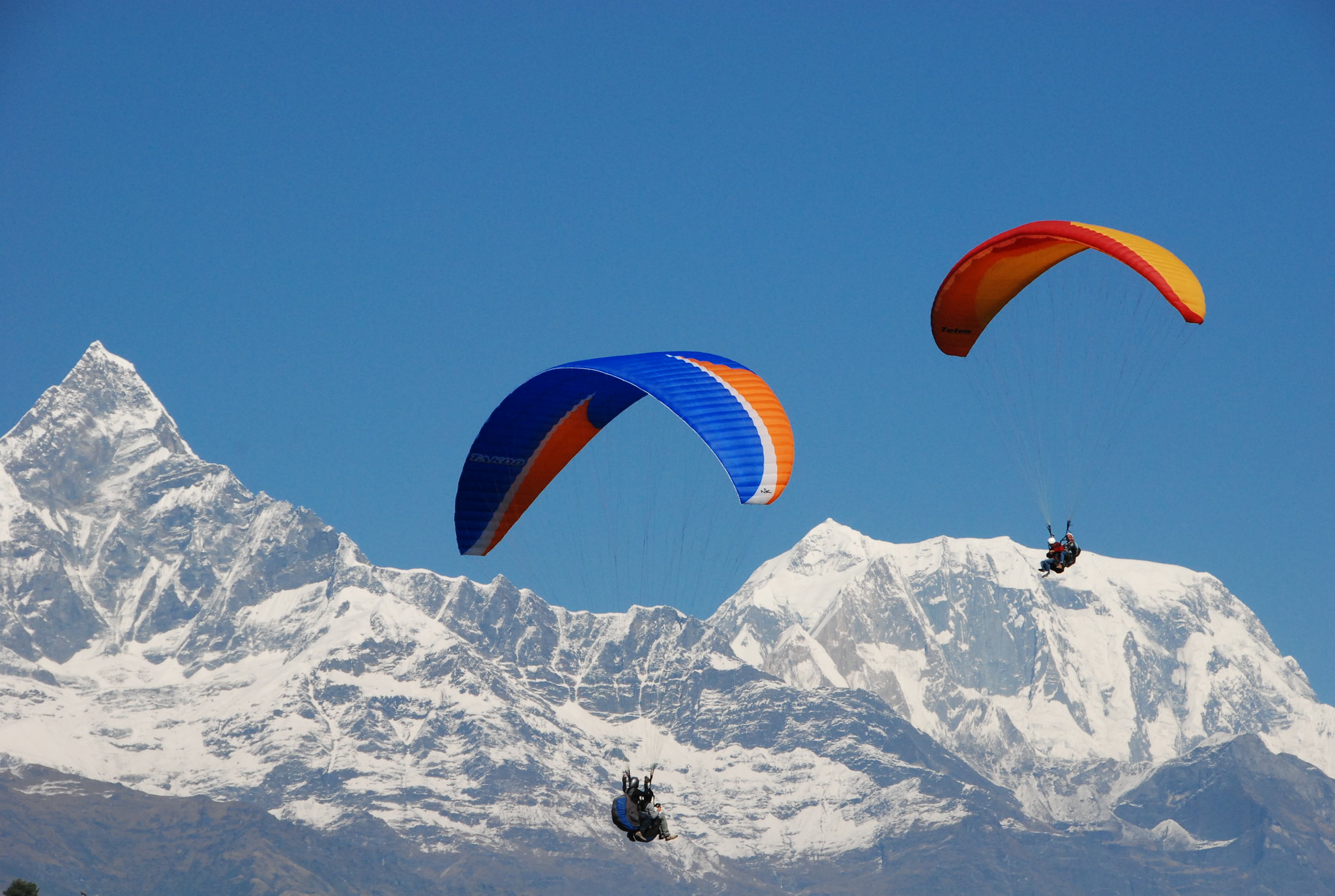
If you have just one day in hand to explore Pokhara, the best way to spend the day would be to have an adventurous day in Sarangkot, a hill at an altitude of 1600 meters.
One of the most popular paragliding landing spots in the world, Sarangkot provides the panoramic expanse of the Himalayan peaks of Annapurna, Dhaulagiri and Manaslu. A hiking trail from Pokhara to Sarangkot takes a maximum of two hours through Miruwa.
Blue Sky Paragliding, Sunrise Paragliding, Frontiers Paragliding are some of the paragliding operators in Sarangkot. A standard flight for 30 minutes costs $75, and an additional charge of $17 if you want GoPro footages.
4. Visit the Three Caves Around Pokhara
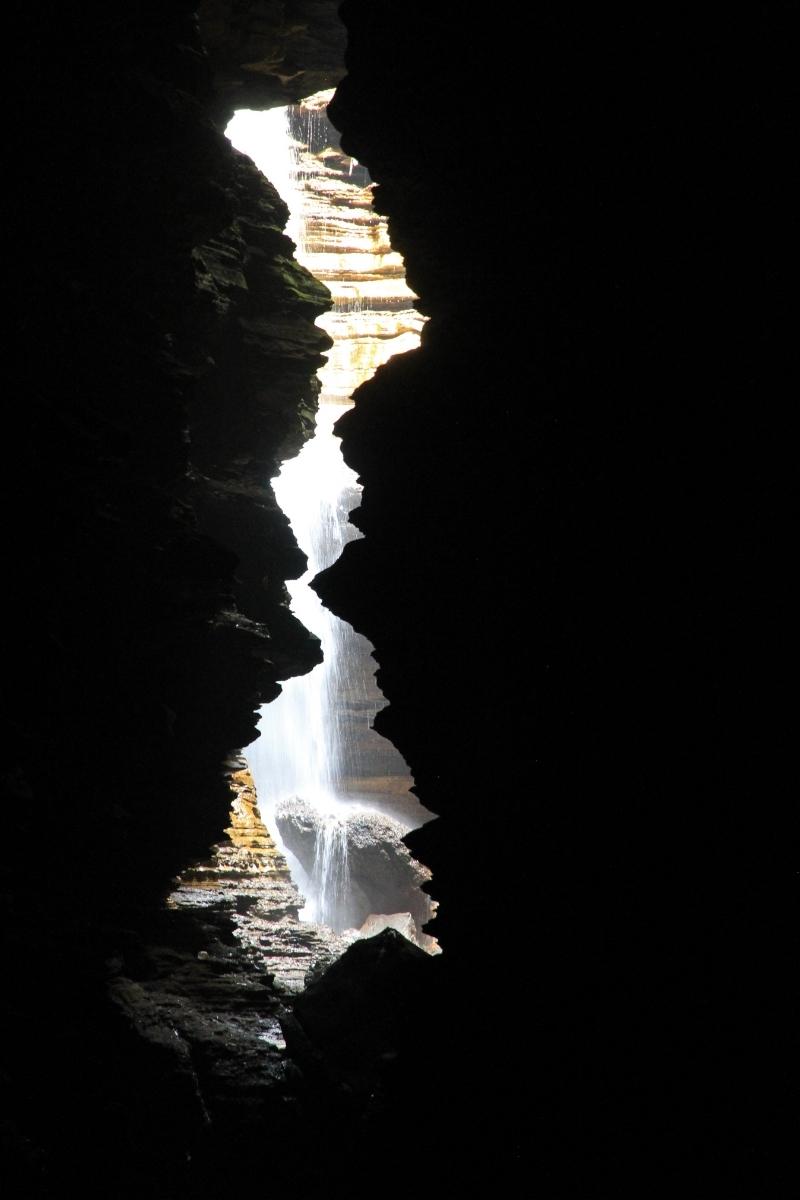
The cave adjoining Davi’s Falls is an underground cave known as Gupteswar Mahadev Cave, with intricate structures of deities carved all along a series of staircases.
As you climb down more and more towards the end of this three-kilometer-long cave in Pokhara, the fallen force of Davi’s Fall with the thick sound of water can be witnessed through a vertical rift in the cliff.
Bat Cave and Mahendra Cave are in the outskirts of Pokhara, both almost 10-12 kilometers away from the central town. Horseshoe bats are found clinging upside down throughout the narrow shaft of Bat Cave.
A limestone cave that was potentially named after King Mahendra Bir Shah was discovered for the first time by the shepherds in the mid-60s. In the bowels of the cave, calcium salt deposits form stalactites and stalagmites, making it a geographical curiosity among the scholars.
- Timings for Gupteswar Mahadev Cave – 9 am to 6 pm
- Timings for Bat Cave – 9 am to 6 pm
- Timings for Mahendra Cave – 7 am to 6 pm
5. Visit the Lakes Around Pokhara
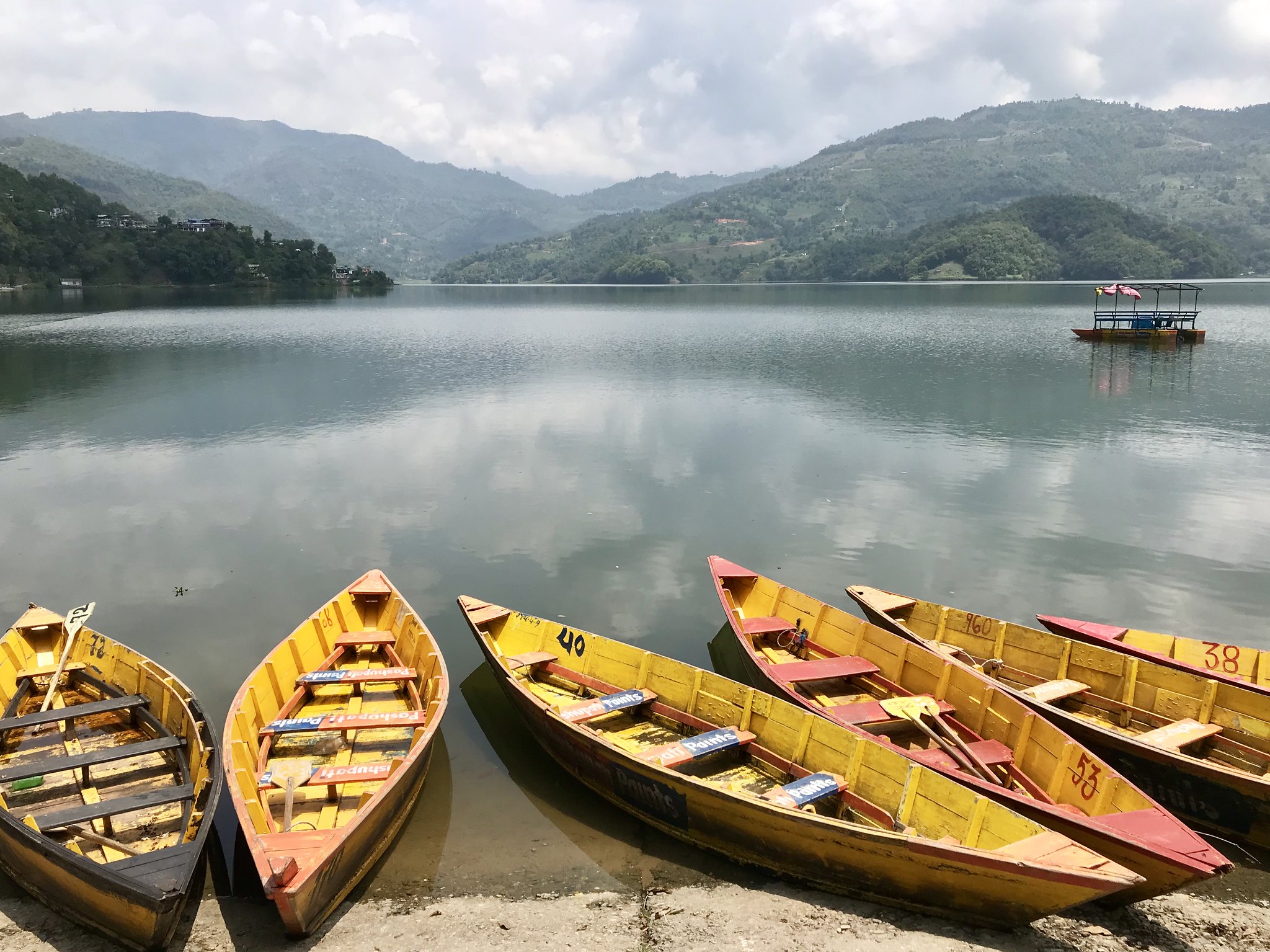
Laden with eight lakes, Pokhara Valley houses two more lakes situated right around the town of Pokhara – Begnas Lake and Rupa Lake.
The second largest lake in Pokhara Valley, Begnas Lake is another freshwater lake, regulated through a dam known as Khudi Khola. Confined in paddy fields, Begnas Lake is often used for irrigation and caged fisheries, and of course, a day to spend by unruffled nature and tourist boats.
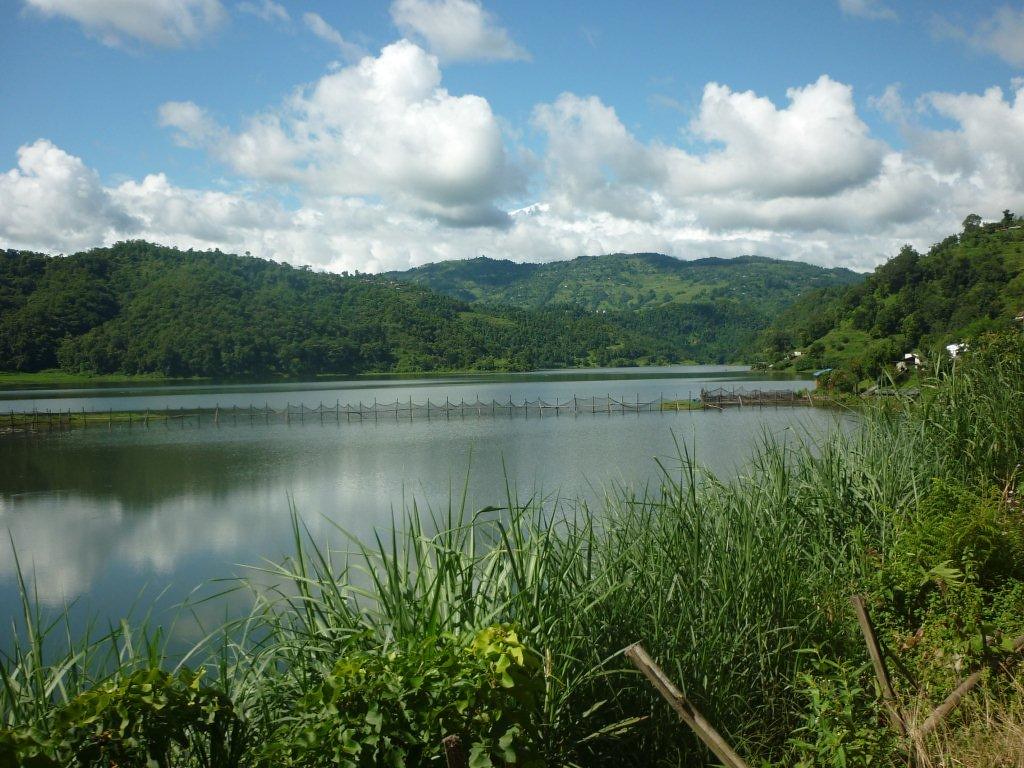
The third largest lake, Rupa Lake, is more of a twin to Begnas Lake. A total of 36 species of waterbirds have been discovered in the lake, making it about 19 percent of the total 193 wetland-dependent birds found all over Nepal.
6. Hike up to World Peace Pagoda
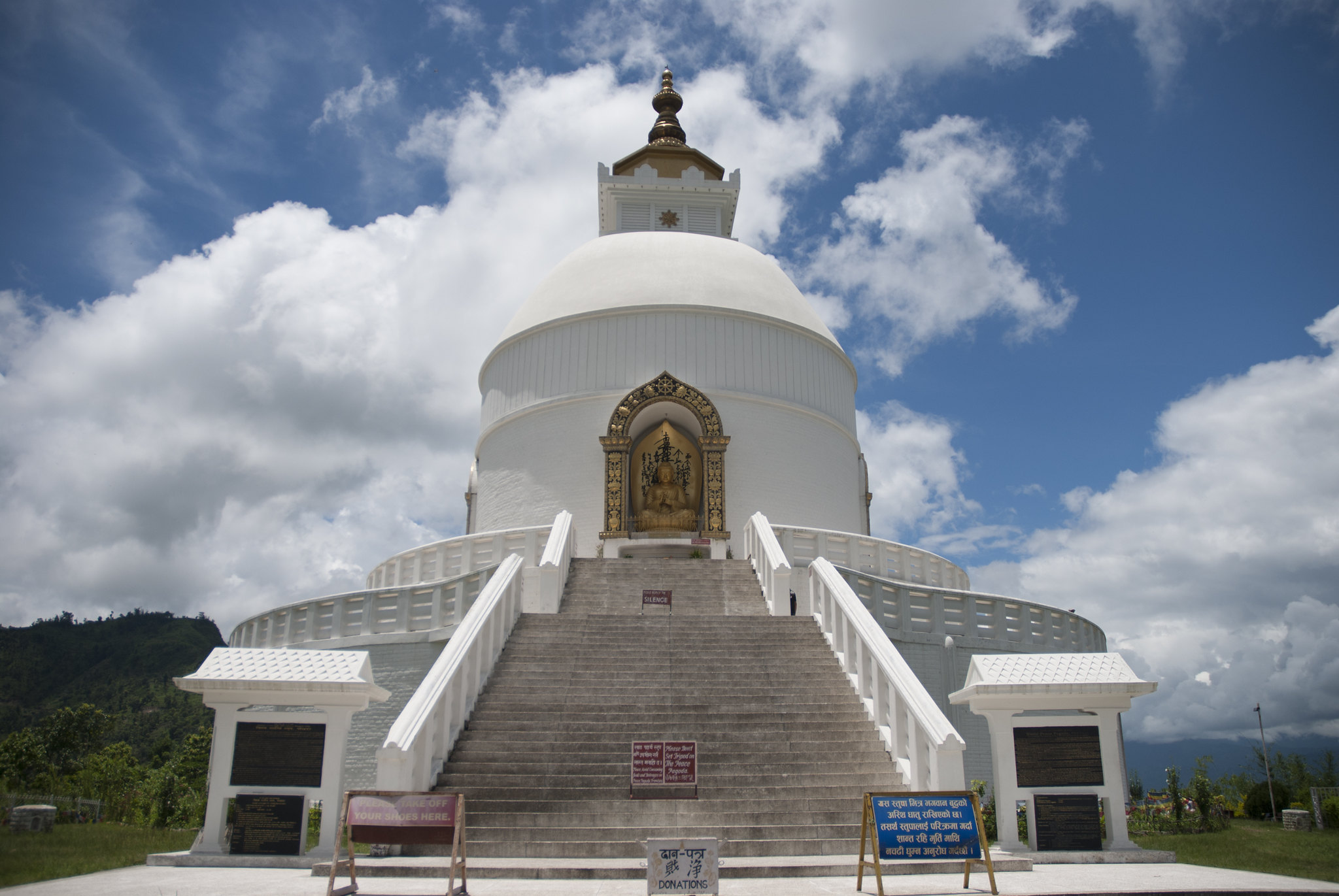
Shanti Stupa, or Peace Pagoda is a monumental Buddhist symbol of peace. Among the eighty Peace Pagodas tossed all over the world, two of them are located in Nepal. One in Lumbini, the birthplace of Buddha, and another in Pokhara on Anadu Hill.
Bifurcated in two tiers, the upper tier has four statues of Buddha facing four different sides to the mountains. ‘Dharmachakra Mudra’ (meaning ‘the wheel of life’) from Japan, ‘Kushinagar’ from Thailand, ‘Bodh Gaya’ from Sri Lanka and ‘Lumbini’ from Nepal.
There are local hiking trails from Phewa Lake to Shanti Stupa, which takes almost an hour. Motorable roads also reach as far as the stairs to the stupa. You need to climb the stairs for five minutes to reach the feet of the World Peace Pagoda.
7. Check Out Museums in Pokhara
Gurkha Museum, Pokhara Regional Museum, International Mountain Museum, and Annapurna Butterfly Museum, are quite a few of the museums around Pokhara.
Whereas International Mountain Museum exhibits the glorious stories of expeditions to the 14 highest peaks and the life in the mountains, Gurkha Museum is dedicated to the services of the Gurkha soldiers ever since they joined the British Army in 1815.
In Pokhara, the Regional Museum is where one can find in-depth insights about the ancient history of Pokhara Valley with the exhibits as old as the Stone Age. Centuries of evolution of the civilisation, and a thorough depiction of the tribe population of Pokhara Valley.
8. Seti River Gorge in Old Pokhara
The milky white water that flows directly from the Annapurna mountain range at 4120 meters connotes the name of Seti River Gorge in Pokhara.
Just in the opposite of Gurkha Museum, there is a park for visitors to eye-witness the deep chasm in the middle of Old Pokhara.
9. Go Trekking from Pokhara
Lakeside alleys of Pokhara are filled with trekking shops, renting out trekking gears, pants, shoes, for Pokhara is where both the short and long treks of Nepal begin. Long-distance treks, such as Annapurna Base Camp Trek, Everest Base Camp Trek, or Annapurna Circuit, find roots from the base of Pokhara.
Pokhara is also the closest source of resources for short-spanned treks like Poon Hill Trek and Ghorepani Trek. It truly is a trekker’s middleground.
10. Day Hike from Pokhara – Australian Camp Hike
Australian Camp is a day-hike close to Pokhara in Nepal, the base of which can either be Phedi or Kande. If you take the route through Phedi, you will first have to hike to Dhampus Village, and then hike straightaway further up to Australian Camp from 1650m to 2060m.
Or, you may decide on the path through Kande. A bus-ride up to Kande (from Zero Point in Pokhara to Kande, local buses go directly to Kande for Rs. 110), and then hike for one hour to reach Australian Camp.
How to Reach Pokhara in Nepal
Planning a trip to Pokhara? Here is how you can reach Pokhara by air, land and rail.
By air
Pokhara has its own domestic landing airport, which means you can conveniently fly out directly to Pokhara Airport from Tribhuvan International Airport in Kathmandu or the other domestic airports situated in major cities all across Nepal. Buddha Air, Yeti Airlines, and
Simrik Air are some of the operators operating on a daily basis between Kathmandu and Pokhara.
By road
Most common among the travelers is to choose to travel from Kathmandu to Pokhara by a local or tourist bus. The distance between Kathmandu to Pokhara is just over 210 km, but the bumpy and holed terrain makes it a 8-9 hours worth of journey. It may take less time, depending upon the weather and the road condition (which often is a matter of serious concern). Apart from Kathmandu, all the cities (like Chitwan) are connected to Pokhara by bus.
By rail
There are no rail services in Nepal. A designated train now rides to Janakpur as part of a pilgrimage. But beyond that, Nepal provides no railway assistance.
Where to Stay in Pokhara
Right or left, south or north, Pokhara has hotels and guesthouses everywhere. The most recommended homestay for a highly comfortable stay would be Mangal Homestay.
For budget travellers, Hotel Cherry Garden is the best hostel for an inexpensive and absolutely delightful time.


Hi,
Great post on Pokhara. One of the latest experiences that have been recently introduced is a hot air balloon. Tibetan Refugee Camp is a must-visit in Pokhara. You can opt for a half-day or a full-day tour, meet a Tibetan doctor, or have lunch with the refugees.