

Nagano is a prefecture in central Japan that is a paradise for nature lovers. With easy access from Tokyo via the Hokuriku Shinkansen, foreigners and Japanese locals alike flock to Nagano’s lush mountain ranges and legendary skiing powder.
I lived in Nagano for a year and managed to visit every prefecture in Japan. Nagano has remained one of my favorite of the 47 prefectures.
The natural beauty is unmatched here. This land is full of tradition and culture. Every season here harbors a special activity like skiing or cherry blossom viewing. In this special prefecture, you will also find historic castles and temples that will command your attention.
If you plan to visit Japan, you need to make sure to stop in Nagano. To help plan your trip to Nagano, here are the 15 best things to do in Nagano that will make for an unforgettable trip.
Ski in Hakuba

The world-famous Hakuba village sits at the Northern Japanese Alps’s edge. Hakuba hosted some events of the 1998 Nagano Winter Olympics. Over 20 years later, it still attracts skiers and snowboarders from across the world. If you visit Hakuba, you will probably hear more English spoken than Japanese.
Beginners and professionals alike love Hakuba. Gentle runs and steep slopes are spread across the village’s 10 resorts. Hakuba 47 Winter Sports Park is one of my favorite resorts in Hakuba. It is a fantastic ski area with slopes for all levels.
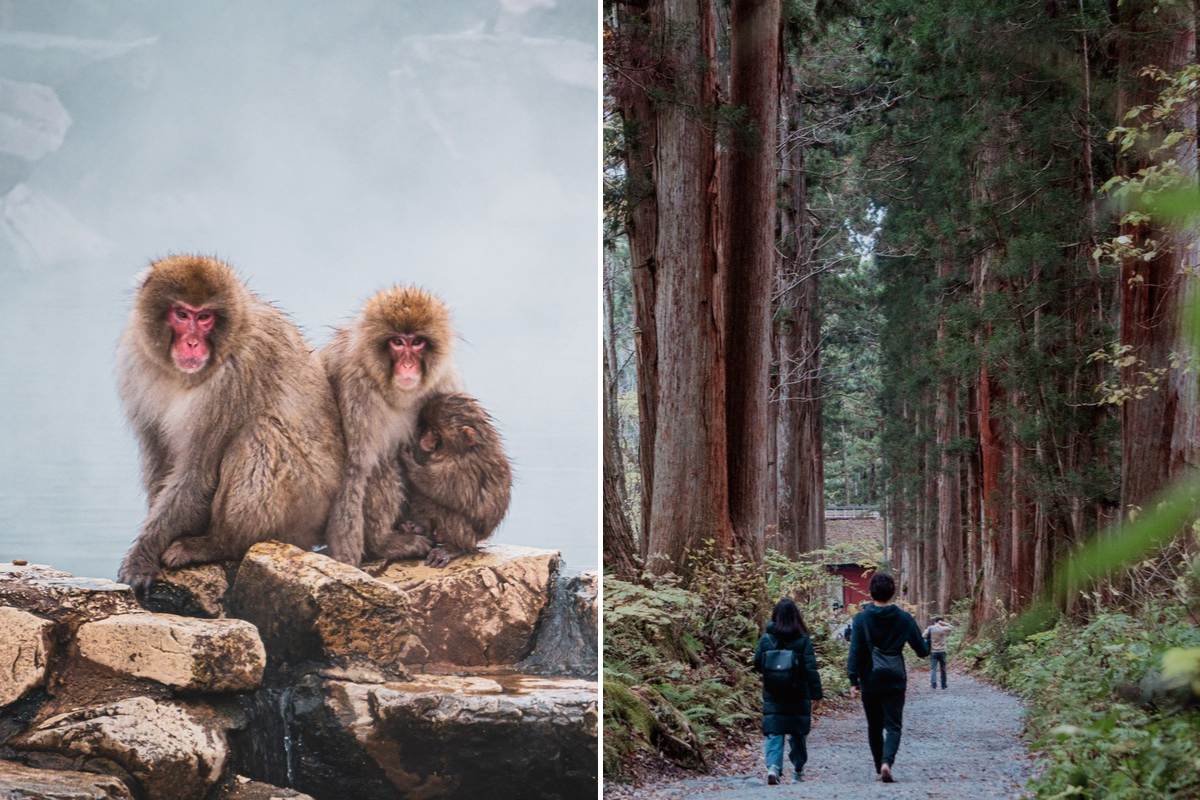
Photography Wild Monkey at Snow Monkey Park

Want to watch lively monkeys splash around in bubbling hot spring water? Then, you will want to visit Snow Monkey Park. You can take a bus from Nagano Station to Snow Monkey Park or take a local train from Nagano Station to Yudanaka Station. Then, from Yudanaka Station, take a quick bus ride up to the park.
Whether you get there by train or bus, you will walk a short path to reach a man-made hot spring. At this hot spring, you won’t find people bathing. Instead, you will find monkeys enjoying the relaxing waters.
These monkeys used to be a nuisance to local farmers. Constantly, they were stealing produce and getting into the trash. To solve the monkey problem, conservationists began feeding the monkeys at the hot springs. Now, the hot springs attract tourists every day who are eager to watch wild monkeys enjoy a dip in warm water.
Spot a Japanese Serow

In Joshin’etsukogen National Park, one of Nagano’s four National parks, you can hike Mt. Azumaya. This mountain is one of Japan’s 100 most famous mountains, so obviously the views are amazing. However, you might be even more excited if you manage to spot the once-endangered Japanese Serow. This mountain goat is a beloved symbol of Nagano.
Serows are considered a “special natural treasure,” and once you learn about their history, you will understand why they have such a high title. The Serow was once severely threatened, but thanks to conservation efforts, the Serow are plentiful around mountains in Japan.
Visit Shiga Kogen
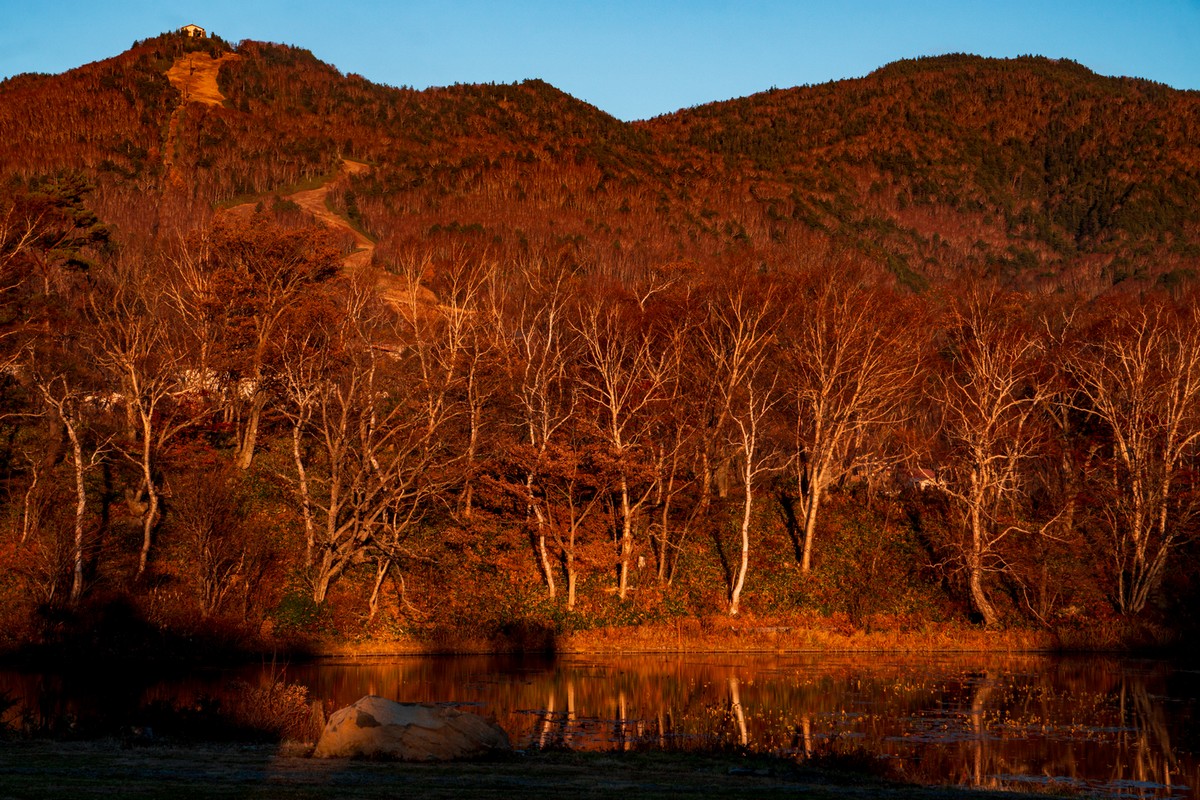
Nagano is home to some of Japan’s most idyllic scenery. The Shiga Kogen Highlands is a convenient place to experience the prefecture’s beauty without difficult trekking. This area is famous for being Japan’s largest combined ski area and hosting some of the Nagano 1998 Olympic events.
Shiga Kogen has many ponds and short walking courses, but Lake Onuma is my favorite destination in the highlands. You can stroll around the lake and admire a large torri gate that sits on the lake’s shore.
Take the Tateyama Kurobe Alpine Route

Taking the Tateyama Kurobe Alpine Route is one of the most exciting journeys you can take in Nagano. Tateyama is one of the most sacred mountains in Japan, and you do not have to hike much to reach it. Instead, you can travel an iconic mountain sightseeing route across the stunning Northern Alps from Tateyama, Toyama, to Omachi, Nagano. However, not one bus or train takes you to Tateyama. You will need to transfer across trains, buses, cable cars, and ropeways if you plan to reach Tateyama.
The best part of the 5-hour mountain route is arguably reaching Murodo, the highest point along the course. Here is where many hikers start their trek up to Tateyama. If you do not want to ascend the steep ridge to Tateyama, there are beautiful ponds in Murodo. You can stroll along flat trails around these tranquil pools of water.
Another highlight of taking the Tateyama Kurobe Alpine Route is walking across the Kurobe Dam, the tallest dam in the country. This is one of the stops before hitting Murodo. At the dam, make sure to walk down a series of stairs to visit a monument that honors the 170 lives lost during the dam’s construction.
Admire Cherry Blossoms at Garyu Park

Garyu Park ranks as one of Japan’s 100 best places to see cherry blossoms. If you are in Nagano during spring, it is an unforgettable place to see the budding flowers. This park is far from the tourist trail in a city called Suzaka. This is a charming city that sees few tourists. The locals here are so kind and eager to communicate with visitors.
Admire Hokusai’s Work in Obuse

Obuse is another quiet city in Nagano. It is known for its delicious chestnuts and being the home of Hokusai, one of Japan’s most celebrated painters. You can visit the Hokusai Museum to learn more about the beloved creative. Then, make your way to the Ganshoin Temple, where you will be amazed by a giant phoenix on the ceiling that was painted by Hokusai.
Take the Togakushi Five-Shrine Pilgrimage

Togakushi is a highland behind Nagano City, known for its folklore and beauty. There are direct buses from Nagano Station that lead to Togakushi. In no time, you can be in the space where gods are said to dwell.
There are many different ways to enjoy Togakushi. However, the most popular way is to get off the bus at the Togakushi Chusha stop. From here, you can begin a hike to 5 different shrines. It is about a 5-mile round-trip hike. Whenever I hike, I like to download a trail map to stay on track. However, don’t worry; it is a fairly easy trail to follow.
The highlight of the pilgrimage is reaching the Zuishinmon Gate. It is one of the most sacred spots in all of Nagano. Once you pass through the gate, you stroll past towering rows of cedar trees. After a few minutes, you will reach the fourth shrine, Kuzuryusha. If you have energy left, keep going! You will climb a few stairs from here to reach the final and most important shrine, Okusha. Join a queue of worshipers and pray for good luck by offering a coin.
After paying your respects at the shrine, you only have to hike 1 more mile to reach the closest bus stop, the Togakushi Chusha Bus Stop. If you are feeling hungry, you can stop by a noodle shop near the bus stop. This noodle shop serves a traditional Japanese dish, soba (buckwheat noodles). Nagano, specifically Togakushi, is famous for its excellent, fresh soba. If you do not need a full meal, try soba ice cream! This unique ice cream flavor is refreshing and surprisingly tasty.
Hike Near One of Japan’s Most Active Volcanoes

Mt. Asama borders Nagano and Gumna, another prefecture in Japan. Nearly every day, you can see smoke rising from this active volcano. Asama is so famous that a Shinkansen (bullet train) line is named after it.
Although you cannot directly hike to the top of Asama, that would be highly dangerous. You can hike the outer rim of Asama that forned from previous eruptions. Hiking near Asama is unforgettable because it doesn’t feel like Japan. Rather, it feels like a different planet. You will have a great view of Asama’s action from the top of the outer rim. You might even spot Mt. Fuji far off in the distance. If you peer down the rim, you will see a lush forest full of wild deer.
You can find information online about Mt. Asama, but most of it is out-of-date. Mt. Asama is an active volcano, so it is important to be extra prepared to hike in this sensitive area. You can read my guide to hiking Mt. Asama to learn more about how to access the outer rim safely. Hiking to see Mt. Asama is a life-changing experience and one of my favorite hikes I have ever done—I have visited over 40 National Parks.
Shop in Karuizawa

Karuizawa is one of the most charming cities in Nagano. Tokyo elite flock to Karuizawa during summer to escape the heat and enjoy gorgeous scenery. Behind the bustling tourist hub sits waterfalls and mountain overlooks.
Although Karuizawa is rich in natural wonder, it is also perfect for a day of shopping. Hit Kyu Karuizawa, a long stretch of specialty stores, but beware, your wallet will be much lighter after enjoying the cafes and craft stores in this picturesque district.
If you want to do more high-end designer brand shopping, head to the Karuizawa Prince Shopping Plaza. This modern complex of shopping outlets and restaurants is one of my favorite places to shop in Japan.
Visit the Kagami Ike Pond During the Fall

Although the most famous attraction in Togakushi is its Five-Shrine Pilgrimage, Togakushi is full of other mystical sites. If you plan to visit Nagano during autumn, you must head to the Kagami Ike Pond. The fall leaves that surround the pond are extremely vivid here.
This is not your average pond. “Kagami Ike” means mirror pond. On a clear day, you will see the jagged Togakushi mountains behind the pond. This mountain range will also reflect onto the pond and create an unforgettable image.
Worship at Zenkoji Temple

After a 15-minute walk from Nagano Station, you can find yourself at one of the most famous Buddhist temples in the entire country. The temple’s origins date back to 642 AD when Yoshimitsu Honda enshrined a Buddhist Image at the site. Ever since then, people have been worshipping at this large temple complex.
Because of Zenkoji, Nagano expanded and gained relevancy and importance. If you plan to visit the popular temple, you can visit the mall hall and admire beautiful Buddhist statues. You can also learn more about the temple’s history at the Zenjoki History Museum that stands hit the mall hall.
Tour Matsumoto Castle

A little over an hour away from Nagano City is Matsumoto, another large city in Nagano. Matsumoto’s most famous attraction is its castle. It is one of the most complete of Japan’s original castles. It is also famous because of its black color and expansive moat.
For 700 yen, you can tour the inside of the castle. You can admire artifacts and the castle’s authentic wooden interior. At the top of the castle, you can peer out the observatory deck for mountain and city views.
Even if you do not want to pay 700 yen to tour the castle, you will enjoy walking the castle grounds and taking photos in front of the castle complex.
Snowshoe in Kamikochi

In the summer and fall, Kamikochi is the number 1 spot to visit in the Chubu Sangaku National Park, more commonly known as the home of the Northern Japan Alps. Since Kamikochi is one of the most beautiful places in the entire country, this spot gets rather busy.
It is not always the ideal setting for a peaceful retreat. Luckily, the cold weather and snow deter most tourists in the winter. It is more calm and perfect for snowshoeing. Although Kamikochi is officially closed in the winter, there are no facilities open or buses that shuttle tourists. You can enjoy this pristine landscape by walking or renting snowshoes.
To see a heavenly view of the Japanese Alps from the Taisho Pond in Kamikochi, you will have to walk over a mile through the Kama Tunnel. Then, walk another mile across the snowy riverbank to reach the iconic view of Kamikochi.
Although it is a difficult endeavor, it is worth every step. Experiencing Kamikochi without hoards of tourists is extremely peaceful. You will really fall in love with Nagano.
Challenge Yourself to Reach Mt. Takamatsu

Nagano is full of hiking trails. It is one of the most mountainous prefectures in all of Japan. If you are looking for a challenge, you should try to summit Mt. Takamatsu, the highest point in Nagano City and the tallest mountain in the Togakushi Mountains.
The route takes close to 10 hours to complete and is said to be one of the longest trails among the 100 famous mountains in Japan.
While trekking through the wild Togakushi Mountains, you will gain over 4,000 feet of elevation to reach Mt. Takamatsu. If you are lucky, you will be greeted with views of the Northern Japanese Alps and Mt. Myoko, another famous mountain.
If you end up having bad luck and find yourself in a sea of clouds at the top, you will still feel victorious. Conquering this mountain is a great feeling. After your hike, you can tent camp in Togakushi for 3,000 yen. It is one of the largest campgrounds in the country and has plenty of amenities like a camp store and shower.
Author Bio
Hi, I’m Noah, and I love solo traveling. I have visited 50 National Parks and hiked over 500 miles alone. I write budget solo travel itineraries on my blog, Noah Takes the World. Follow me on Instagram and learn how to solo travel with pride.


