

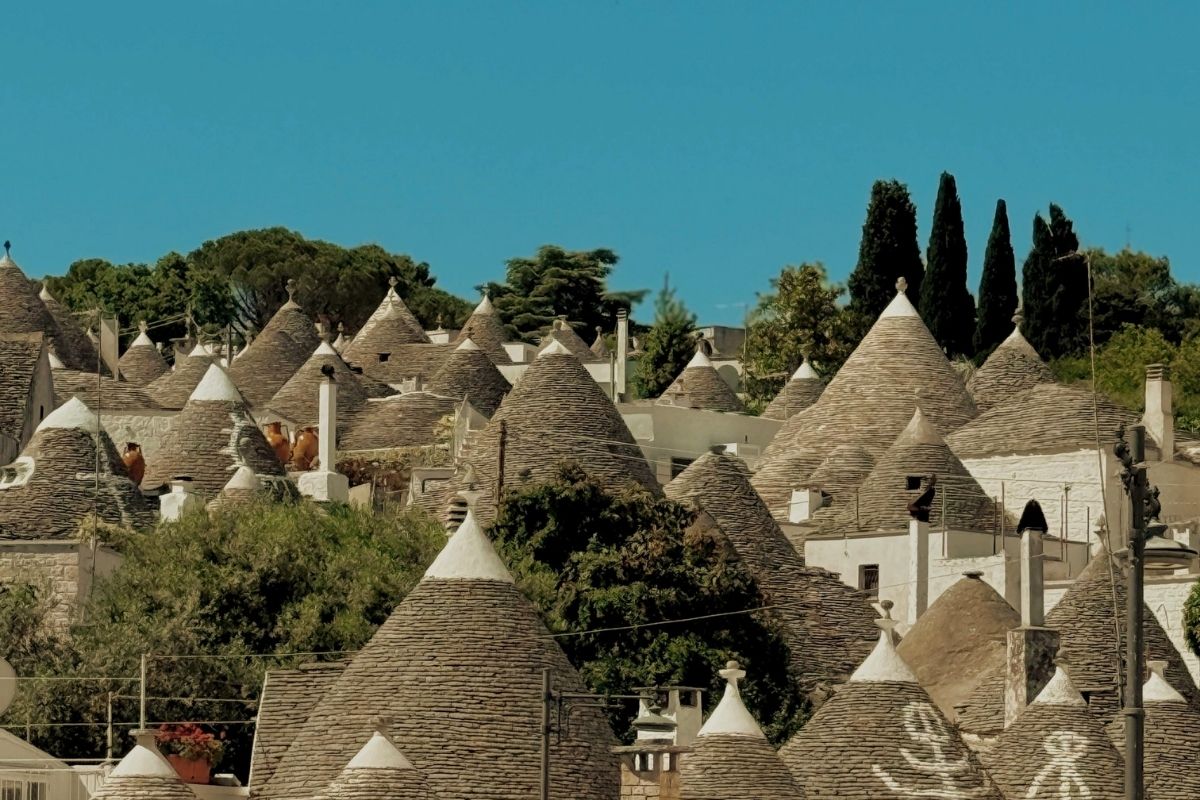
By early November the beach clubs at Polignano a Mare have stacked their sunloungers, and the town goes back to the people who live there. You walk the cliff edge above Lama Monachile with the Adriatic slapping the rocks below and nobody else in your photo. Out in the Valle d’Itria, nets are spread under the olive trees and the mills press into the evening. In Lecce, students still crowd the bars around Piazza Sant’Oronzo on weeknights.
Puglia between late autumn and early spring is quieter, cheaper and a little colder than most people expect. It is still open for business, if you pick the right base and know which places sleep until Easter.
What the Weather Is Really Like
Winters here are mild by northern European standards. Daytime highs along the coast usually sit in the low to mid-teens Celsius from December to February. Inland towns such as Alberobello and Locorotondo sit higher up on the Murge plateau, and nights there can drop close to freezing.
Late autumn is the wettest stretch of the year, with rain often in short, heavy bursts followed by clear, windy days. When the tramontana blows down from the north, a sunny afternoon on the Bari seafront can feel far colder than the thermometer says. Pack layers, a waterproof and shoes with grip, because polished limestone streets turn slippery in the rain.
Late February and March are the turning point. Almond trees blossom across the countryside, the days stretch out, and the first masserie start to reopen ahead of Easter.
Where to Base Yourself
Choose a town with a year-round population, so the bar and the trattoria are still there in January.
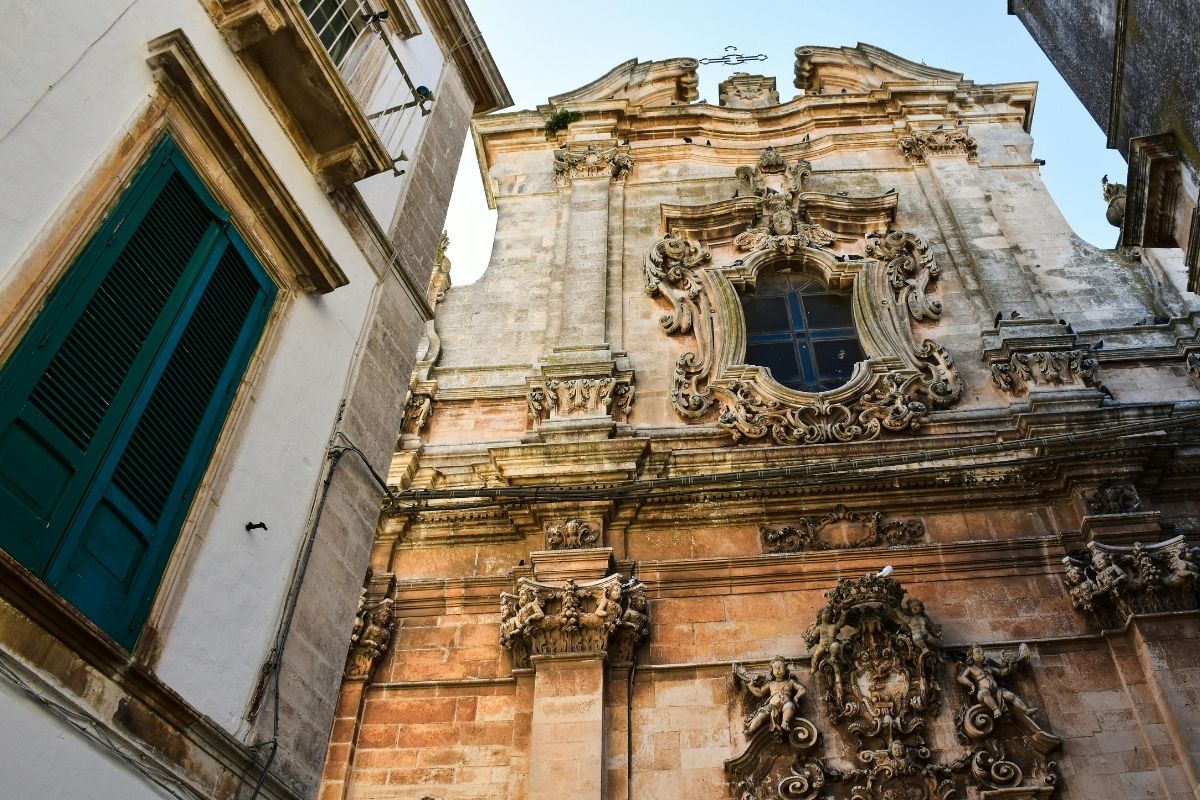
Lecce is the easiest pick. The university keeps the centre busy through winter, restaurants stay open, and the baroque churches carved from soft local stone glow in the low winter sun. Otranto and the Salento coast are within reach for day trips.
Bari suits you if you want a real city with an airport on the doorstep. Bari Vecchia, the old town, feels most like itself in winter, when the pasta makers on the lanes near the Arco Basso work at their own pace. The Basilica di San Nicola marks its saint’s feast day on 6 December.
Monopoli is the best coastal base. It has a working harbour, a normal weekly rhythm and direct trains north to Bari and south to Brindisi and Lecce.
Ostuni and Polignano a Mare are lovely off-season, but they lean on summer visitors, so expect shuttered shops midweek.
What Stays Open (And What Doesn’t)
Places that serve residents stay open, and places built for summer visitors often don’t. Expect this:
- Many masserie (fortified farmhouse hotels) and beach lidos close from November until around Easter.
- Trattorias in the bigger towns stay open, but many take one weekday off.
- Most shops close for a long lunch, roughly from 1pm until late afternoon.
The cold months also have their own calendar. Olive mills (frantoi) press the new harvest from around October into December, and some offer tastings of the green, peppery olio nuovo. In mid-January, the town of Novoli near Lecce lights the Fòcara, a huge bonfire for Sant’Antonio Abate. The Carnival of Putignano runs rituals and float parades from December to February, and its organisers date it back more than six centuries. Viaggiare in Puglia, the region’s official tourism site, lists events by date and is worth a look before you fix dates.
Getting Around by Train and Car
The main Adriatic rail line links Bari, Monopoli, Brindisi and Lecce, and it is the backbone of any car-free trip. Inland, the Ferrovie del Sud Est network reaches Alberobello, Locorotondo and Martina Franca, plus much of the Salento. Its trains are slower, and on Sundays service is thin, with some routes covered by bus.
For the countryside and the smaller Salento villages you will want a car, and winter rental rates are usually well below summer ones. Watch for the ZTL (limited traffic zones) in historic centres such as Lecce and Ostuni, where cameras fine unregistered cars automatically.
Working Remotely in Puglia
Quiet months here suit remote work. Rents drop, distractions are few and the short days push you towards the desk anyway. Lecce and Bari both have coworking spaces, while in smaller towns your connection depends on the apartment, so ask the host for a recent speed test before you book.
Winter is when landlords are most open to longer stays at lower monthly rates. Non-EU remote workers who want to stay past the usual 90 days will find that Italy’s digital nomad visa rules ask for proof of accommodation covering a full year, so a string of short holiday lets will not do. Whatever the length of your stay, get the contract in writing and ask what the bills came to last January.
Ask about heating as well. Old stone houses keep summer heat out and hold winter cold in, and many rely on wall-mounted air-conditioning units that double as heaters. The sun sets around 4.30pm in December, so plan walks and errands for the middle of the day and save the dark evenings for work.
Before You Book
Message two or three hosts and ask how their place is heated and how fast the internet is. Email any masseria or restaurant you have your heart set on to confirm it is open, because websites often go unchanged all winter. Reserve a car for at least the days you plan to spend in the Valle d’Itria and the Salento.
Then pick your month by what you want from it. Come in November for the olive harvest and new oil, in January for the Fòcara, or in late February and March for almond blossom and longer days.


