


Ask any good and honest Dutchman, and they will tell you that the Netherlands isn’t the most naturally beautiful country in the world. It’s mostly flat farmland as far as the eye can see.
But over generations, the Dutch have built beautiful cities on manmade canals and even drained an entire bay to create a whole new state. They’ve pioneered mass farming and lead the world in tulip exports (and are a close second in tomato exports).
The Netherlands might be small, but there are so many things to see and do on a trip to this little country. In this article, we will go through the top 10 places to visit on your trip to the Netherlands.
The list is in no particular order, so don’t consider it a ranking system. You can string together a lot of these stops on an epic 7-day Netherlands itinerary, but you won’t be able to see all of them without a little longer in the country. So without further ado, let’s get to it!
1: Amsterdam
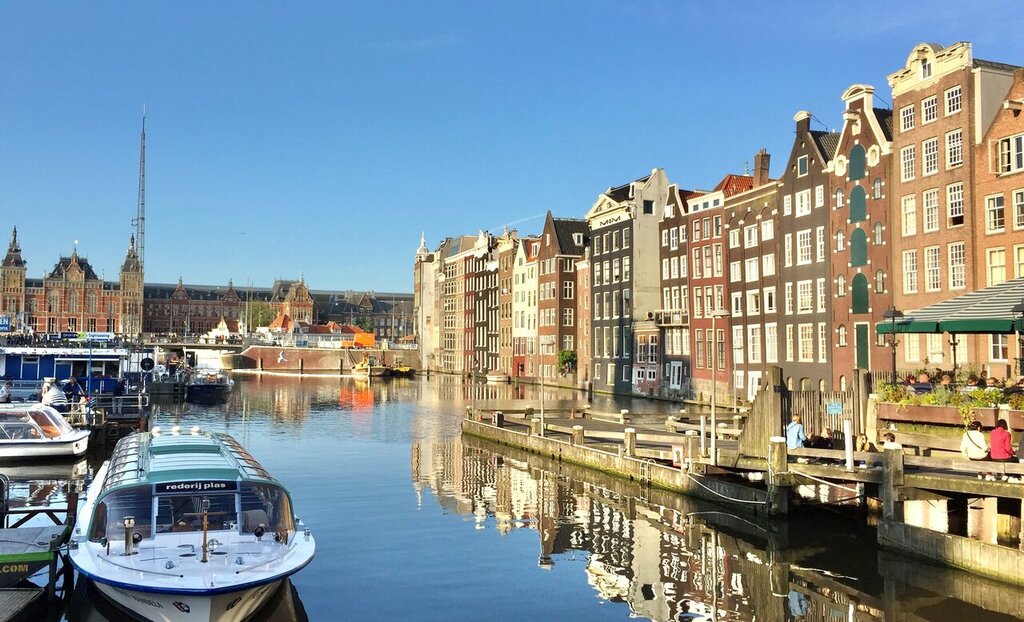
The list is in no particular order except #1 here. Amsterdam is by far the best place to visit in the Netherlands and the main – and often only – reason most people come to the country. Famous for its extensive network of canals and its liberal attitude toward things like prostitution and marijuana, the Dutch capital is one of the most beautiful cities on earth.
It’s easy to spend days on end exploring every inch of Amsterdam. But if you’re short on time, you can start with a scenic walk around Prinsengracht, the most charming of all the city’s canals. While admiring the old Dutch houses that line the canal, be sure to stop by the Anne Frank House before heading to the city center to experience Dam Square, Amsterdam’s main city square, and the King’s Palace.
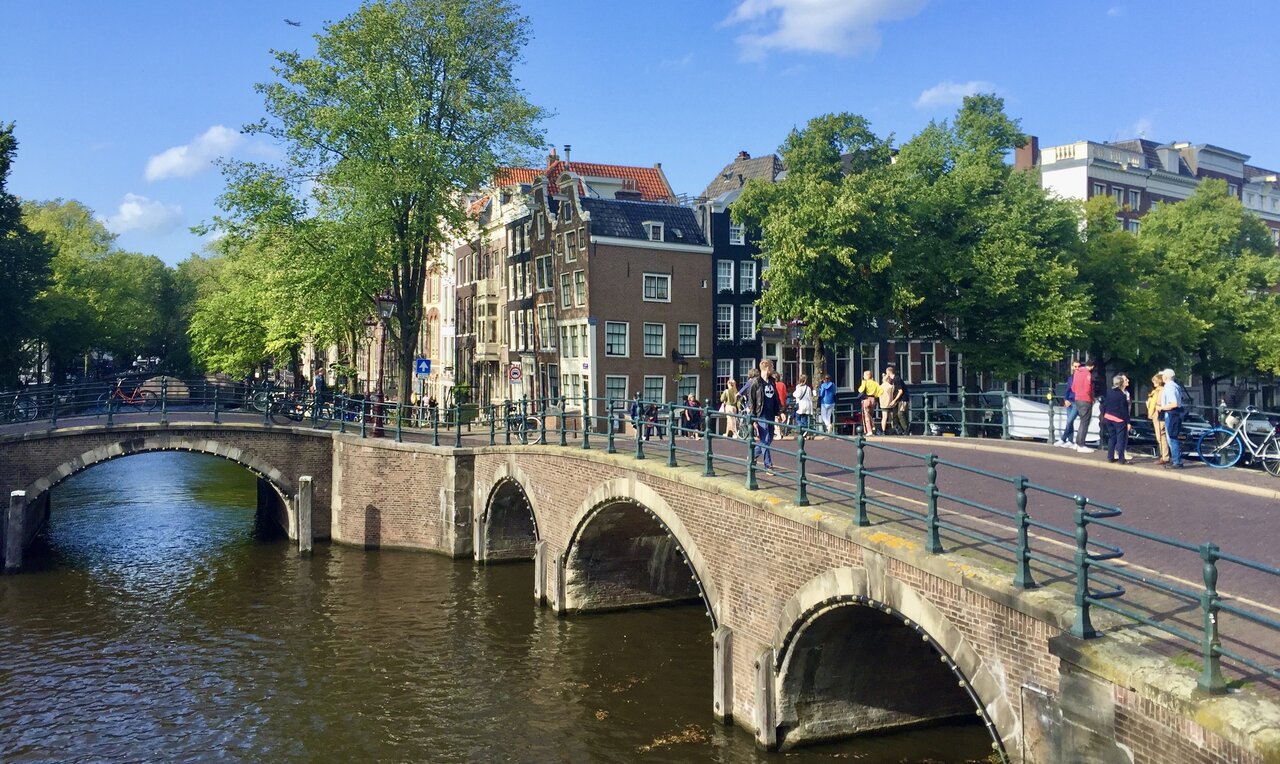
If you’re into art, there’s arguably no better place than Amsterdam. The Van Gogh Museum and Rembrandthuis showcase historical pieces from the Netherlands’ most famous painters. When night falls (so long as you’re not traveling with children), head to the Red Light District in the city center just to see and experience the most famous adult playground in the world. There are numerous beautiful cathedrals around the Red Light District to check out when you’ve had enough debauchery.
There are too many things to do in Amsterdam to discuss here. Enjoy the restaurants, breweries, and bars on top of the beauty of the city, and you’ll feel your trip to the Netherlands was already worth it before even stepping outside the city limits.
2: The Hague
The Hague is the third largest city in the Netherlands, and it’s located on the coast of the North Sea in South Holland. It’s famous for housing the international criminal court, where multinational court cases are arbitrated and settled. It’s also known for the Hague Convention, which established various international laws used today.
The Hague is notably the seat of government for the Netherlands, which is sort of odd since Amsterdam is the capital of the country. But that’s just how it’s done in the Netherlands. The Binnenhof is the Dutch parliament building, and it’s free to go in and walk around.
There are plenty of other things to do in the Hague as well. The city is easily walkable and connected by a vast network of trams. Some other sites you should check out on your trip to the Hague are The Mauritshuis and the Noordeinde Palace (the Dutch answer to Buckingham Palace).
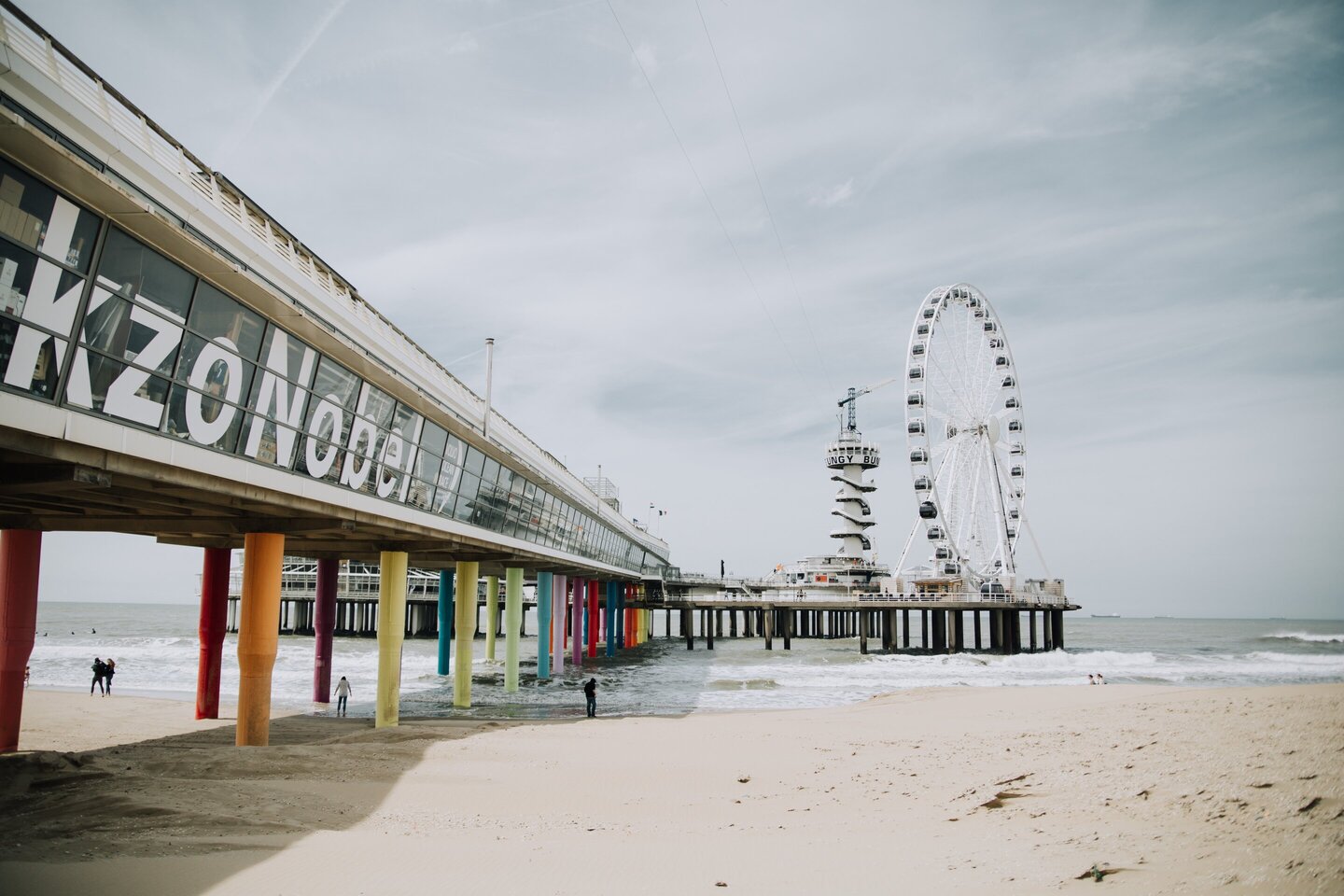
Or, if you fancy a day at the beach, take the tram to Scheveningen Strand, one of the most popular beaches in the Netherlands.
3: Haarlem
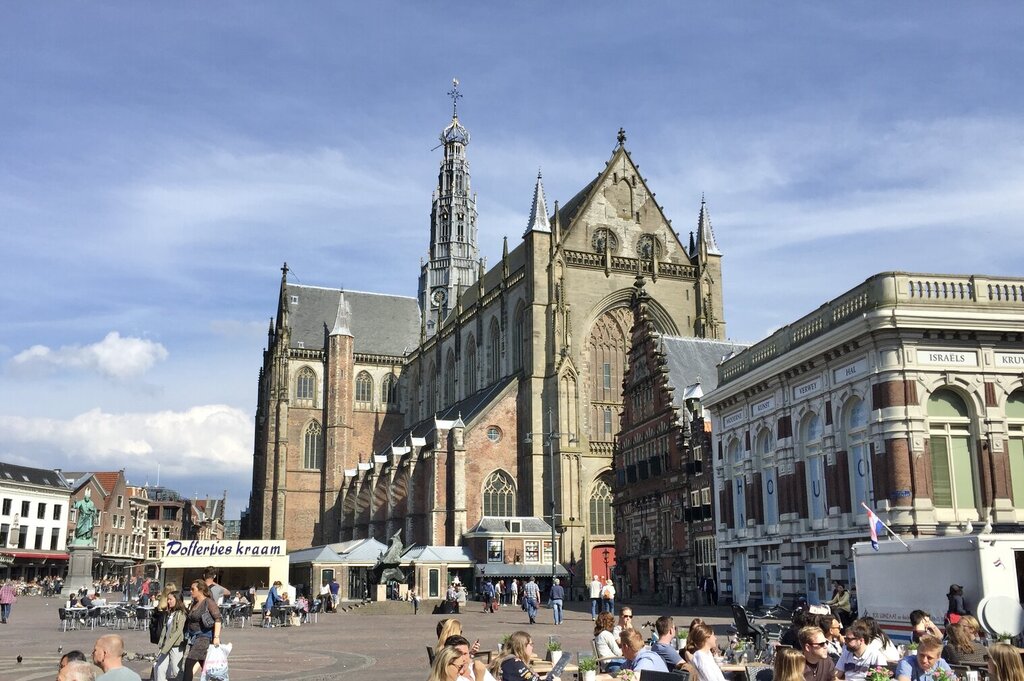
Fifteen minutes west of Amsterdam by train, you’ll find the quintessentially Dutch city of Haarlem. It’s a beautiful city that is easy to walk around in the afternoon. The main landmark of Haarlem is the De Grote St. Bavokerk (a large gothic cathedral) in the central square. It’s the second largest cathedral in the country, and the square in front of it is the heart of Haarlem. On Saturdays, the square is full of vendors selling everything from fresh fruit to hand-stitched wool clothing. The Saturday market starts at 9 AM and runs till about mid-afternoon.
Outside the main square, you’ll find even more old cathedrals in Haarlem. The city is known for having more cathedrals per capita than anywhere else in the country. Another spectacular cathedral is Kathedrale Basiliek Sint Bavo, just west of the city center. It has two towers that rise above the surrounding neighborhood and overlook the city.
Haarlem can get busy on the weekends, as it’s a popular place for shopping. If you can help it, visit on a weekday, as that will add to your enjoyment as you wander the little alleyways getting lost in Haarlem. And for a unique experience, stop for lunch or a drink at the Jopenkerk, a brewpub located in – you guessed it – an old cathedral.
4: Edam, Volendam and Marken
Just 20 km north of Amsterdam sit the adorable villages of Edam, Volendam, and Marken. Edam is known mostly for cheese production (like many places in the Netherlands). The city center features some historic buildings as well as a famous cheese market. The Edam cheese market runs on Wednesdays between 10:30 and 12:30 and only during the summer months.
Volendam is a little fishing village known for smoked eel. Yes, smoked eel. Don’t knock it until you try it. For the best-smoked eel, stop into Smit-Bokkum and get it from the family that originally had the idea to smoke a tiny sea snake. Volendam is a popular tourist destination these days, so it can get busy in the summer months. Go in the morning and stay for lunch to get out before the big crowds.
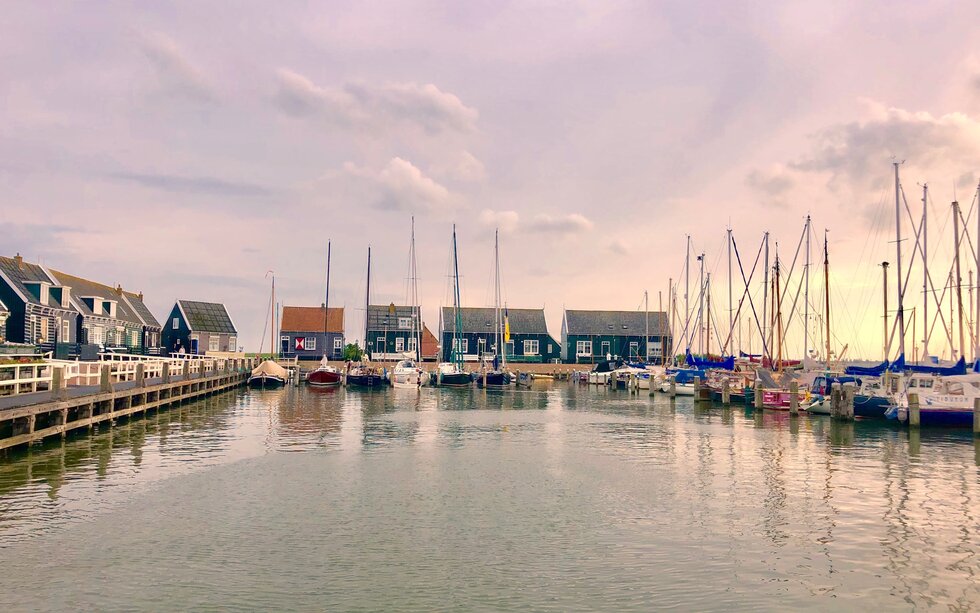
Last but not least, Marken is an even tinier fishing village south of Volendam. It’s located on an island that is now connected to the mainland by a man-made land bridge. Marken is mostly car-free. Only vehicles of residents are allowed past the parking lot (where you’ll be parking). The town is basically just one street along the water which features local restaurants and cute little wooden houses, but you’ll fall in love with it and not want to leave!
5: Lisse (SEASONAL)
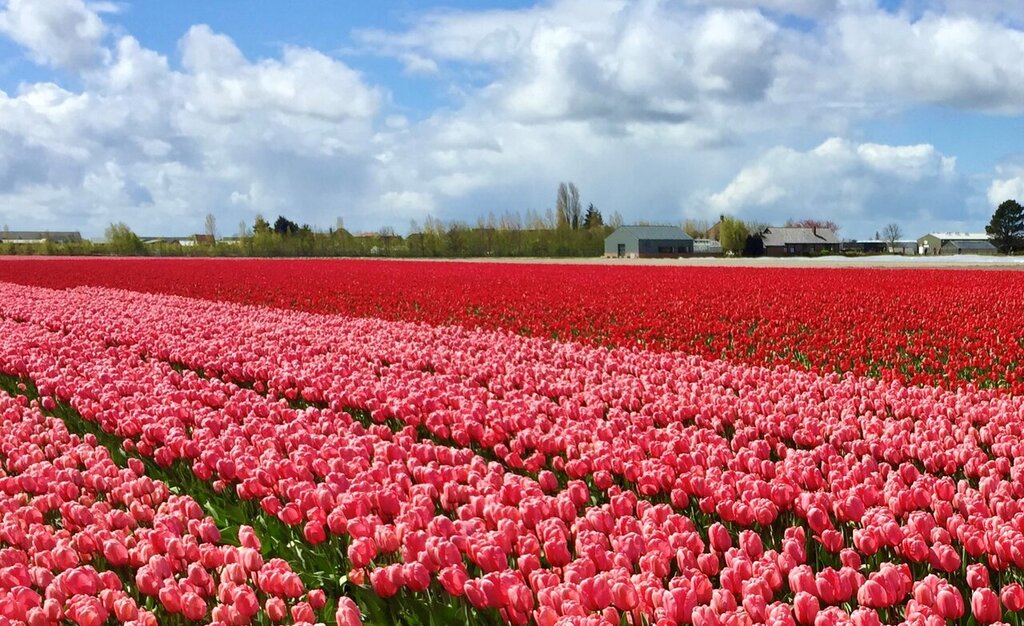
Oh, those famous Dutch tulip fields. You’ve seen the photos; you’ve heard the stories. The Netherlands is littered with expansive tulips and flower fields, and flowers are big business in the country. If you come to the Netherlands in April (and possibly late March or early May) you’ll have the opportunity to visit these famous flower fields. No region of the country has more widespread flower fields than the region in and around Lisse.
Lisse is also home to Keukenhof Gardens, the world-famous flower garden that most people visit in lieu of wandering the back roads where the larger flower fields are located. While Keukenhof is nice, it is incredibly touristy and super busy during the 6 weeks per year that it’s open. Instead, opt for a driving or cycling adventure around the flower fields for the most memorable experience. Just remember that the fields are private property and you’re not supposed to walk in between the flowers. Be sure also not to pick flowers from the fields. If you want some tulips, you can find people selling them from the side of the road.
If you don’t have a rental car, you’ll want to take a train to Lisse and rent a bike in order to explore the flower fields. There is also a tourist bus that goes to Keukenhof from the Airport as an alternate way to get there. Either way, you’ll love your day in the tulip capital of the world.
6: Giethoorn
Giethoorn is a picturesque little village full of canals and cafes on the water. The town bills itself as being the “Venice of the North” and being completely car-free. Giethoorn certainly has its charm, but at the same time, it’s also overhyped and has become overcrowded with international tourists in recent years. It’s best to visit in the off-season or on weekday mornings to avoid the crowds.
I’ll let you in on a little secret here: the village is not completely car-free like the actual Venice. It has car-free parts, but you’ll see at least a few cars on a side road as you cruise the canals in your rental boat. It’s easy to avoid the road in your photos though, as seen below. No prior boating experience is required to rent a little motorboat in Giethoorn, and rental rates are surprisingly reasonable.

Giethoorn is not super easy to get to and is best visited with a rental car. The drive is about 90 minutes from Amsterdam and there is sufficient free parking available. Once you get there, it’s easy to walk everywhere, even if you decide not to rent a boat. But do yourself a favor and rent the boat for the best Giethoorn experience.
7: Zaanse Schans or Kinderdijk
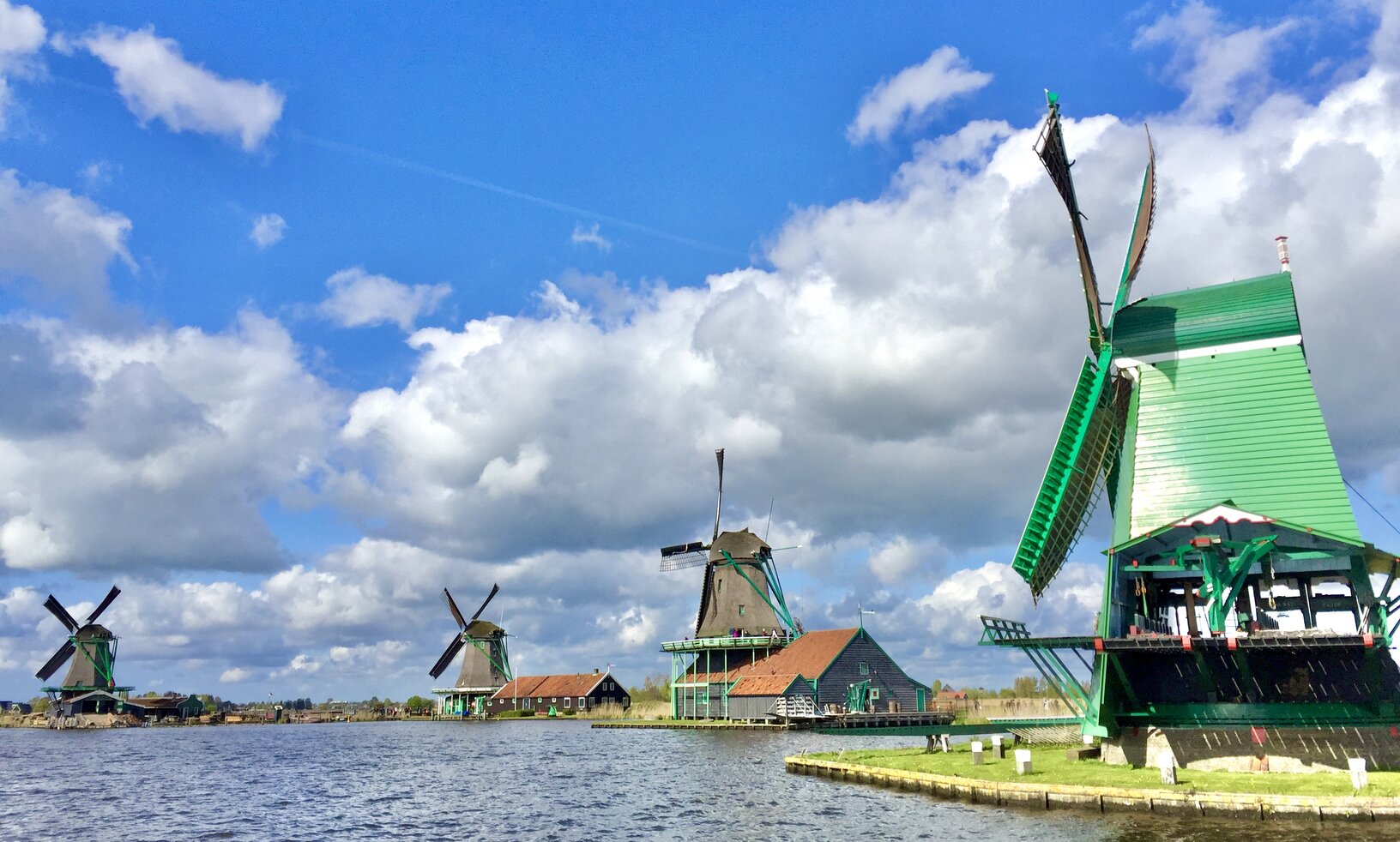
It’s not a visit to the Netherlands unless you get to see some windmills, am I right? For the most well-preserved and historic windmill collections in the country, there are two locations to choose from: Zaanse Schans near Amsterdam and Kinderdijk near Rotterdam.
Zaanse Schans is more popular due to its close proximity to Amsterdam and ease of getting to. Kinderdijk is a UNESCO World Heritage Site, but difficult to get to without a car, even from nearby Rotterdam.
Zaanse Schans is a famous old village with multiple windmills along a picturesque winding river. You can walk along the river and learn all about the history of windmills and, of course, cheese making. You can also see how clogs were historically made in the daily Clog Workshop. You know clogs, right? Those silly Dutch wooden shoes that someone thought were a great idea at some point?
Kinderdijk is an open-air museum that showcases the history of harvesting the wind to create energy in the Netherlands. It’s definitely more educational and informative, but perhaps not as picturesque as Zaanze Schans.
At Kinderdijk, you can take a boat ride that is included in your admission ticket, however. Whichever windmill site you choose to visit (both might be a bit much), you will learn a lot and leave impressed about how people centuries ago used wind energy to power so many things.
8: Maastricht
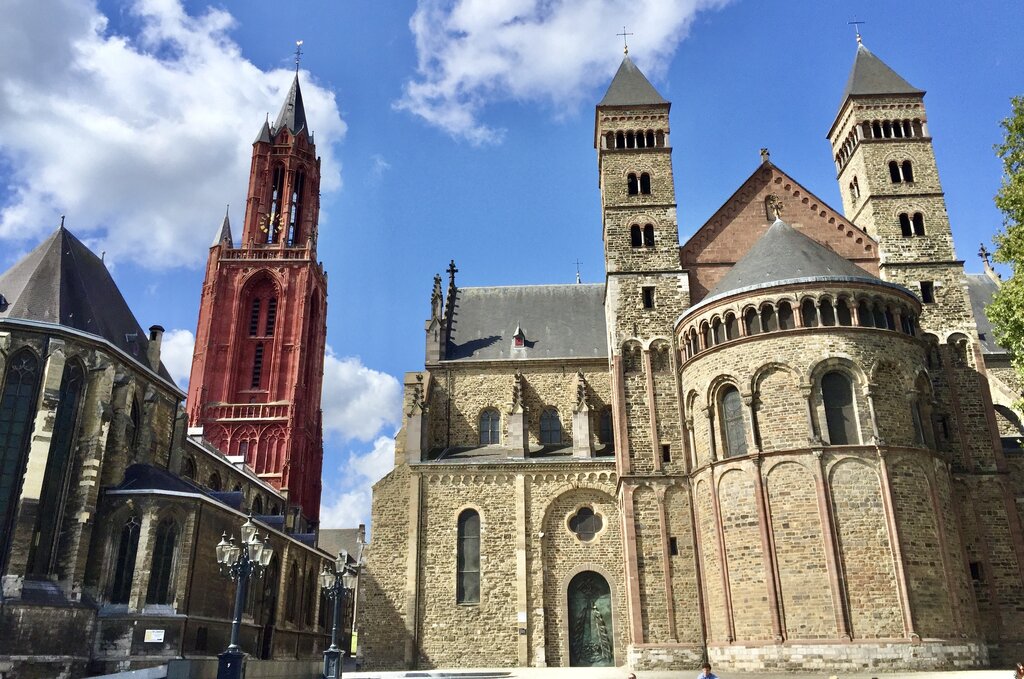
At the southern tip of the Netherlands, tucked between Belgium and Germany, you’ll find the medieval city of Maastricht. Maastricht flies under the radar for most visitors to the Netherlands, but this little city in the Limburg province offers high-quality attractions with a fraction of the crowds. Asides from being known as the birthplace of the European Union, Maastricht is perhaps most known domestically as the only city in the Netherlands that isn’t completely flat. This might sound like an interesting thing to be proud of, but in a topographically challenged country like the Netherlands, the hills in the outskirts of Maastricht are kind of a big deal.
When visiting Maastricht, start at the Vrijthof Plaza, which is the city’s main square, and go from there. Some of the top landmarks are the Basilica of Saint Servatius, Fort St. Pieter, Saint Jan’s Church (go to the top of the tower for a view of those rare Dutch hills), and the old city walls at Hell Gate. When you’re done exploring, enjoy a nice meal on the main square as you wonder why more tourists don’t make it down here to the bottom of the Netherlands.
Maastricht is about a three-hour train ride from Amsterdam and can be visited as an overnight trip or as part of a long journey down into Belgium, Germany, or Luxembourg.
9: Baarle-Nassau
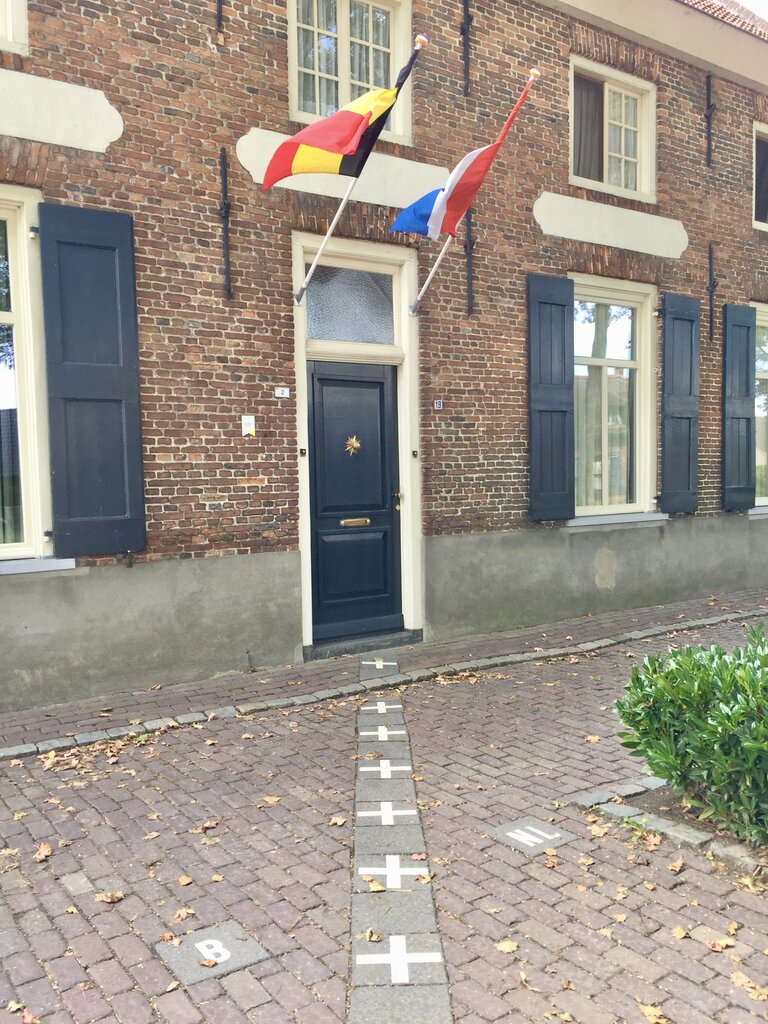
You’d be forgiven for never having heard of the small Dutch town of Baarle-Nassau. But Baarle-Nassau is becoming a more popular place for tourists to visit for a peculiar reason: it contains quite possibly the strangest international border in the world.
While the town is a few kilometers from the main Belgian border, it contains almost 30 Belgian enclaves within the city. The Belgian enclaves are known as Baarle-Hertog, even though it’s the same city. To make it even more confusing, there are even Dutch enclaves inside the Belgian enclaves. Still following?
So basically, the border between the two countries is all over the town, splitting streets, restaurants, and even houses between countries. Thankfully both Belgium and the Netherlands are in the European Union and Schengen Zone members, so the border is really more symbolic than anything. But how many other places in the world can you walk down a straight street and cross an international border dozens of times?
10: Utrecht
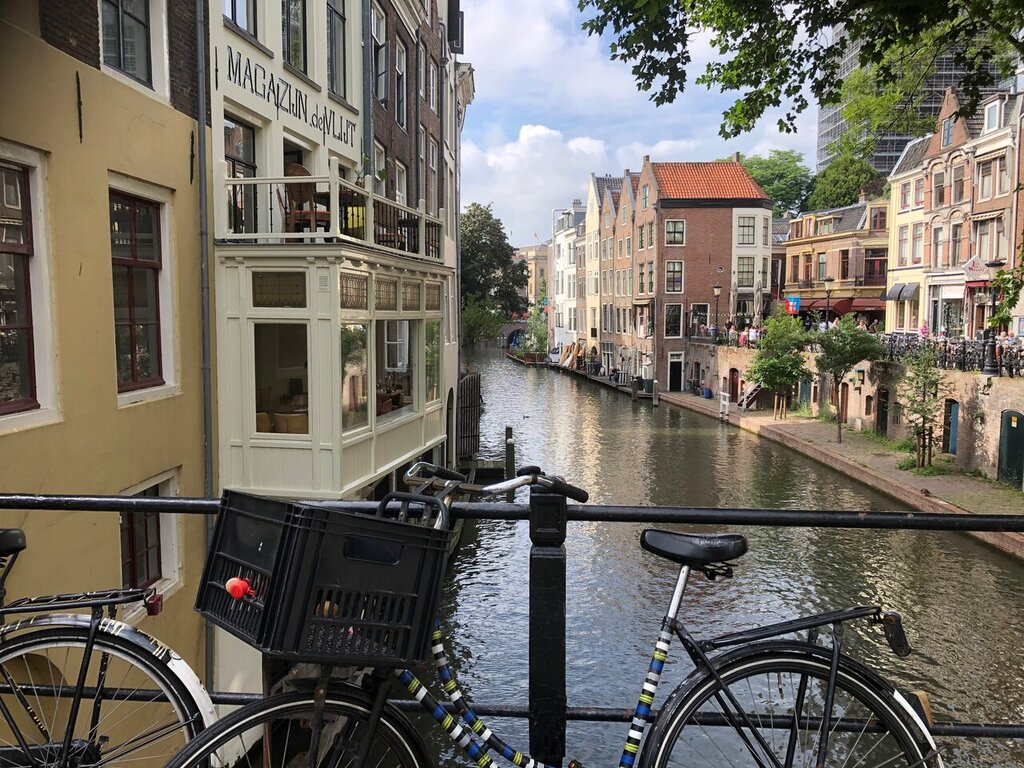
Utrecht is the fourth largest city in the Netherlands, and it’s barely a half-hour train ride from Amsterdam Central Station. It’s so close that many people who work in Amsterdam live in Utrecht since housing is considerably cheaper. Utrecht is sort of like a small version of Amsterdam without the hordes of international tourists. There are beautiful canals, world-class museums, and adorable cafes all over the city center.
When touring Utrech, be sure to climb the 485 steps up the Dom Tower to get a bird’s eye view of the city. On a nice day, you might even see Castle de Haar, just outside of town. Castle de Haar is perhaps the most spectacular castle in the Netherlands. While it’s not exactly well-connected on public transport, it might be worth hopping on the bus to the castle on your day in Utrecht to admire it up close.
Back in the city, Utrecht’s main canal is unique in the Netherlands as it’s actually a full story lower than the city streets, and there is a promenade along the canal where you walk below the streets and bridges above. The promenade is lined with cafes and restaurants. Think of it like the San Antonio Riverwalk without the tacky chain restaurants. Be sure to sit and enjoy a fine meal along the canal before you leave Utrecht.
Honorary Mention
There are, of course, tons of other awesome places to visit in the Netherlands that didn’t make the list. Don’t count out more charming Dutch towns like Gouda, Hoorn, Elburg, and Delft to name a few. Rotterdam can also be a fun city to spend a night in if you have time, and the coast of Zeeland can make for a relaxing holiday.
So there we have it, folks, the top 10 places to visit on your trip to the Netherlands. Hope you enjoy!


