


The city of Cordoba is in the Spanish region of Andalusia. It is a magical and ancient city, nestling on the banks of the great Guadalquivir River. In Roman times, this river was navigable all the way from the port of Cadiz. Situated inland, it does not have the beaches of the Costa del Sol, but it has more than enough attractions to make up for it.
I was keen to explore this lesser-known area of Spain’s most Southerly province. I was definitely not disappointed. Cordoba has a fascinating history and stunning architecture. It also has the best gourmet food you will taste in Spain and dozens of beautiful flower-filled courtyards—a treat for every sense.
1. Visit Córdoba’s Mosque-Cathedral
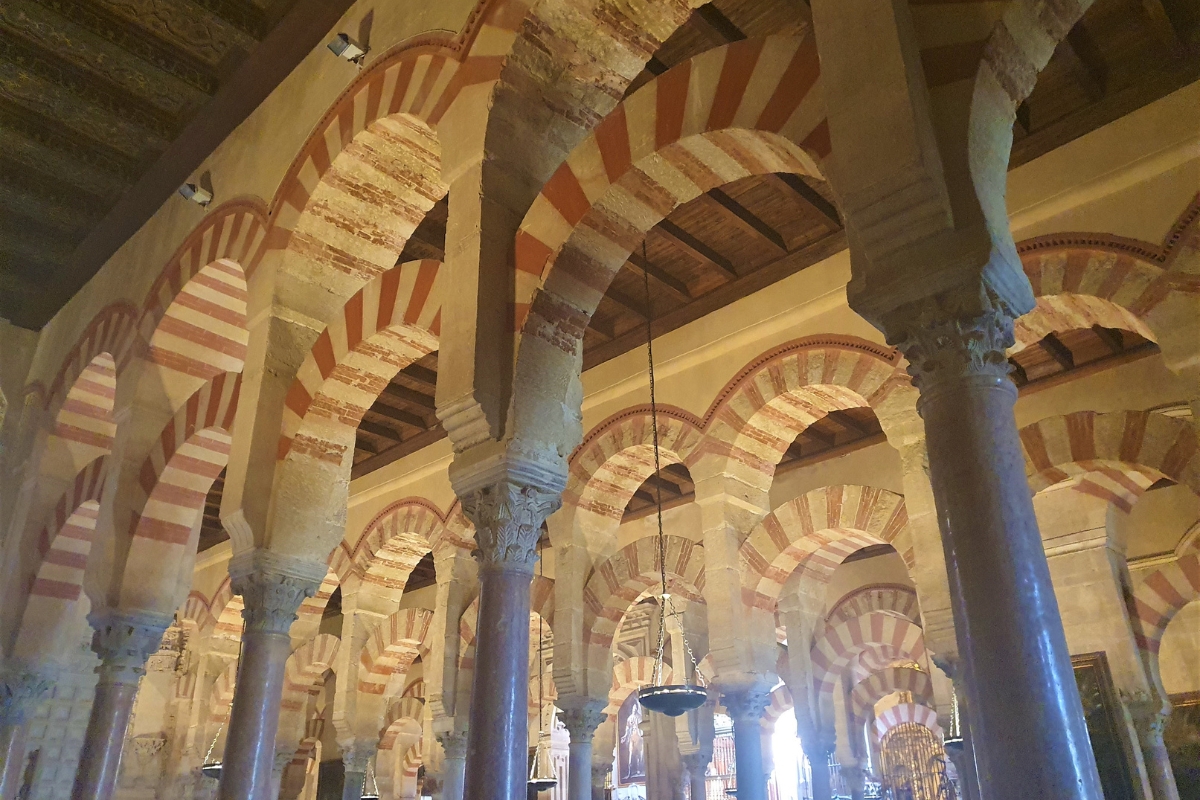
This is a very famous cathedral, but I was unprepared for the majesty of it. Cordoba’s breathtaking Mosque-Cathedral is quite unique. The first thing that strikes you about the building is its monumental size. It is absolutely enormous! When it was first built, it was a Muslim structure, and later it morphed into a Christian one. The two distinct religious styles still exist today side by side within the same space. This was once the most important mosque in the Islamic kingdom and home to the powerful Caliphate of Cordoba.
The design of its high-striped red and white double arches in the vast main hall is stunning, and this is a real photographer’s delight. Repeat patterns based on natural forms are a feature of Islamic art, and you will see such patterns at the Alhambra Palace in Granada too.
Ceiling height and size were a way to express how rich and powerful you were. The Moors plundered the sites of previous settlements for the jasper, onyx, marble, and granite needed to build these fabulous structures.
In 1236, Cordoba was recaptured by the Christian King Ferdinand III. While Ferdinand did not destroy the building, he gave it a sprinkling of holy water and declared it Christian!
This was actually quite a sensible thing to do as it would have cost a huge amount to rebuild anything as comparably impressive. We can witness the transition of cultures and religions as told through this amazing architectural piece of history.
2. See the Cordoba and the Andalusian Horse
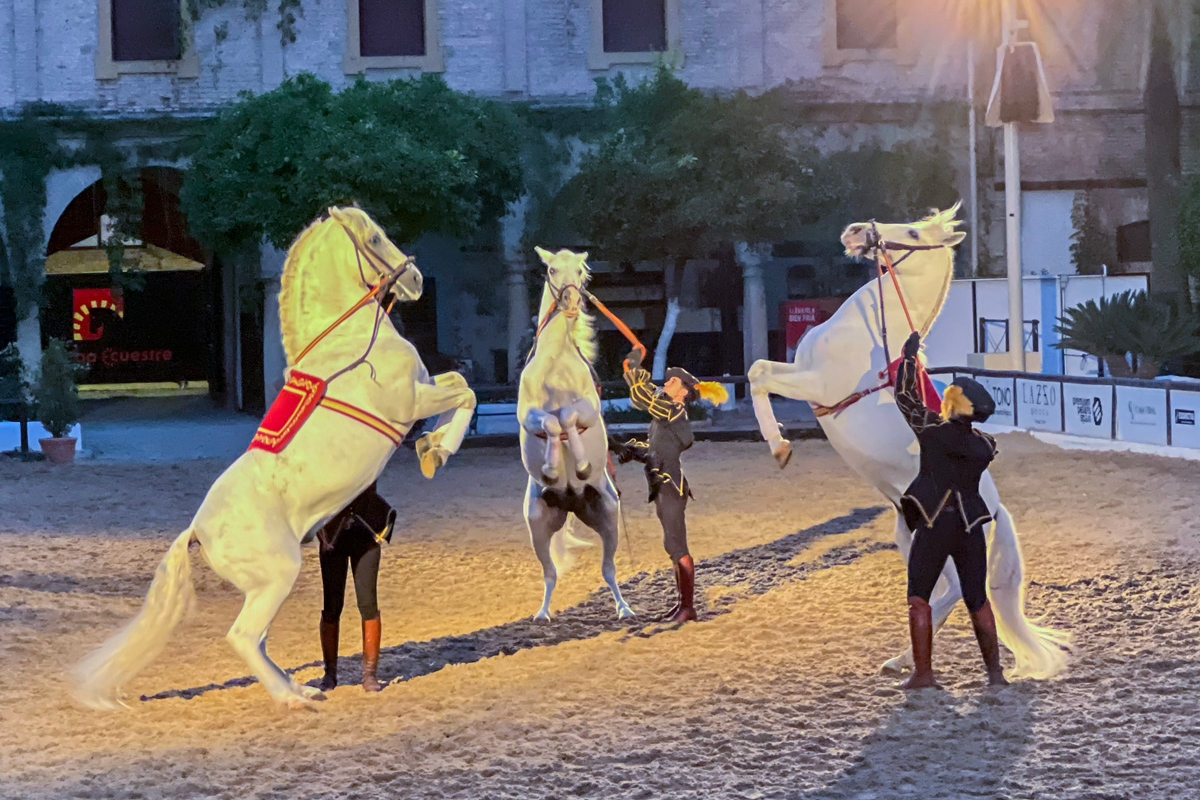
The Andalusian horse is a special animal, and Cordoba is its birthplace This purebred Spanish horse was created in the 15th Century by mixing the strong original Iberian breed, with the elegance of the Arab horse.
Andalusian horses are calm, intelligent, and extremely athletic. Historically, they were used as war horses and are known for their ability to carry out complicated dressage moves. These moves have been developed from the horse’s natural behaviors.
Cordoba hosts an amazing show nightly, which gives visitors a chance to see these beautiful horses perform. It happens in an arena in the center of the city behind the city walls. It is a particular pleasure to see what these beautiful animals can do in this amazing equestrian show in Cordoba on a hot summer evening.
The passion and spirit of Andalusian Horse Equestrian Show perform nightly in an arena inside the Fort. You can also see the original Royal Stables next to the arena before the show starts.
These horses are the pinnacle of their breed. They are highly trained, and their riders display great skill. Even if you aren’t a horse person, I recommend you see this show. You will definitely be impressed by what these elegant animals can do.
3. Try Ajo Blanco
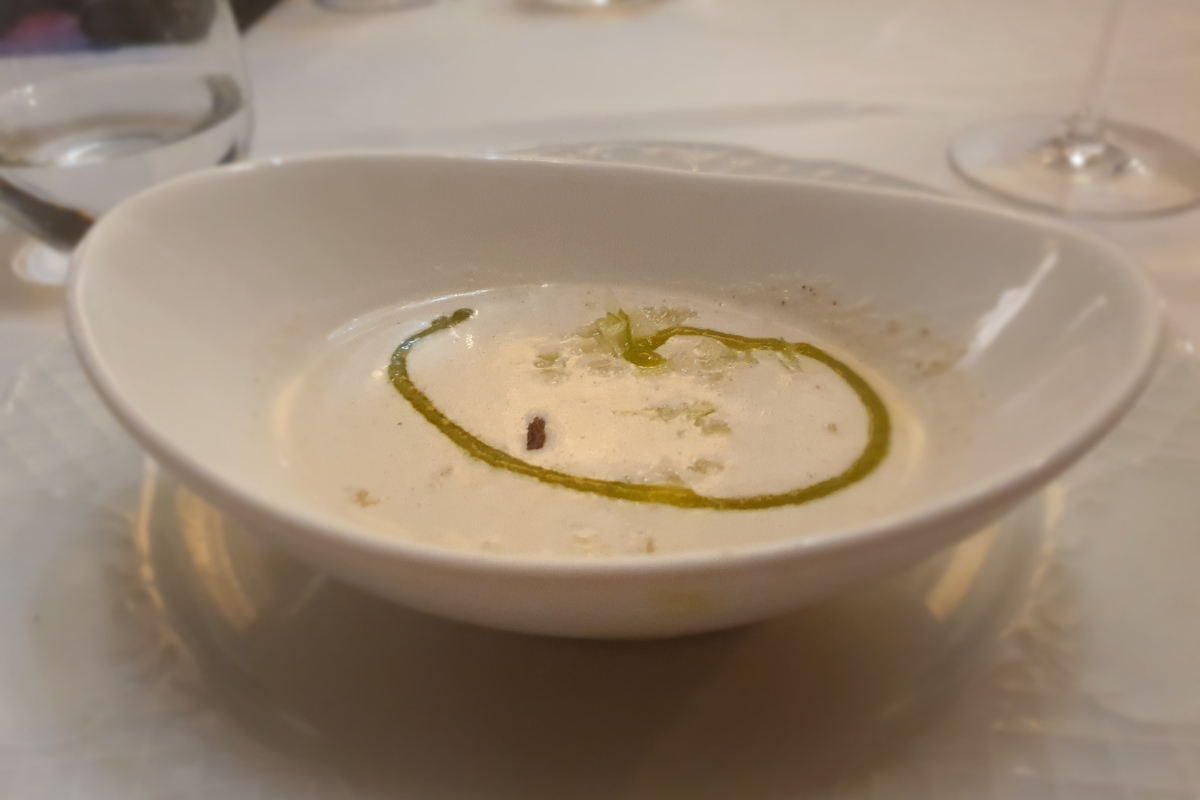
Something you must try eating when visiting Cordoba is Ajo Blanco. People are often confused when they are served Ajo Blanco in Southern Spain, as it could be mistaken for some sort of white sauce.
It is, in fact, a type of white gazpacho, a refreshing cold tomato soup often served in Spain. Ajo Blanco means ‘white garlic’ in English. This dish is made of bread, garlic, olive oil, crushed almonds, salt, and sometimes vinegar. The addition of bread thickens the soup, and it is usually served with grapes or slices of Melon. It’s much tastier than it sounds!
4. Try a Gourmet Restaurant in an Old Hermitage!
Located in the heart of Cordoba, down a narrow cobbled street, you will find the Ermita de La Candelaria restaurant, which occupies the building of an old hermitage. The entrance looks ordinary and old, but the beautiful vaulted rooms are pure elegance once inside. Eating at this restaurant is definitely a luxury experience. You can dine in a choice of airy dining rooms and courtyards and be served a superb gourmet menu.
Classic Cordoban dishes appear at the table, served by attentive staff. They offer an exceptional Spanish wine selection too. I ate beautifully braised oxtail with a creamy Russian salad. Try the orange ice cream with olive oil too, which is a delicious pallet refresher. This is fine Spanish cuisine at its best.
5. Visit the Mercado Victoria
Housed in a nineteenth-century forging building, surrounded by lush gardens, you will find the Mercado Victoria. This is the first gastronomic market in Andalusia. This gourmet street food market is buzzing with people eating and enjoying themselves late into the night. Things get busy after dark due to the cooler temperature.
There are dozens of stalls selling local specialties and other cuisines from all over the world. You purchase tickets for the market at the door and then spend them as you like on the different selections. Alcoholic and soft drinks are available too, and there are lots of break-out terraces where you can sit down and eat comfortably. Or why not try the live music venue next door and join in the dancing?
6. Check Out the Patios of Cordoba
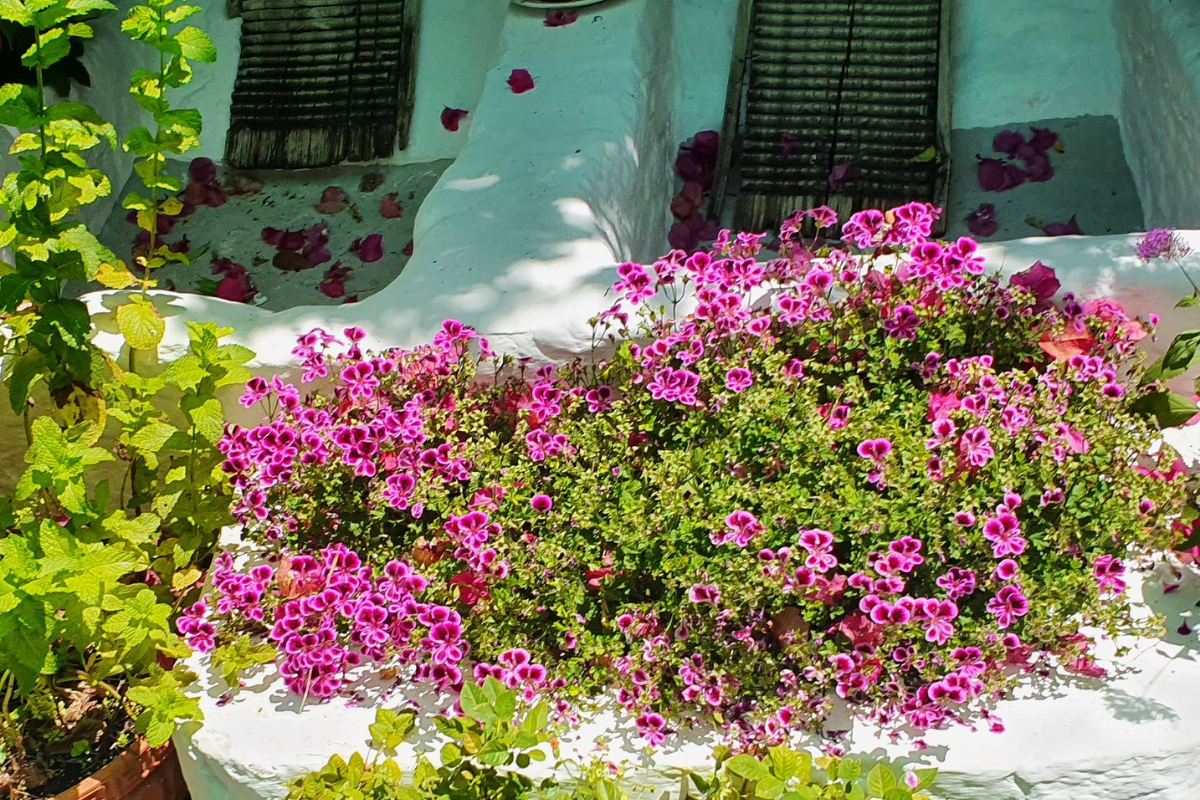
Cordoba is famous for its patios or courtyards filled with flowers. Plants and fountains bring vibrant splashes of color and moisture to this hot, dry climate.
The Cordobans celebrate these horticultural efforts with an annual Courtyard Festival and Contest. During this time, residents open the flower-filled indoor/outdoor spaces they have created to the public. The patios are like little cool oases in a desert climate, as it does get very, very hot here. It transports you away from the hot, busy city.
Watering of plants is only in the traditional manner, with no automatic watering systems allowed. One lady waters some of her plants in little pots way up on the wall. She uses a tin can tied to a long bamboo stick. It takes some time to complete this task!
The patio festival is a tradition that began in 1918. The patios of Cordoba are now a World Heritage attraction as designated by UNESCO.
The annual Balconies and Grilles contest happens in May. This is effectively the window box class of the courtyard festival. I visited in June, and so got to see most of the floral abundance still at its best.
I love this type of garden as they are like the outside rooms of your house. Who wouldn’t enjoy sitting outside chatting with friends or family on a warm summer evening surrounded by plants, fountains, and flowers?
7. Explore the Palace of Viana
The palace of Viana is another grand site and very much worth adding to your itinerary. A stately home from the 15th to the 19th centuries, it is linked to the marquisate of Cordoba. Owned by the Marquis of Viana, it passed down to the third Marchioness, who had no heirs. The Palace is now the property of the Fundacion CajaSur.
A huge rabbit warren of rooms containing countless treasures, the palace has original works by Julio Romero de Torres too. Besides the paintings, equally important is the abundance of ornate furniture and other precious artifacts to be found here.
There are some huge and impressive paintings of battles from the thirty Years’ War. They depict horses, troops, and even cannons going off on the battlefield. Fine tapestries show animals and plants representing the discovery of the Americas.
The palace reveals collections of hunting arms, ornate glass, and porcelain. Huge regal crystal chandeliers and beautifully detailed ceilings carved in wood amaze the eye. This is an extraordinary collection and documents how the nobility lived over different centuries.
8. Check Out the Gallery of Azulejo tiles
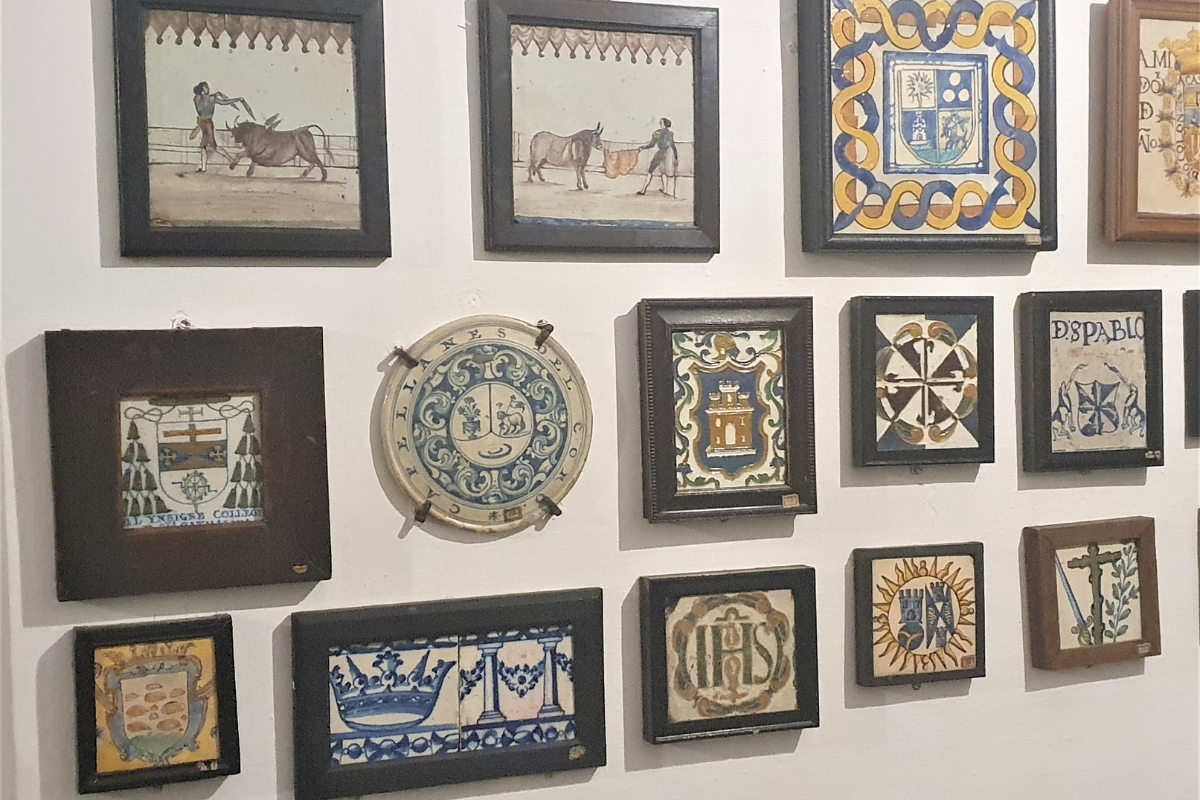
One thing which caught my eye at the Palace was the amazing Gallery of the Azulejo Tiles. Azulejo tiles are a form of Spanish (and Portuguese) painted tin-glazed ceramic tile work. You will see them almost everywhere even in railway and subway stations. They are an ornamental art form, but they also help to control the temperature in homes.
Azuljos constitute a major part of Spanish architecture to this day and are seen across Spain and Portugal as well as their former territories: many chronicle cultural practices and major events in history.
The collection in the Palace of Viana is one of the few collections of this type in the world. The designs vary, but many are generally heraldic in nature. In fact, some of these stunning ceramic examples are more than eight centuries old.
9. Get Lost in the Gardens of the Palace
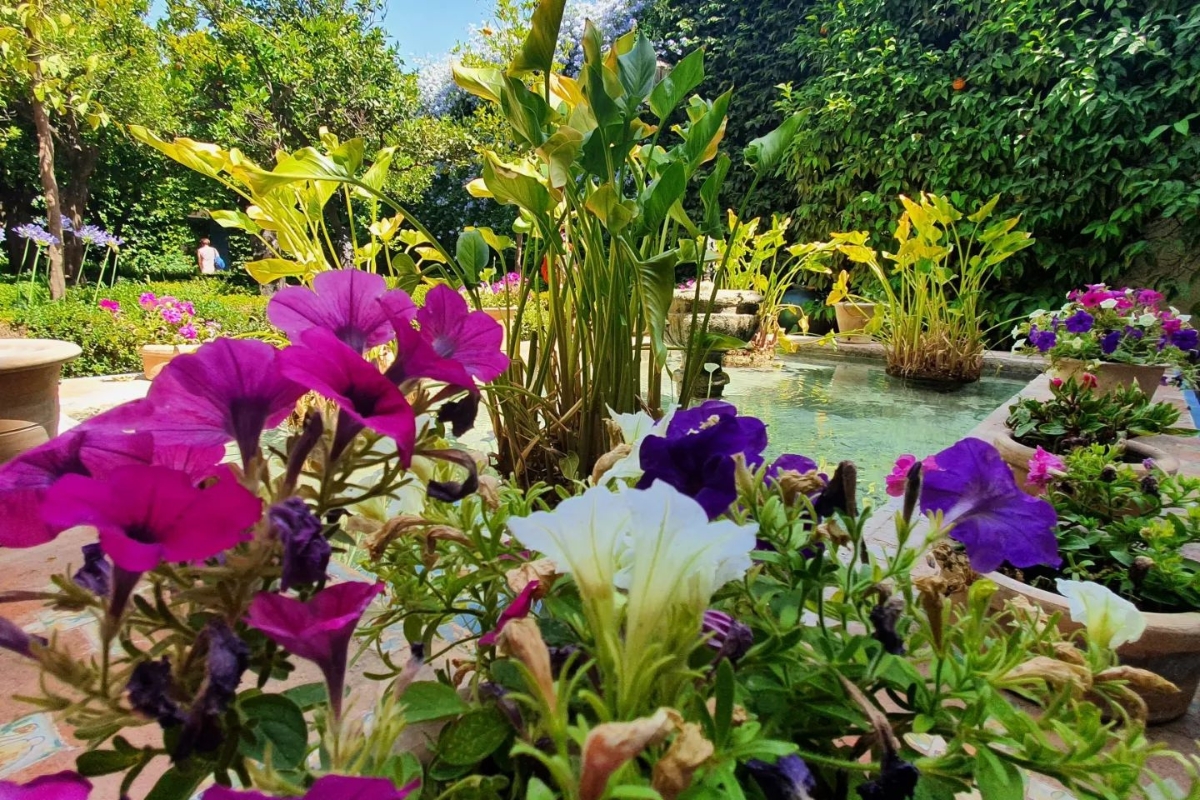
Surrounding the Palace are eleven beautiful courtyards. Each has its own type of plants and personality.
These protected courtyards served as a focal point of people’s social and family lives. The courtyards at the palace are some of the best examples. They are all unique and have evocative names like The Madame, Patio of the Gardeners, the Iron Bars, the Well, and the Orange Trees. It also has a garden covering almost 1,200 square meters in the Baroque style which displays an Arabic influence.
10. Eat at Puerta Sevilla
If you want to eat somewhere in the city center and maybe combine a meal with a visit to the horse show experience, then Puerta Sevilla is a great option.
This traditional and very charming Taverna is a stone’s throw from the Cordoba Fort and close to the Andalusian Horse Show experience. A door on a white-washed corner of the square opens. It leads through to a superb traditional restaurant set in and around a flower-filled atrium. The space hangs with greenery and Julio Romero de Torres prints. Delicious food is on offer here – there is a great menu – along with a lively atmosphere. Alberto Rosales Ortega and his wife Antonia are very welcoming hosts.
One of the things I tried here were fine artichokes braised in a wine reduction. We also had some delicious Ajo Blanco. The restaurant also serves natural Andalusian wines, as well as many other varieties from all over Spain.
11. Explore the Julio De Torres Museum
This museum celebrates the career of one of the great painters of the late nineteenth and early twentieth centuries, Julio Romero de Torres. He was born and lived all of his life right here in Cordoba, and the museum is housed in his lifelong home. He captured the spirit of the people of this Southern city on numerous canvases.
Although in general a portrait artist, Torres is notably also inspired by the culture of flamenco. In his art, he celebrates the beauty of Spanish women as they capture the true spirit of the beautiful city he knew so well.
Bonus! Check Out the Prettiest View in Cordoba

This is, of course, a matter of opinion, but it is certainly picture perfect viewpoint. From one of the winding little streets in Cordoba, you can look back through the white-washed houses with their blue pots filled with colorful red geraniums and see the spire of the stunning cathedral through the gap. To be fair, there are many such gorgeous views in Cordoba, in my opinion!
The guarantee the city will make a real impression on you. Cordoba captures the colorful, complex character of Southern Spain within this stunning region of Andalusia.
Overall, Cordoba is all about beautiful horses, tumbling vibrant flowers, strong sunshine, and fascinating history. The culture is colorful, and the food is most certainly fantastic too! This is a special Spanish city that will have a place in my heart now for good.
Where to Next? Check out Madinat Al Zahra if you’re interested in Moorish culture! You can also check out Zuheros, it’s a perfect day trip from Cordoba!
Where to Stay
There are lots of places to stay in Cordoba, but if you visit anywhere near the summer season, you will definitely need air conditioning!
The Eurostar Palace is a modern 5-star hotel in a great location within walking distance of most things you will want to see here and just down from Mercado Victoria.
This is a great base from which to explore this wonderful city. It has all the services you would expect and a welcome rooftop pool to cool off in after a long day of site seeing.
About the Author
Elaine Wilson has been a travel writer for over ten years and is based in Northeast UK. She has won numerous awards for her eclectic blog, Eccentric England (which isn’t just about England). She is an eternally curious traveler with a penchant for riding horses, beautiful ceramics, and other people’s stories.


