


France beckons travelers from around the globe with its iconic landmarks. From the Eiffel Tower to the Lavender Fields of Provence, they are as diverse as they are majestic.
Each monument, steeped in history, and cultural significance offers a glimpse into the nation’s rich past. Then, there are the natural landmarks. Their jaw-dropping beauty is second to none. And they will no doubt leave you in awe.
So, whether you’re looking to add a stop to your itinerary or learn more about these fascinating landmarks, this post has you covered.
Here are the most famous landmarks in France.
1. Eiffel Tower

The Eiffel Tower, an undisputed symbol of Paris, attracts millions of visitors annually.
Built by Gustave Eiffel for the 1889 World’s Fair, it was initially met with controversy but has since become an engineering marvel. It stands at an impressive height of 330 meters and can be seen from anywhere in Paris.
Then, there’s the tower’s observation decks. From here you’ll be able to see other landmarks like the Louvre Museum and the Notre-Dame de Paris.
There are also several spots around Paris where you can view the Iron Lady herself. Some of the most popular places include Champ-de-Mars, Pont Alexandre III, Trocadéro, and the Bir-Hakeim Bridge.
2. Strasbourg Cathedral

Known officially as Cathédrale Notre-Dame de Strasbourg, the Strasbourg Cathedral is one of the most stunning churches in France.
Constructed over three centuries, its detailed exterior is a masterpiece of Gothic architecture. And until the end of the 19th century, it stood as the tallest building in the world at 142 meters.
Today, you can tour the church and even climb to its viewing platform. It’s a whopping 330 steps to the top, but the views are incredible.
And if you’re visiting Strasbourg in December, the square in front of the church hosts the oldest Christmas market in France.
3. Mont Saint-Michel
Mont Saint-Michel, a UNESCO World Heritage site, is a magnificent island commune, crowned by an ancient abbey.
Its origins date back to the 8th century when, according to legend, the Archangel Michel told Bishop Aubert of Avranches to build a small church on this site. Over centuries, this modest sanctuary grew into a spectacular Gothic-style abbey. And, today, it attracts tourists and pilgrims from around the world.
The island is full of narrow streets filled with quaint shops, charming houses, and ancient churches. Then, there’s the abbey itself. From its spires to its ramparts, it’s an impressive structure, to say the least.
4. Louvre Museum
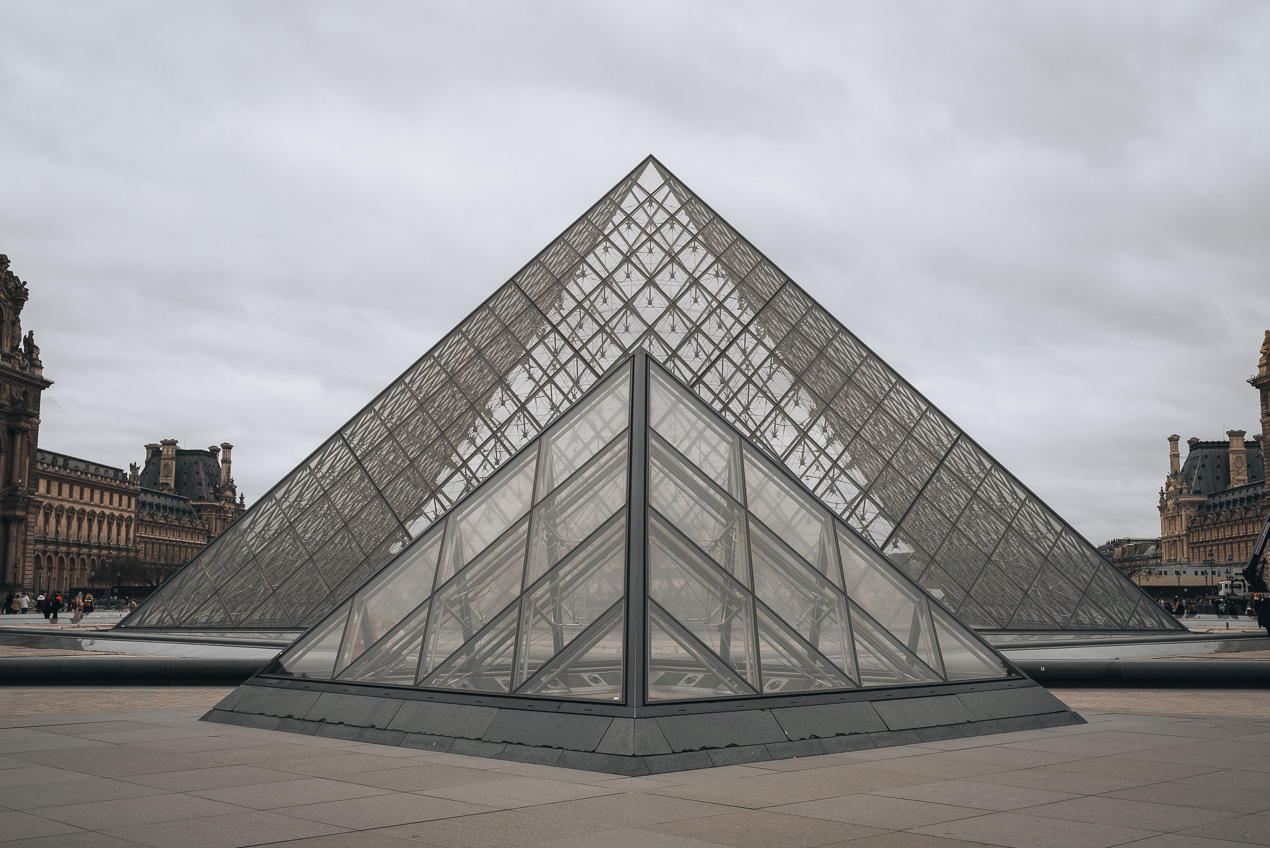
The Louvre Museum is more than a French landmark. It’s a global icon of art and culture.
Located in the heart of Paris, this magnificent museum was once a royal palace. It was transformed into a public museum at the end of the 18th century following the French Revolution.
Today, it houses a vast collection of over 380,000 works of art, with about 35,000 on display, including the legendary Mona Lisa by Leonardo de Vinci.
Then, there’s the Louvre’s iconic glass pyramid entrance, designed by I.M. Pei. It’s yet another impressive structure that only cements the Louvre’s status as a timeless landmark.
5. Palace of Versailles
Located outside of Paris, the Palace of Versailles is a symbol of the French monarchy. It’s also a testament to France’s architectural brilliance.
It first served as a hunting lodge for Louis XIII in 1624, before it was later transformed into an extravagant palace by his son Louis XIV. It’s also where the Treaty of Versailles was signed, marking the end of World War 1.
Today, it showcases grand chambers, landscaped gardens, and beautiful works of art.
Its most impressive room is undoubtedly the Hall of Mirrors. Decorated with mirrors and chandeliers, you won’t find anything more elegant.
Then, in summer, the palace puts on the most spectacular fireworks display. Tickets sell out quickly, so be sure to book in advance.
6. Basilique Notre-Dame de Fourvière
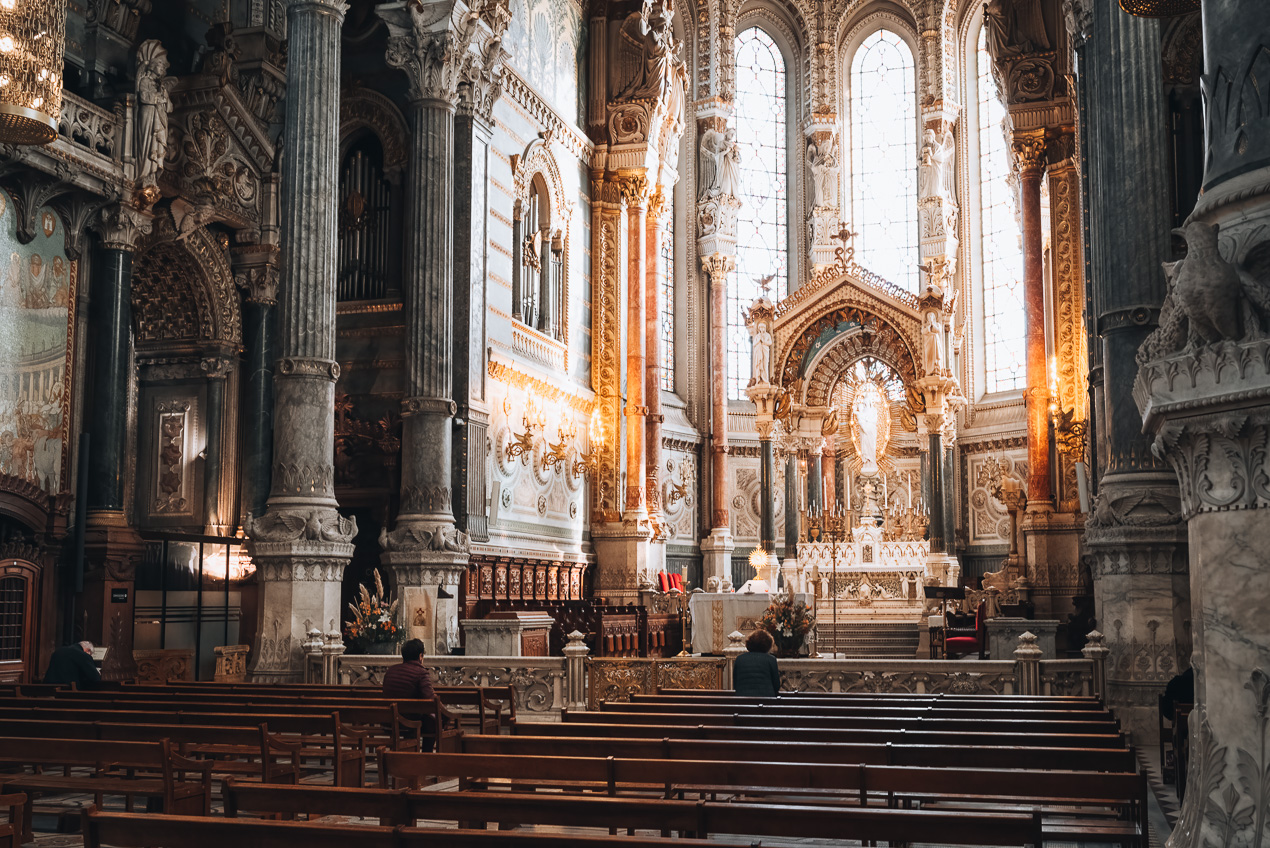
The Basilique Notre-Dame de Fourvière is easily one of the top attractions to visit in Lyon.
Built between 1872 and 1884, it represents a fine example of Byzantine and Romanesque architecture. It has four main towers and a central bell tower topped with a gilded statue of the Virgin Mary. And its interior is even more impressive. Here you’ll find intricate mosaics, brilliant stained-glass windows, and ornate statues. All of which is a testament to the craftsmanship of the era.
Then, of course, there are the panoramic views from its terrace. From here you’ll have an unencumbered outlook over Lyon.
7. Château de Chambord
The Château de Chambord is the largest and most impressive castle in the Loire Valley.
It was commissioned by King Francis I in 1519 as a hunting lodge and it took 28 years to complete. The castle flaunts an elaborate design with its massive façade. But its most iconic feature is the double helix staircase, rumored to be designed by Leonardo da Vinci.
Today, it’s a popular attraction, receiving hundreds of thousands of tourists per year. You can tour the castle and the grounds, both of which offer an unforgettable experience.
8. Notre-Dame de Paris

A symbol of Gothic grandeur, the Notre-Dame de Paris is a must-visit landmark. This majestic cathedral, standing at the heart of Île de la Cité, has a history that dates to the 12th century.
Its awe-inspiring scale and intricate detail are absolutely breathtaking. Then, of course, there are the flying buttresses and rose windows, its most notable features.
It’s so impressive that it was even used as the setting for Victor Hugo’s classic novel, “The Hunchback of Notre-Dame.”
In 2019, the spire was destroyed by a fire. And while you can’t tour the inside of the church, you can still visit the exterior.
Restoration is currently underway and is scheduled to reopen in December 2024.
9. Palais des Papes
The Palais des Papes, or the Palace of the Popes, is an icon of Avignon and southern France.
Built in the 14th century, the palace was once a formidable fortress and luxurious residence combined. It reflected the dual role of the popes as spiritual leaders and temporal rulers at the time.
Its sheer size, which includes chapels, libraries, and the Pope’s private chambers, makes it one of the largest Gothic palaces in Europe.
In fact, its architecture and historical significance are so important that it was classified as a UNESCO World Heritage site in 1995.
If you’re a history buff or just want to learn more about the role of the Papacy in France, the Palais des Papes is a must-visit.
10. Pont du Gard
This three-tiered aqueduct bridge was designed to carry water to the Roman colony of Nemausus, which is, today, known as the city of Nîmes. It was built in the 1st century AD and stands 49 meters high. And in 1985, it was labeled as a UNESCO World Heritage site.
Today, Pont du Gard is one of France’s most celebrated landmarks, attracting millions of tourists per year. And it’s not just the aqueduct that draws all these people. The picturesque surroundings are second to none.
11. Arc de Triomphe
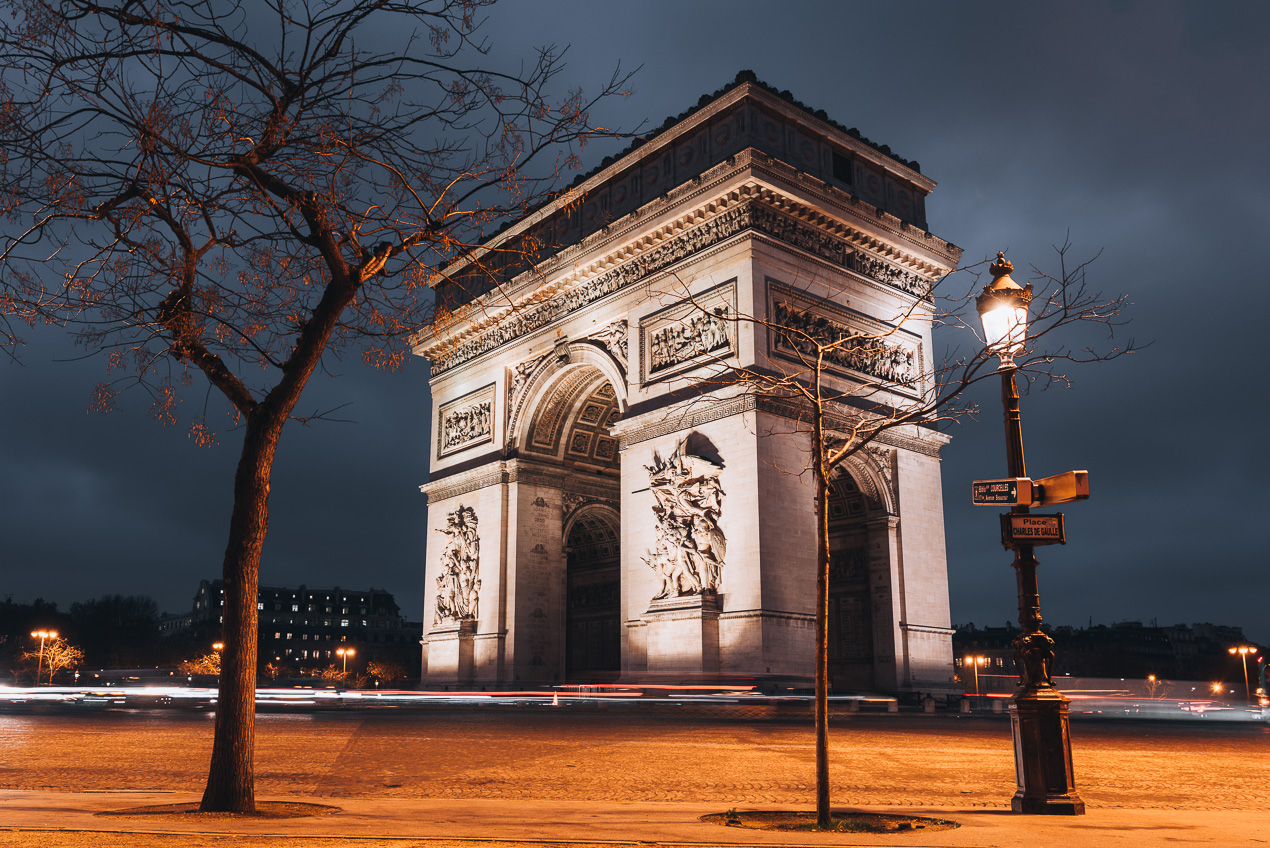
The Arc de Triomphe sits at the western end of Paris’ most famous avenue, the Champs-Élysées. It was commissioned by Napoleon Bonaparte after his victory at Austerlitz. And it commemorates all those who gave their lives for France during the French Revolution and Napoleonic Wars.
Today, it’s an undeniable must-visit landmark. You can even climb to its rooftop for an epic view of Paris.
12. Cathédrale Notre-Dame de Chartres
The Cathédrale Notre-Dame de Chartres is one of the most famous cathedrals in France. Its history traces back to the 12th century and is renowned for its stunning stained-glass windows. And believe it or not but they have retained their vibrant colors over the centuries.
Adding to its impressive list of features is the labyrinth embedded in the cathedral floor. It once served as a reminder of the path to salvation.
Then, of course, there are the detailed carvings and sculptures. Those, combined with the Romanesque and Gothic architectural styles, make this landmark unmissable.
13. Sainte-Chapelle
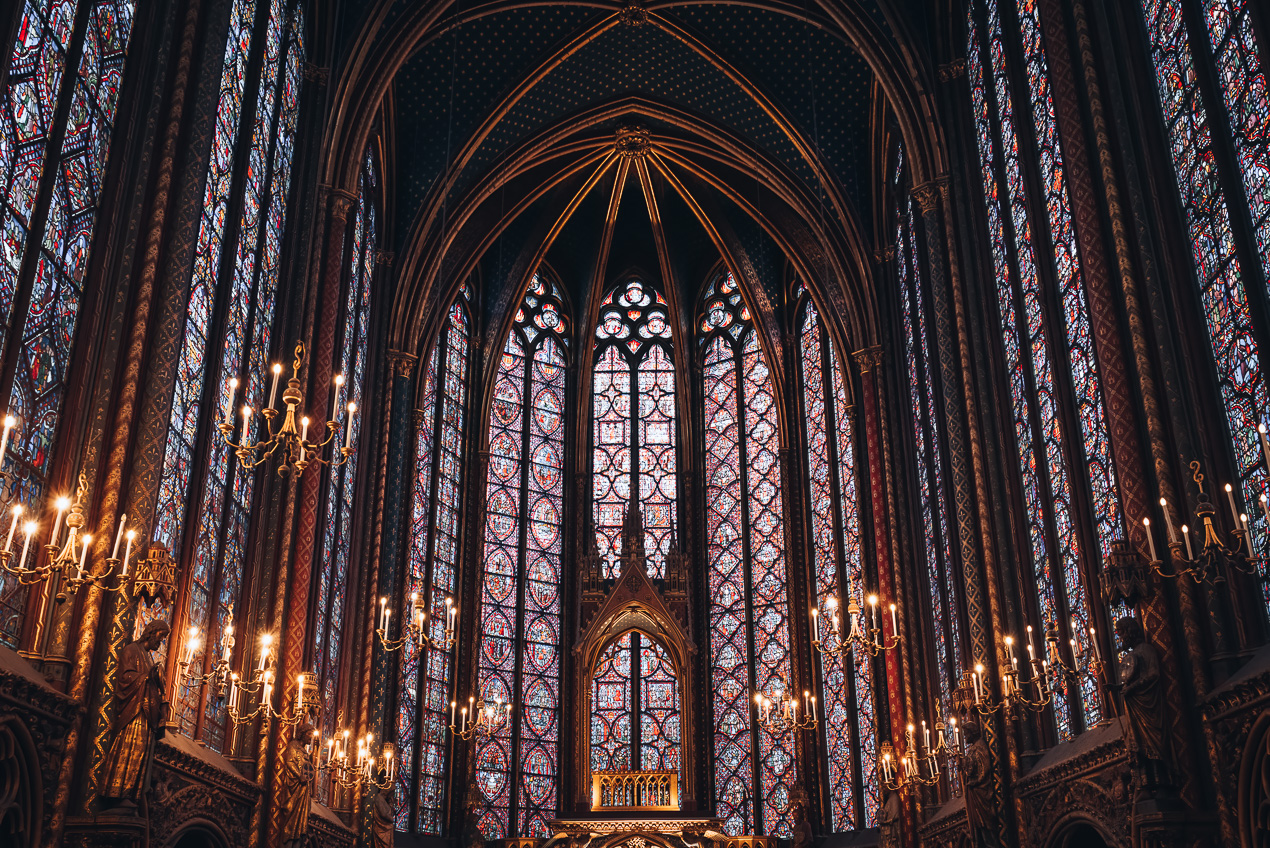
Located in the heart of Paris, Sainte-Chapelle is the epitome of Gothic architecture.
It was commissioned by King Louis IX in the 13th century. And, for years, it held some of the most important relics related to the Christian faith.
It’s most renowned for its stained-glass windows that depict detailed scenes from the Bible.
But what sets Sainte-Chapelle apart from other landmarks is its combination of architectural brilliance and spiritual history. If you’re visiting Paris, it should definitely be at the top of your list.
14. Mont Blanc
Mont Blanc is one of the most known natural landmarks on this list.
As the highest peak in the French Alps and Western Europe, standing at 4,808 meters, it is a paradise for the adventurous. Mountaineers are drawn to its challenging slopes, while skiers revel in the thrill of its world-class ski resorts.
Beyond the adrenaline rush, Mont Blanc is also known for its gorgeous landscapes. From pristine glaciers to lush valleys, it’s nature at its best. And its panoramic vistas are absolutely spectacular.
Whether you’re seeking adventure or serenity, Mont Blanc promises an unforgettable experience.
15. Notre-Dame de la Garde Basilica
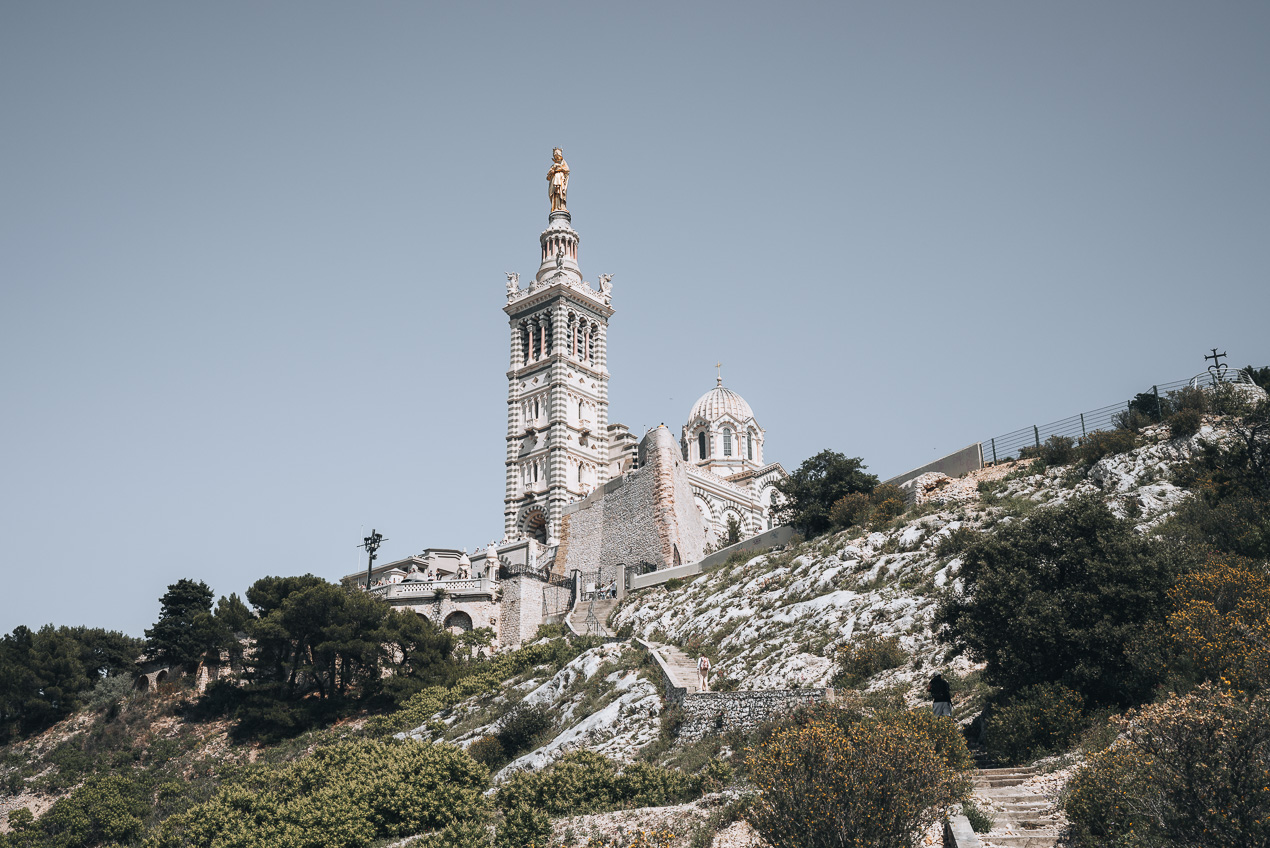
Perched on the highest hill in Marseille, Notre-Dame de la Garde Basilica is a symbol of the city.
Built in the 19th century, this Romano-Byzantine icon is renowned for two reasons. The first is its lavish interior and the second is its striking gold-leaf statue of the Virgin Mary and Jesus.
Today, the church still plays a vital role in the culture and holds mass regularly. And you can visit the interior outside these times.
Then, there are the views from its terrace. They are, undeniably, the best in town. From here, you’ll have a breathtaking panorama of Marseille, the Old Port, and the Mediterranean Sea.
16. Lavender Fields of Provence
The Lavender Fields of Provence are one of France’s most stunning natural landmarks. This floral wonder is not just a feast for the senses, but also a gateway to Provence’s traditional way of life and history.
Stretching across the plateau of Valensole, these vibrant fields of deep purple are an iconic symbol of Provence. Since the Middle Ages, lavender has thrived in the region’s perfect combination of dry soil, sunny skies, and hot temperatures.
These fields typically reach their peak from late June to August, attracting visitors from around the globe.
17. Omaha Beach
Omaha Beach was one of the five sections of the Allied invasion of German-occupied France during World War II. The day they invaded, the 6th of June 1944, is referred to as the D-Day landings. And it was the beginning of the end of the war.
During the Battle of Normandy, Allied forces also captured Pointe du Hoc, a strategic lookout point that was occupied by Germany.
Today, this beach serves as a reminder of the bravery and sacrifices made by the Allied forces. You can visit the Omaha Beach Memorial Museum as well as the American Cemetery of Colleville sur Mer and Pointe du Hoc.
In Conclusion
France’s landmarks, from the Louvre Museum to Omaha Beach, show just how beautiful this country’s culture and landscapes are. A visit to these attractions is more than a journey to a scenic location, it’s a fascinating dive into the heart of the country’s past and present. And each offers a unique way to experience French heritage. Now, as you plan your trip, make sure to include at least a few of these places.


