
Finding the right overnight mountain camp in Southern California shouldn’t feel like a chore. Type “Inland Empire overnight camp” and you will still see mostly RV parks and public campgrounds rather than the counselor-led programs you actually want.
This guide closes that gap. We vetted seven ACA-accredited mountain camps in the San Bernardino and San Jacinto ranges, weighing safety records, age-right activities, and session lengths that fit real calendars.
What Counts as an Overnight Mountain Camp?
Before ranking anything, we set ground rules. A program qualifies only if it meets all four checkpoints:
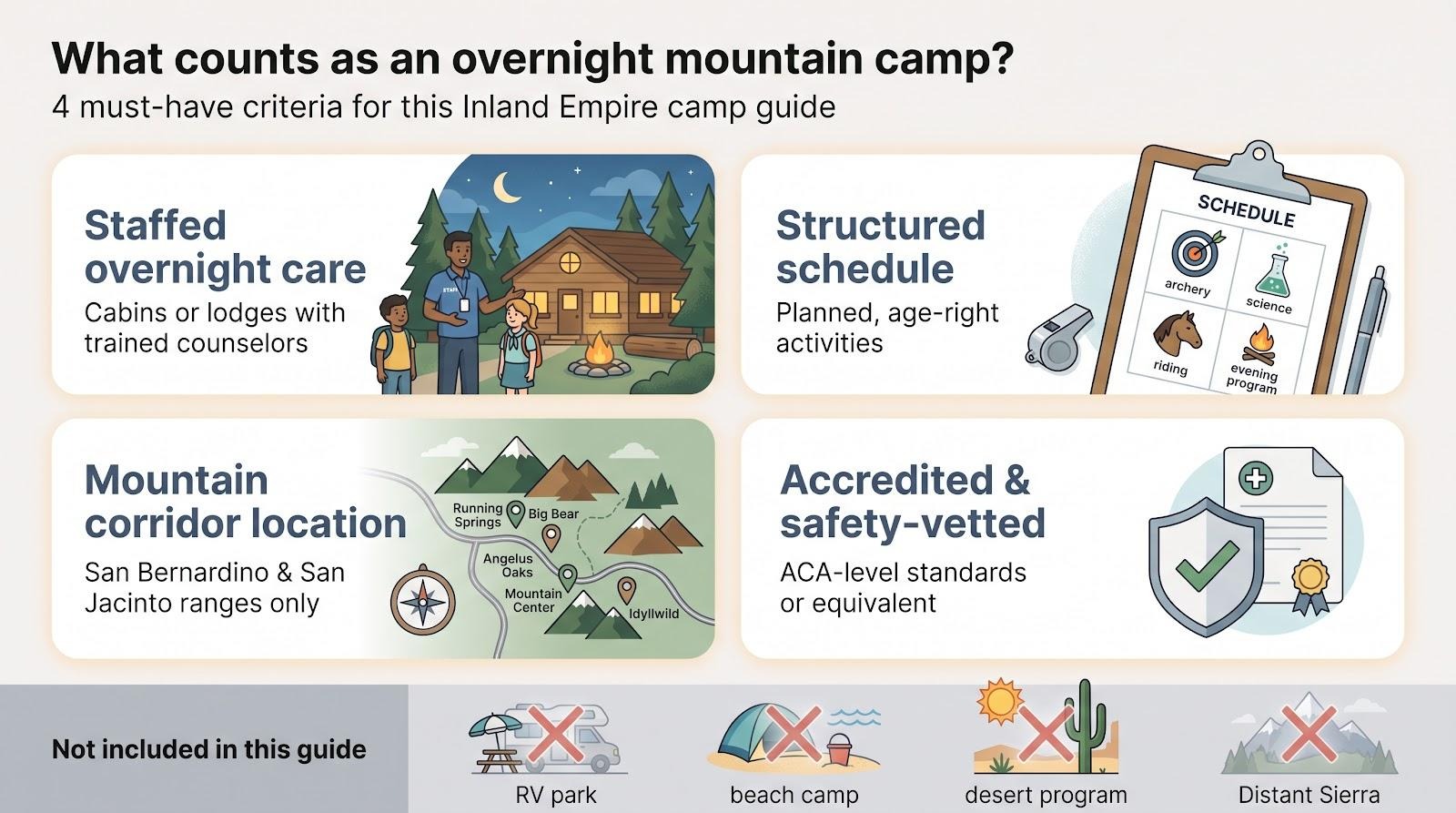
- Staffed overnight care: campers sleep in cabins or lodges with trained counselors, not parents.
- Structured schedule: days mix age-appropriate activities — archery, science, trail rides — rather than free-form stays.
- Mountain corridor location: Running Springs, Big Bear, Angelus Oaks, Mountain Center, Idyllwild, or nearby San Bernardino and San Jacinto peaks.
- Current ACA accreditation or equivalent review: no campground, retreat venue, or rental-only site makes the cut without documented youth-program standards.
We excluded public campgrounds, RV resorts, family-only retreats, beach camps, desert programs, and distant Sierra sites. These rules keep the list centred on the counselor-led sleepaway experiences parents are actually searching for.
How We Ranked the Best Inland Empire Mountain Camps
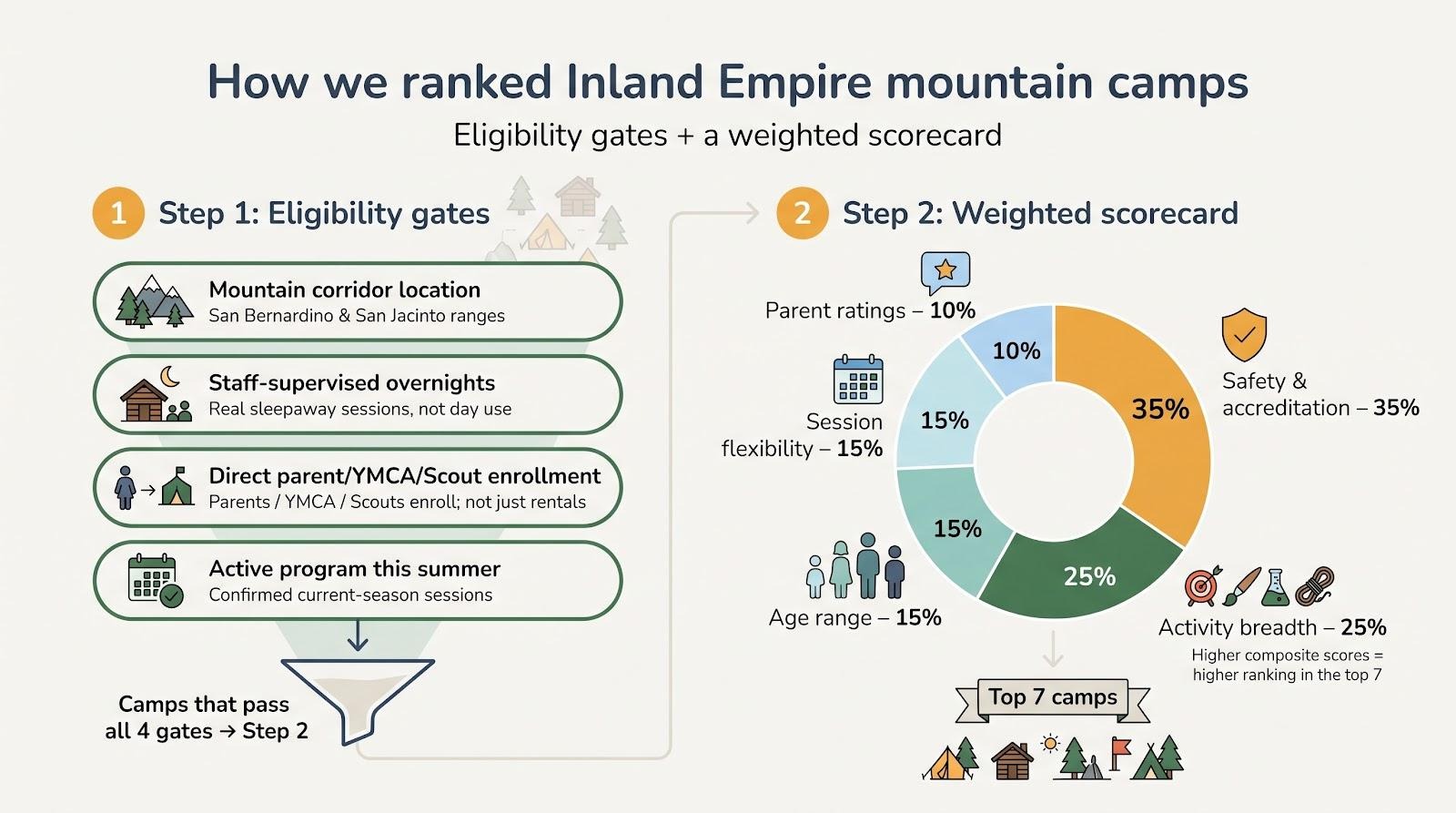
Step 1: eligibility gates. A camp entered the running only if it sat in the San Bernardino or San Jacinto corridor, offered staff-supervised overnight sessions, allowed direct parent or YMCA/Scout enrolment rather than facility rental only, and confirmed an active summer program.
Step 2: weighted scorecard. Qualified camps then earned points across five categories:
| Factor | What we measured | Weight |
| Safety and accreditation | LiveScan or equivalent background checks, first-aid and CPR certification, on-site medical staff, current ACA status | 35 percent |
| Activity breadth | Range of distinct program areas such as high ropes, science labs, creative arts | 25 percent |
| Age range | Ability to serve elementary campers through teens with tiered programming | 15 percent |
| Session flexibility | Mini weeks, standard weeks, and leadership tracks that fit different family calendars | 15 percent |
| Parent ratings | Recent public reviews referencing the summer camp experience specifically | 10 percent |
How We Verified Each Camp
Our verification ladder ran in three steps: the American Camp Association database to confirm current accreditation; the Western Association of Independent Camps directory as a second checkpoint; and each camp’s own published material for ages served, cabin ratios, medical coverage, and specialty details. All accreditation was confirmed current at the time of writing.
Some camps bury those documents behind password walls or withhold them until you have paid a deposit. Pali Adventures goes the other way — its public safety and accreditation page spells out 24-hour licensed-nurse coverage, distances to emergency services (fire and EMT three miles, hospital seven), and confirmation that it meets more than 250 ACA standards. That open-book approach let us cross-verify its protocols in minutes rather than days.
1. Pali Adventures: Best Overall for Camper Choice, Safety, and Specialty Breadth
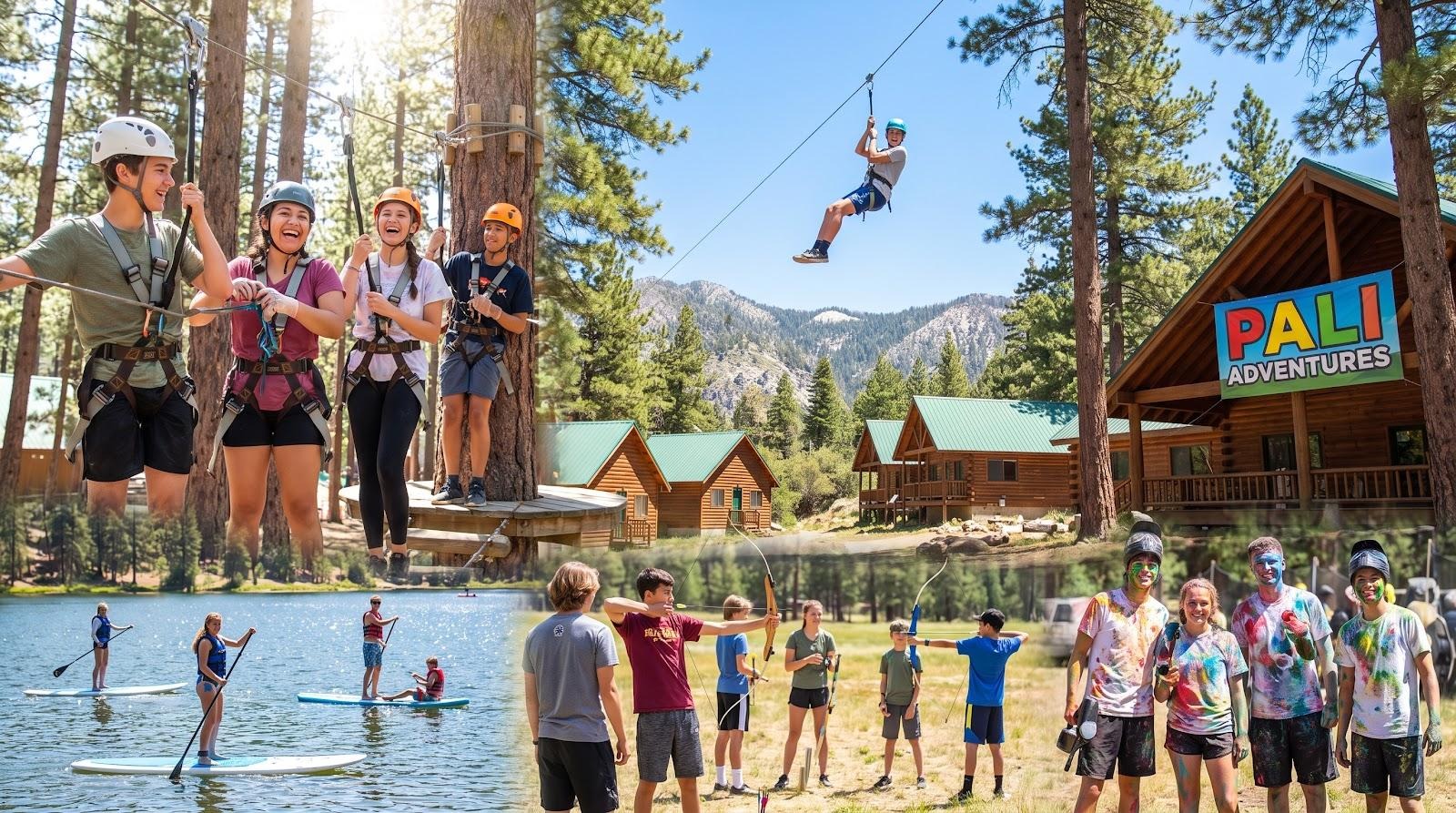
Pali Adventures sleepaway camp website
A Choice-Driven Specialty Model
Located in Running Springs, about 90 minutes east of Los Angeles, Pali keeps the focus on overnight adventure. Each morning campers spend three full hours in a self-selected specialty such as Flying Trapeze, Hollywood Stunts, Motorsports, or DJ Camp. Afternoon electives add more freedom, so no two timetables match. With 27 specialties across the Adventure, Creative, and Performance tracks, returning campers keep finding something new while first-timers land on a passion quickly. See the lineup at Pali Adventures.
Age-Tiered Support From Mini Camp to Leadership
Three brackets keep experiences age-right: Mini Camp for ages 6–8, Juniors 8–12, and Seniors 13–16. Motivated 15- and 16-year-olds can step into the Counselor-in-Training track to shadow veteran staff.
Safety, Accreditation, and Staffing
Pali is accredited by both the ACA and WAIC. Every staff member passes LiveScan and U.S. Department of Justice background screening and holds first-aid, CPR, and AED certifications. Daily operations run at better than a 3:1 camper-to-staff ratio, a registered nurse staffs the wellness centre around the clock, and leadership carry radios.
All-Inclusive Value With No Specialty Upcharges
Pali does not publish pricing, so contact the camp directly. The fee is all-inclusive: meals, lodging, activities, and specialties carry no added cost. A camper can fly the trapeze before lunch and drive an ATV afterwards without a single add-on charge.
2. AstroCamp: Best for STEM and Mountain Adventure
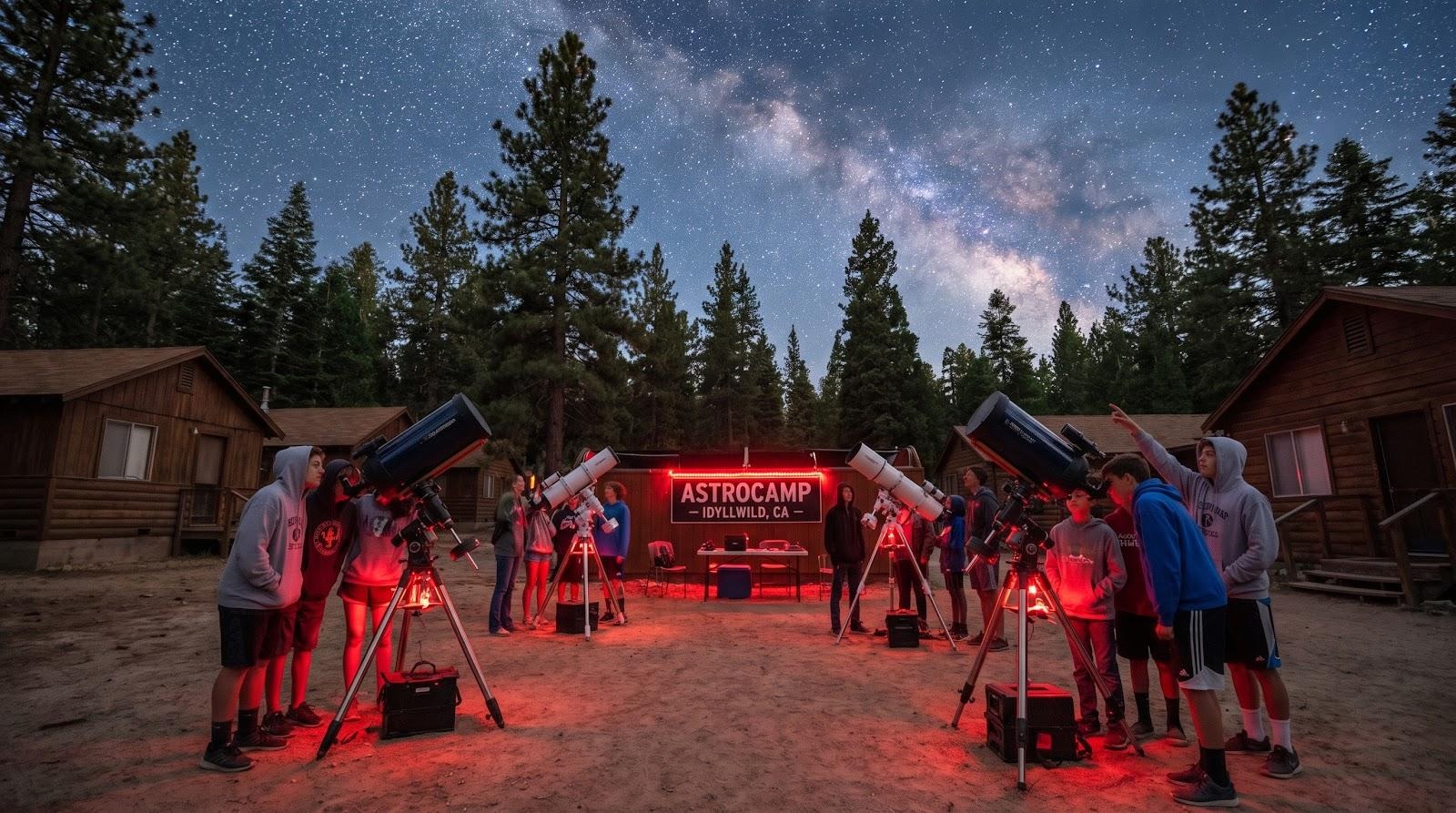
AstroCamp STEM and mountain adventure camp
Overview and Standout Features
On its 100-acre Idyllwild campus, AstroCamp blends hands-on science with classic mountain thrills. Campers fire compressed-air rockets, test vacuum chambers, and steer telescopes after dark, then tackle climbing walls, mountain-bike trails, and archery ranges by day.
Age Suitability and Session Format
Programs serve ages 8–17 in three overlapping steps: one-week sessions for ages 8–13 as an entry-level taste of independence, two-week sessions for 12–17 with deeper electives and long-format projects, and a Specialty Week for 10–17 offering mix-and-match schedule control.
Safety, Accreditation, and Staffing
AstroCamp is ACA-accredited and listed in the WAIC resident directory. Counselors pass background checks and drug screening and complete nine days of on-site training covering first aid, CPR, and waterfront lifeguarding. A health centre operates around the clock, and the camper-to-staff ratio stays at 8:1 or better.
What Makes It Different
Many camps add a token science block; AstroCamp builds the whole week around discovery and layers adventure on top. Older campers co-design their daily slate — extra telescope time, advanced mountain-bike clinics — while younger ones make liquid-nitrogen ice cream.
3. YMCA Camp Whittle: Best Traditional Camp for Los Angeles Families
Overview and Standout Features
Spread across 93 pine-lined acres above Big Bear Lake, roughly a two-and-a-half-hour bus ride from many LA neighbourhoods, Camp Whittle delivers the classic reel: sunrise flagpole, heated-pool laps, climbing-tower scrambles, and nightly campfires. Archery, arts and crafts, team sports, and low-ropes teamwork run under the YMCA of Metropolitan Los Angeles banner.
Age Suitability and Session Format
Co-ed campers aged 7–17 attend one-week sessions booked through their local YMCA branch, so many arrive with familiar faces. Cabins top out at 10 campers with two counselors, grouped by age.
Safety, Accreditation, and Staffing
Whittle is ACA-accredited. Counselors clear a California LiveScan fingerprint check, complete YMCA abuse-prevention coursework, and log at least 24 hours of ACA-aligned training covering CPR, first aid, and water rescue. A staffed health centre operates around the clock and the published 5:1 ratio holds day and night.
What Makes It Different
Branch-based enrolment means campers ride up with neighbourhood friends and reunite at weekend Y programs all year, which softens the post-camp letdown. Combined with the 5:1 cabin ratio, it is a reassuring first leap into mountain-camp life.
4. Pathfinder Ranch: Best for Nature, Horses, and Teen Leadership
Overview and Standout Features
Set in Garner Valley’s ponderosa pines, Pathfinder feels like a living nature preserve. Days mix archery, canoeing on a spring-fed pond, and a challenge tower with ecology walks, garden harvesting, and barn chores. The equestrian program is the star: small-group arena lessons build toward trail rides, moving from mounting basics to confident cantering.
Because the site runs an outdoor-education centre all year, summer staff arrive with field-tested lesson plans. Campers head home knowing manzanita from madrone and how to tack a horse before breakfast.
Age Suitability and Session Format
Campers aged 7–14 spend five nights on site, a good length for beginners. Teens 15–17 join the Counselor-in-Leadership Training track, pairing morning workshops with afternoon mentoring at the archery range or horse corrals. The two-tier ladder keeps twelve-year-olds from being rushed into adult roles.
Safety, Accreditation, and Staffing
Pathfinder is ACA-accredited. Horses receive daily wellness checks from wranglers certified in equine first aid, and riding groups cap at eight campers with two instructors. Counselors clear national background checks and hold Red Cross first aid and CPR; waterfront and climbing staff carry lifeguard or belay credentials. A licensed nurse staffs the health centre around the clock, with a volunteer fire station five minutes away.
What Makes It Different
Pathfinder suits kids who would rather muck out stalls than scroll. The equestrian progression — groundwork Monday, posting trot Wednesday, trail ride Friday — pairs with ecology projects that turn abstract stewardship into muscle memory.
5. Camp Scherman: Best Girls’ Camp for Outdoor Skills and Leadership
Overview and Standout Features
On 700 forested acres near Mountain Center, Camp Scherman offers a Girl Scout take on classic camp. Canoes cross a private lake, arrows meet straw targets, and every activity links to a badge step: knife safety before carving, rescue knots on the climbing wall, trail miles counting toward hiking awards. Horseback options run from arena lessons to half-day trail rides.
Age Suitability and Session Format
Girls entering grades 2–12 bunk with classmates. Most sessions run five days and four nights — long enough for new skills, short enough to soothe first-timer nerves. Older campers move through CIT I, CIT II, and a Wrangler-in-Training track.
Safety, Accreditation, and Staffing
Camp Scherman is ACA-accredited. Counselors clear fingerprint checks, earn first aid and CPR, and train on Girl Scouts’ Progression in Camping guidelines. Lifeguards hold Red Cross credentials and wranglers certify in equine first aid. A resident health supervisor manages medications and coordinates with Idyllwild emergency services. Cabin and activity ratios are published each spring — ask the council for current numbers.
6. YMCA Camp Oakes: Best Big Bear Camp for Classic Activities
Overview and Standout Features
Just outside Big Bear City, Camp Oakes delivers the movie-scene version of camp: a glassy lake framed by pines, a climbing tower and zip line above open meadows, and an on-site observatory. Mornings might open with a polar-bear plunge or canoe relay, move to archery after lunch, and finish with campfire skits.
Multiple Southern California Y branches share the property, so activity stations stay open all season and campers spend less time facing closed signs.
Age Suitability and Session Format
Co-ed campers aged 8–17 attend seven-day, six-night sessions booked through a sponsoring YMCA branch. Younger units stay near home base for swim checks and low ropes, while ages 12 and up hike farther, climb under floodlights, and take the night-zip slots.
Safety, Accreditation, and Staffing
Camp Oakes is ACA-accredited. Counselors clear LiveScan checks through their home YMCA, then train in first aid, CPR, and water rescue before the first bus arrives. Waterfronts run with Red Cross lifeguards, climbing staff meet industry belay standards, and a licensed nurse staffs the health centre 24 hours. The published ratio is 5:1 or better.
What Makes It Different
Few single sites deliver so many firsts — observatory nights, match-free fire building, fishing from a mountain dock — without extra fees. Branch registration also simplifies logistics, with many Ys including charter transport and group photos.
7. YMCA Camp Edwards: Best for Younger First-Time Campers
YMCA Camp Edwards, built for first-time campers
Overview and Standout Features
At 6,400 feet in Angelus Oaks, Camp Edwards feels like a small mountain village designed for newcomers. Rustic lodges circle a central meadow where flag, lunch songs, and campfire set the pace. Activities hit the just-right mark: a starter climbing wall progressing to high ropes, sheltered paddling on Jenks Lake, and a beginner-friendly zip line. An optional pre-summer open-house hike lets nervous families meet staff and preview bunks.
Age Suitability and Session Format
Grades 1–9, grouped by school level, in a six-day, five-night signature session that builds independence without exhausting first-time stamina. Cabins cluster by grade, so first graders share bedtime stories with peers while eighth graders take twilight hikes.
Safety, Accreditation, and Staffing
Camp Edwards is ACA-accredited and lists a 5:1 ratio — 10 campers with two counselors per lodge. Staff pass fingerprint background checks and complete Red Cross first aid, CPR, and basic water rescue. A licensed nurse runs the health centre around the clock, and waterfront and ropes teams hold specialised certifications. Counselors also train in homesickness coaching, so they spot nerves before tears.
What Makes It Different
Counselors model every routine on day one — where to stash a toothbrush, how to refill a water bottle — then step back just enough for kids to try alone. A comfort crew circles the lodges after lights-out with breathing tricks and nightly-wins journals. Add a 45-minute drive from Redlands and generous financial aid, and this is the simplest launchpad on the list.
Inland Empire Overnight Camp Comparison
San Bernardino and San Jacinto mountains overnight camps
| Rank | Camp | Mountain location | Ages or grades | Overnight format | Best for | Accreditation | Cost |
| 1 | Pali Adventures | Running Springs | Ages 6–16 | Tiered sessions | Camper choice and specialty depth | ACA, WAIC | Not published |
| 2 | AstroCamp | Idyllwild | Ages 8–17 | 1-week, 2-week, specialty week | STEM plus mountain adventure | ACA, WAIC | Varies by session |
| 3 | YMCA Camp Whittle | Fawnskin / Big Bear | Ages 7–17 | 1-week via LA YMCA branches | Traditional camp, clear ratios | ACA | Branch-set |
| 4 | Pathfinder Ranch | Mountain Center | 7–14; 15–17 leadership | 5-night | Horses, nature, teen leadership | ACA | At registration |
| 5 | Camp Scherman | Mountain Center | Grades 2–12 | 5-day | Girls’ outdoor skills and leadership | ACA | Session-based |
| 6 | YMCA Camp Oakes | Big Bear City | Ages 8–17 | 1-week sponsoring-Y | Classic Big Bear activities | ACA | Branch-set |
| 7 | YMCA Camp Edwards | Angelus Oaks | Grades 1–9 | 6-day / 5-night | Younger first-timers close to home | ACA | At registration |
Formats and fees change each season; confirm with the camp office before enrolling.
How Parents Should Interpret the Ranking
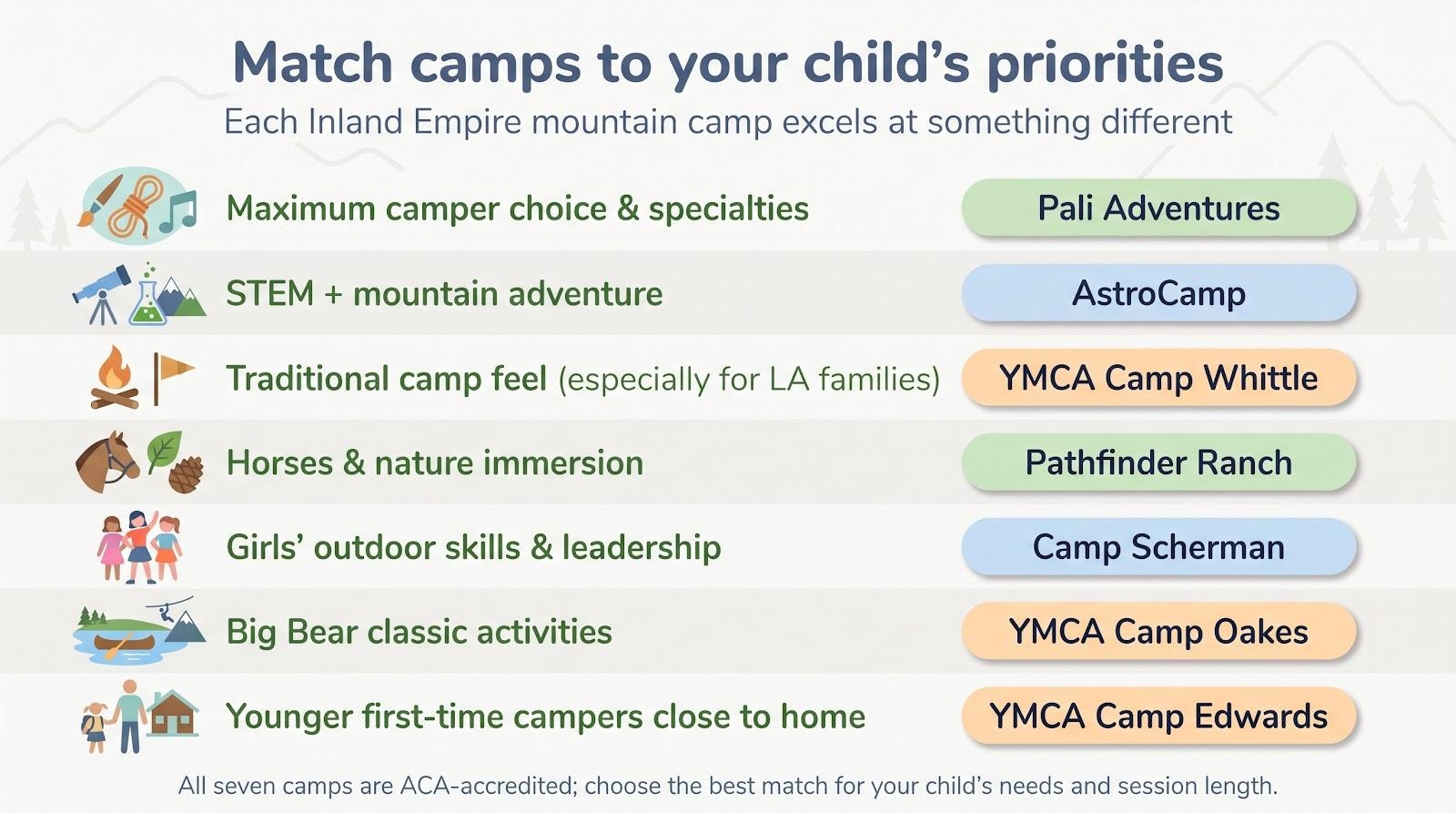
All seven hold current ACA accreditation. Pali leads because it pairs the broadest specialty menu with an all-inclusive model and a documented better-than-3:1 ratio. AstroCamp owns the STEM niche. Whittle, Oakes, and Edwards share a YMCA backbone but serve different needs: Whittle for LA families wanting tradition, Oakes for an action-packed Big Bear sampler, Edwards for younger first-timers. Pathfinder is the horse-and-nature specialist, and Camp Scherman offers a girl-led environment with a clear leadership ladder.
Frequently Asked Questions
Are Inland Empire Overnight Camps the Same as Campgrounds?
No. A campground rents your family a tent pad or RV space and leaves the logistics to you. An overnight camp enrols your child in a staff-run program supplying cabins or lodges, meals, 24-hour supervision, and a structured schedule led by trained counselors. Every camp in this guide meets that standard, so you are comparing like with like.
How Do I Know Whether My Child Is Ready for Sleepaway Camp?
Look for five green lights: your child handles basic hygiene without reminders, falls asleep away from home without drama, follows adult directions in a group, keeps track of personal items, and speaks up when they need help. If at least four are there, start with a shorter introductory session — a four- or six-night program — so counselors can guide any homesickness.
What Does ACA Accreditation Tell Parents, and What Should They Ask Next?
Accreditation means independent inspectors have reviewed more than 250 standards covering health, safety, staffing, and program quality. It is a solid baseline, not the finish line. Before registering, ask each camp in writing: what background checks staff complete; the published camper-to-staff ratio in cabins, on the waterfront, and on ropes courses; whether a licensed medical professional is on site around the clock and how daily medications are handled; what certifications lifeguards, belay staff, and riding instructors hold; how the camp communicates with parents during an emergency; and whether any electives carry extra fees. A credible camp answers each clearly and will put it in writing.


