

Denver’s summer heat fades fast when you swap traffic for paddle strokes. Within a two-hour drive of the city, families logged 508,000 commercial rafting “user days” in 2025—a 22 percent jump since 2022, according to outdoor-tour data cited by Men’s Journal. Guided trips make that thrill remarkably safe, and this guide shows you exactly where to find Class I–III water for kids, how to keep everyone smiling, and what to look for when choosing the best white-water outfitter. Ready to trade city noise for canyon echoes? Let’s hit the water.
Quick-glance comparison table
You want the short answer first. The table below lines up five family-friendly rafting spots so you can compare drive time, rapid class, age limits, and price at a glance.

| Rafting tour / area | Distance from Denver | Rapid class | Minimum age | Price (adult / child)* | Season |
| Echo Canyon: Arkansas River, Cañon City | 2 hr 15 min | I–III | 4 / 6 | $85–$100 / $65–$85 | May–September |
| Clear Creek: Idaho Springs (Gold Rush) | 40 min | II–III | 6 | $70 / $60 | May–August |
| Cache la Poudre: Fort Collins (Lower) | 1 hr 15 min | II–III | 7 | $75–$90 / $65–$75 | May–August |
| Upper Colorado: Kremmling float | 2 hr 30 min | I–II | 3 | $85–$95 / $75 | May–September |
| Arkansas River: Browns Canyon, Buena Vista | 2 hr 30 min | III | 7–8 | $100 / $85 (half-day) | May–September |
*Prices reflect peak-season 2026 rates published by local outfitters.
Pick the trip that fits your kids’ ages and your schedule, then keep reading to see what makes each river special.
Echo Canyon River Expeditions: Arkansas River
Two hours south of Denver, the city skyline gives way to the red walls of the Royal Gorge. Echo Canyon River Expeditions has guided families through this canyon since 1978 (48 seasons and counting), and the know-how shows the moment you arrive at its polished basecamp.
The drive is straightforward along I-25 and US-50, so you can leave after breakfast and still catch the morning put-in. Little paddlers start on the Scenic Family Float, a mellow Class I–II glide where guides point out bighorn sheep and let kids splash in calm pools. Adventurers six and older step up to the Bighorn Sheep Canyon run, an upbeat Class III stretch with wave trains named Five Points and Spikebuck. It hits the sweet spot between gentle and exciting, which is why many Colorado parents call it the best first “real” whitewater.
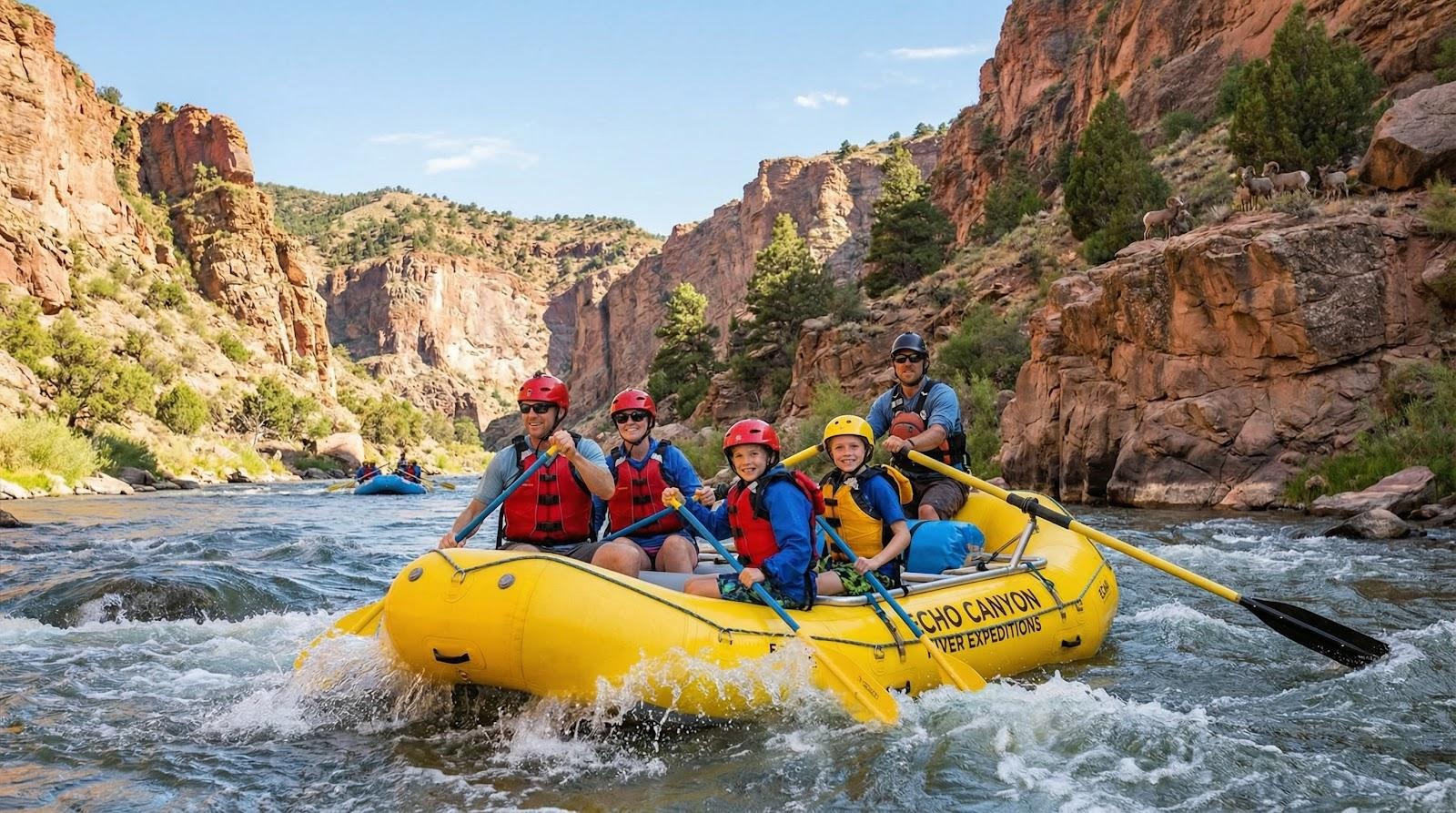
Comfort comes built in. Clean restrooms, shaded picnic tables, and the on-site 8 Mile Bar & Grill spare you a frantic food stop after the trip. If you want more playtime, stay overnight in one of the glamping cabins and visit the Royal Gorge Bridge the next morning.
Safety stays front and center. Every guide trains under the Colorado River Outfitter Licensing Program, which requires swift-water skills, first-aid certification, and annual inspections. Use the public Colorado Parks and Wildlife licensing roster to verify those credentials, then run through Echo Canyon’s checklist for choosing the best white water rafting company for families—guide-to-guest ratios, child-sized gear, and beginner-level route options—to be sure the outfitter matches your crew.
Tip: Book the first morning departure. You will beat afternoon winds, skip most crowds, and still have time for ice cream before the drive home.
Clear Creek: Idaho Springs
Need a quick dose of whitewater without a long drive? Clear Creek is the answer. Thirty minutes—and about 25 miles—up I-70, the historic mining town of Idaho Springs hands you paddles, helmets, and a front-row seat to Colorado history.
The Gold Rush stretch feels built for first timers. Class II and III waves roll in every few minutes, just long enough for a whoop and a face full of spray before the creek settles again. Kids six and older sit toward the center for extra stability, while parents up front power the raft past landmarks like the Argo Gold Mine and the wooden waterwheel visible from the highway.
Short run times keep the day flexible. Morning trips get you back in Denver for a late lunch; afternoon departures avoid eastbound weekend traffic. If your crew wants more adrenaline, many outfitters pair the raft with a zipline in the same canyon—two adventures without moving the car.
Bring layers. Snowmelt keeps Clear Creek near 50 °F (10 °C) until July, and most guides require wetsuits during peak runoff. Rental runs about $10 per person for 2026, though some companies include it, so confirm when you book.
Save ten minutes to explore Idaho Springs itself. A slice of mountain pie at Beau Jo’s or a quick gold-panning lesson can turn a solid outing into a summer memory with no extra driving.
Cache la Poudre: Fort Collins
If you want wilder scenery, drive north toward Fort Collins and the Cache la Poudre. The road hugs the river through a granite canyon, and every bend teases the white spray you are about to surf.
The Lower Poudre run mixes Class II and III rapids such as Pinball and Roller Coaster with glassy pools that invite a swim. Because the river is federally protected and undammed, flows follow natural snowmelt. Early June packs extra punch, while July settles into a playful rhythm ideal for kids seven and up.
Guides here share the story behind the name—French trappers “cached la poudre,” their gunpowder, during an 1820s blizzard—then point out bald eagles riding thermals above the same cliffs. Fewer permitted boats mean it often feels like your family has the whole river.
Logistics stay simple. Most outfitters meet in Fort Collins, load gear, and shuttle you 30 min up canyon to launch. Half-day trips return by early afternoon, leaving time for burgers at the riverside Mishawaka or ice cream downtown before heading home.
Expect cool water around 55 °F (13 °C). Wetsuits are usually included at no charge, a small perk that keeps everyone warm and smiling even during spring runoff. By the take-out, kids are already asking, “When can we try the bigger section next year?”
Upper Colorado: Kremmling float
Picture a broad river valley framed by red rock walls, bald eagles overhead, and steam curling from a natural hot spring on the bank. That scene sits 2 hr 30 min northwest of Denver on the Upper Colorado, which locals call the “Upper C.”
This stretch trades rapids for relaxation. Class I riffles, plus the occasional Class II wave at high water, let toddlers as young as three join the adventure. Guides often invite kids to steer through calm water, then stop so everyone can slip into Radium Hot Springs midway through the run.

The vibe stays slow and social. Families in oar rigs drift past anglers casting for trout, and linking rafts for a floating picnic is common. Reservoir releases steady the flow, so outfitters run trips May through September, making Upper C the most reliable family option on this list.
From the Pumphouse launch, you will float 6 mi (9.7 km) to the take-out at Radium or State Bridge. Half-day outings finish by lunch, while overnight trips let guides handle camp set-up while you count shooting stars with the kids.
Bring sun shirts and water shoes; canyon walls reflect heat, and water warms to the mid-60s °F (18–20 °C) by July. When you climb back into the shuttle, the ride feels less like a commute and more like a rolling recap of every wildlife sighting and splash battle you shared.
Browns Canyon: Buena Vista
Browns Canyon packs every postcard image of Colorado into one 10 mi (16 km) ribbon of water. Granite walls rise above the raft, the Collegiate Peaks shimmer beyond, and Class III rapids such as Zoom Flume and Big Drop keep paddles moving in unison.

The put-in sits just outside Buena Vista, about 2 hr 30 min from Denver. Many families turn it into a weekend by pairing rafting with a soak at Mt. Princeton Hot Springs or a night in a riverside cabin along the Arkansas River trail system.
Mid-summer is prime time. Snowmelt has eased, water warms to the low-60s °F (16 °C), and outfitters welcome kids seven and older. Guides cue crisp forward strokes through wave trains, then point out rock spires shaped like sleeping elephants during calmer intervals. That mix of action and scenery led Outside Magazine to name Browns Canyon “Colorado’s best family rafting trip.”
Half-day outings cover the heart of the canyon in about three hours. Full-day routes add upstream sections and include a riverside taco bar. Remote walls mean no bail-out points, so use the restroom, apply sunscreen, and commit to the adventure.
By the final rapid, families tap paddles to celebrate and start plotting next summer’s return—proof that Browns Canyon turns first-timers into lifelong rafters.
Family logistics, safety, and FAQs
What to pack and wear
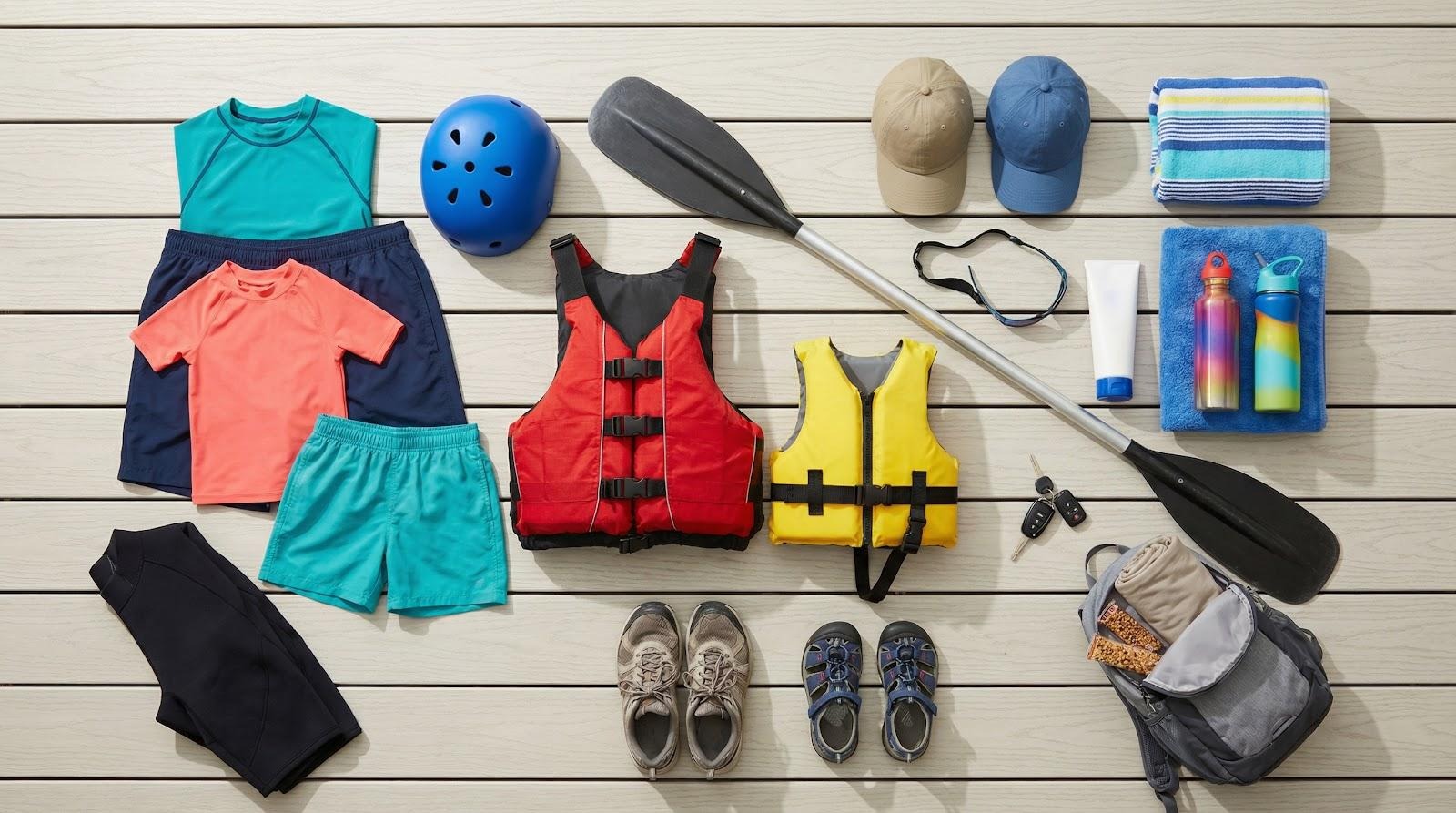
Dress like you will swim, hike, and sunbathe, all in one morning. Quick-dry shorts, a rash guard or lightweight tee, and secure shoes (old sneakers or strap-on sandals) keep you comfortable when the raft hits a wave and when you scramble ashore for lunch.
Sun is relentless on water, so pack waterproof sunscreen, a hat that fits under your helmet, and sunglasses with a strap. Every outfitter supplies the big three — PFD, helmet, paddle — and most stock wetsuits or splash jackets when spring snowmelt chills the river. Ask whether children’s rentals are free; many companies include them.
Stash a dry change of clothes and towels in the car, plus an extra snack and bottle of water for the ride home. Those small details turn a great day on the river into an easy drive back to Denver.
Safety basics everyone should know
Guided rafting is statistically one of the safest adventure sports you can book. About four million people paddle with commercial outfitters in the United States each year, and documented fatalities hover between six and ten nationwide, according to the Outdoor Industry Association’s 2024 participation report.
Every reputable Colorado company follows the same playbook. Before launch, your guide gives a short safety talk that covers paddle grip, seating posture, and what to do if you fall out. Life jackets stay buckled the entire trip, helmets are mandatory on any section above Class I, and a first-aid kit rides in every boat. Many family runs also send a safety kayaker who shadows the group for quick assists.

Your job is simple: listen, paddle when the guide calls “all forward,” and keep smiling if you take an unexpected swim. The current pushes you feet-first downstream, and the guide will pull you back in within seconds. Kids gain confidence fast when they see adults treat the drill like another part of the adventure.
Want extra peace of mind? Look for the Colorado Parks and Wildlife license sticker on the outfitter’s door, then ask how many seasons your guide has run the stretch you are booking. Pros enjoy sharing their river résumés, and that quick chat reassures the whole crew before the first paddle dip.
Match the river to your crew
- Toddlers to first-graders thrive on scenic floats such as the Upper Colorado or Echo Canyon’s Family Float. Calm water lets them swap paddles for squirt guns, and warm mid-summer temperatures keep shivers away.
- Elementary kids with a taste for adventure light up on Class II–III runs — think Clear Creek’s Gold Rush or the Lower Poudre. Rapids feel bouncy, not brutal, and guides can still pause for swim breaks.
- Tweens and teens usually beg for “real whitewater.” Browns Canyon or Bighorn Sheep Canyon provide that while staying in the Class III sweet spot. Everyone paddles hard, celebrates harder, and rolls into camp talking in rapid names.
Spring runoff increases both thrill and minimum ages, so if your youngest barely clears the cutoff, wait until July. Conversely, if you want the spiciest ride of the year, book late May when snowmelt peaks and guides raise minimum ages to ten or twelve.
Call before you reserve. Explain your kids’ ages, swimming confidence, and appetite for excitement. A good outfitter will steer you to the stretch where smiles outweigh nerves every time.
When to go and quick-hit FAQs
Colorado’s rafting calendar runs May through early September, but the personality of each month shifts like the river itself.
May and early June bring peak snowmelt. Water runs near 50 °F (10 °C), fast and cold, so outfitters often raise minimum ages by a year or two. July settles into a sweet spot with warm air, moderate flows, and dependable sun. By late August some creeks drop, turning rapids into riffles ideal for nervous newbies. Morning trips dodge afternoon thunderstorms and crowds, while mid-week departures feel almost private.
Still wondering if rafting fits your family? Here are the top questions we hear on the bus ride to the put-in.
- Do we need to swim?
Life jackets handle the floating. Non-swimmers can join Class I–II floats, and guides prefer at least one confident swimmer in the boat for Class III sections. - What if someone falls out?
Guides practice quick rescues daily. Nationwide statistics show only six to ten fatalities out of roughly four million commercial rafters each year — a risk so small that most insurance companies rate rafting safer than skiing. - Can my child back out at the last minute?
Yes. Most companies keep a spare guide or van driver at base who can watch a reluctant kid and meet the group at take-out. - Will anyone get motion sick?
Rarely. Fresh air, cold water, and constant paddling keep queasy feelings at bay. If your child is prone to car sickness, seat them mid-raft where movement is gentlest. - How about bathrooms?
Use facilities before gearing up. On the river it is all natural; guides know discreet spots and carry hand sanitizer.
Pick the right month, choose the right rapid class, and most worries wash away with the first splash.