


Chiang Mai, the cultural hub of Northern Thailand, is a must-visit destination for many people heading to the country, but why is Chiang Mai worth visiting? Well, if you enjoy a rich history, delicious cuisine, and stunning scenery, it’s going to be perfect for you!
If you’ve decided you’re going, you might be wondering when is the best time to visit the charming city of Chiang Mai. The answer is not so straightforward, as each season has its own unique benefits and downsides.
In this post, we will run through each season and dive deeper into these benefits and drawbacks, we’ll also cover topics including festivals, what to pack and when the perfect time to visit Chiang Mai is for you!
No matter what time of year you choose to visit, Chiang Mai is sure to captivate you with its beauty and charm.
Weather in Chiang Mai

When planning a trip to Chiang Mai, one of the most important things you need to consider is the weather. Chiang Mai has a tropical savanna climate, this is because the city sits at a relatively low latitude (tropical) but in the mountains in north Thailand (savanna).
It produces warm and dry to hot humid weather all year round. However, the weather in Chiang Mai is generally less humid than in other parts of Thailand and nighttime conditions during the dry season can be quite cool.
Thailand’s climate is also influenced by two monsoons which take place from May to October, with September and October experiencing the highest rainfall.
Therefore, due to the region’s tropical location, Chiang Mai experiences three distinct seasons: the cool season, the hot season, and the rainy season.
It’s worth mentioning that Chiang Mai doesn’t really have an official spring, but there are a couple of weeks from late February to early March when many beautiful flowers are in bloom. This is a great time to visit if you are interested in nature and want to see the beautiful colours in full display.
The Three Seasons In Chiang Mai
- The Cool Season runs from November to February
- The Hot Season runs from March to May
- The Rainy Season runs from April to October
We actually visited Chaing Mai in March, just at the start of the hot season, and likely one of the worst times to visit! For many reasons, but mainly due to the fact it’s the start of the annual burning of the rice fields and controlled forest fires but also because of the heat.
We almost skipped Chiang Mai due to this, but to be honest, it wasn’t as bad as we were led to believe. In our experience, the weather in March was hot but the smoke and air pollution were not terrible, we still managed to enjoy the vistas!
That said, being under the midday sun did get too hot at times and it was essential to wear sunscreen, we usually sought shelter in a cafe or shaded area during this time. One thing we didn’t miss out on was a road trip to Pai, something which we think everyone who visits Chiang Mai should do!
Cool Season in Chiang Mai
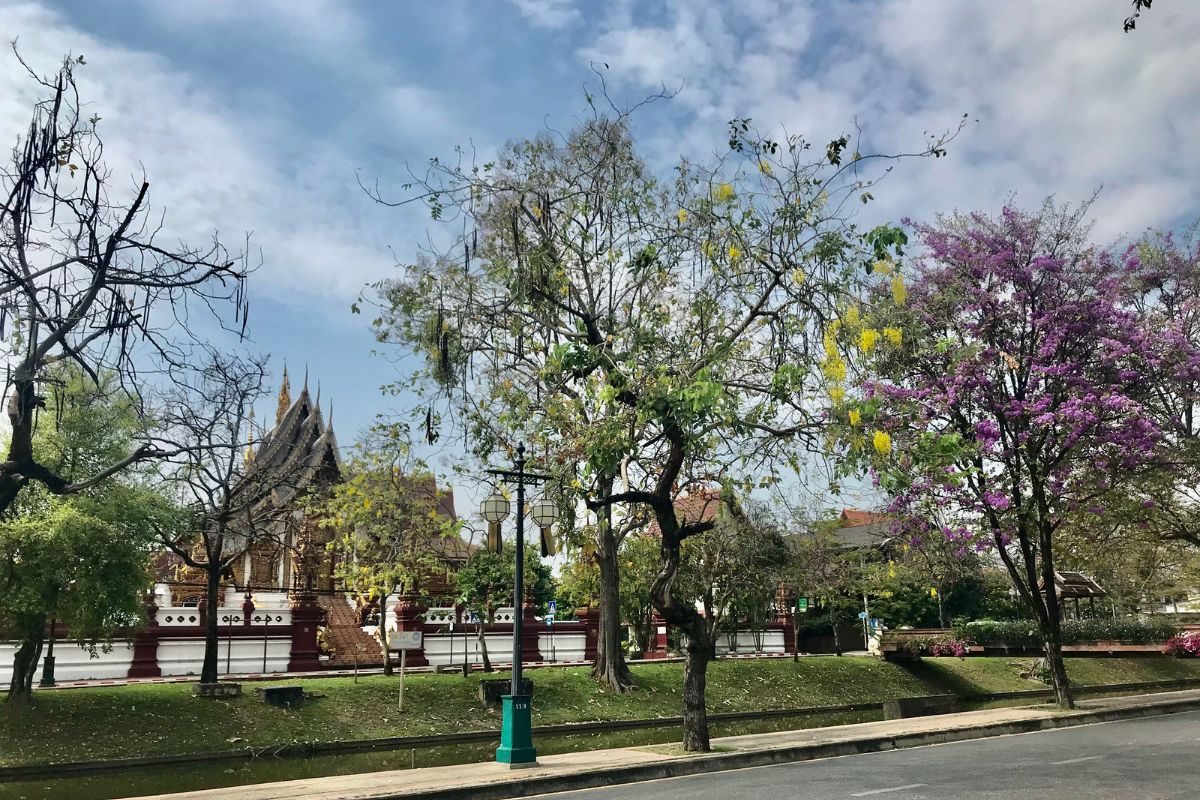
Months: November to February
When the northeast monsoon from Siberia begins blowing southward Chaing Mai starts to experience the cool season, which runs from November to February. During this time, the weather is pleasantly warm and dry, with temperatures ranging from an average daily maximum of 26°C in December to an average daily maximum of 28°C in January.
Nighttime conditions during the dry season can be cooler dropping to as low as 10°C (although usually, it hovers around 19°C), but it’s a good idea to pack some warm clothing nevertheless. Interestingly, if you’re planning to visit the Doi Inthanon National Park, the temperatures can drop to as low as 3°C!
Many people agree this is the best time to visit Chiang Mai. Due to the warm weather, blue skies, and lack of clouds plus the cooler evening weather and the fact the season experiences the lowest rainfall and humidity. Outdoor activities won’t be affected by bad weather either since rain showers are rare during these months.

What’s the driest month in Chiang Mai? The driest month is March, with 4mm of rainfall and 30 sunny days, while the wettest month is May, with 69mm of rain over 5 days. January has about a 7% chance of rain on an average day!
Sounds perfect, so what’s the catch? Well, during this time people from all over the world travel to Chiang Mai to experience the lovely weather in the mountains. It’s the most popular time to visit causing congestion and crowds.
It also means the tours and accommodation prices see an increase as demand is higher. This is also the case during special festivals, therefore it’s wise to book well in advance if you’re planning to travel to Chiang Mai during this time.
Events/Festivals
- Loy Krathong and Yee Peng – Lantern Festivals – are celebrated on the full moon day of the 12th month of Thai’s traditional calendar, which falls in November.
- Chinese New Year falls in February and since there is a large Chinese community in Chiang Mai, it is celebrated throughout the city.
- Chiang Mai Flower Festival is also celebrated in February, usually near the start of the month.
- The Bo Sang Umbrella Festival takes place in the Bo Sang village, every January, the villagers make colourful umbrellas from traditional Saa paper using centuries-old techniques.
- Another highlight of the cool weather is the beautiful cherry blossoms, known as Sakura Season. Although not a festival the event is popular and you will find the small pink flowers bloom from January to early February.
Top Tip: purchase tickets at least 10 months in advance, so you can get more reasonable prices and available seats.
What to Pack
If you’re planning a visit to Chiang Mai during the cool season, it’s important to pack appropriately for the varying temperatures. During the day, temperatures can reach up to 30°C, so bring light summer clothes such as shorts and T-shirts.
However, as mentioned, temperatures can drop to as low as 10°C after dark, so it’s important to pack cool-weather gear such as a light jacket or sweater.
This is the best season for photography in Chiang Mai, so make sure to pack your camera and accessories. We recommend visiting tourist spots early in the morning to avoid the crowds and capture the best shots!
If you plan on exploring the countryside, it’s wise to bring all-weather gear, especially if you’re thinking about hiring a motorbike or going on a mountain trek. Bring both comfortable walking shoes for city visits and sturdy trekking shoes for country visits to navigate the rugged terrain.
We would also suggest packing sunscreen, a hat, insect repellent, and a reusable water bottle. Don’t forget to pack any necessary medications and travel documents, including a passport and travel insurance.
Top Tip: In January and February, walking under the midday sun can be challenging. I would suggest always wearing sunscreen and a hat. In the evening, a jacket is not usually needed, except in fully air-conditioned places.
Hot Season in Chiang Mai
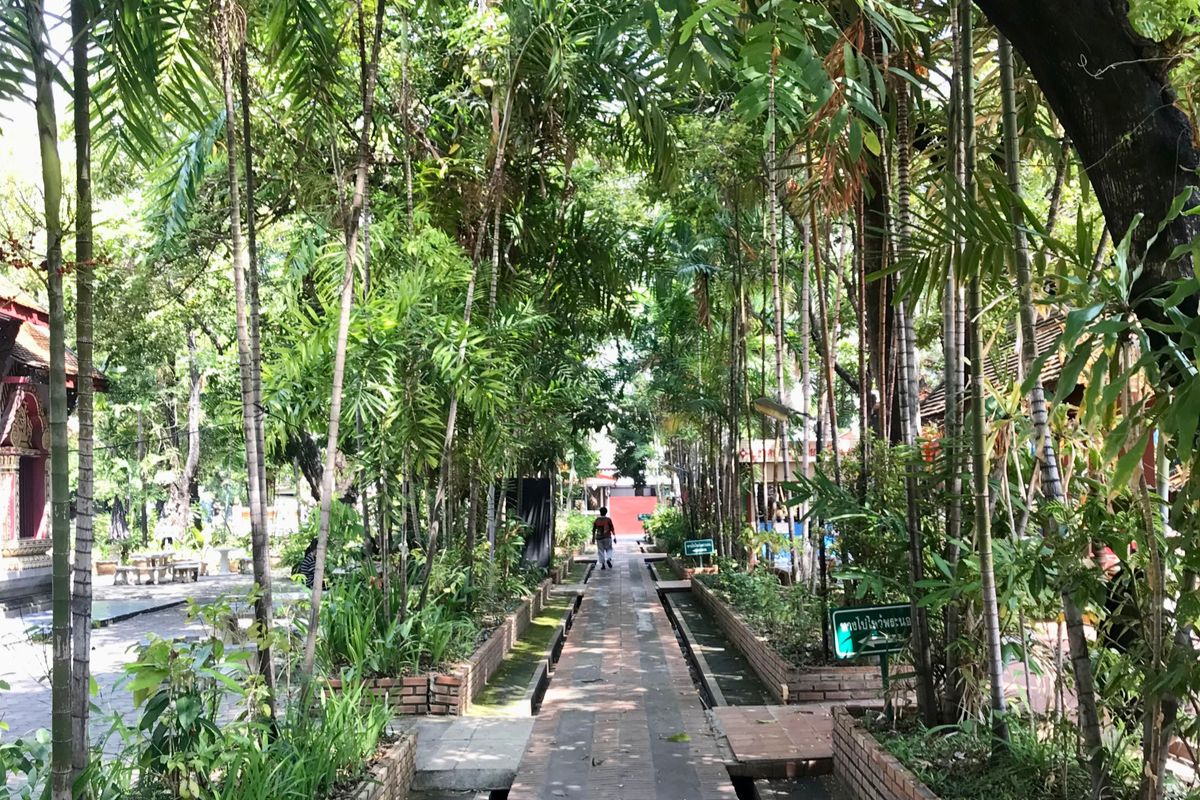
Months: March to May
Commonly regarded as the worst time to visit Chiang Mai, the hot season runs from March to May. The weather during this season is extremely hot and can be quite uncomfortable for many travelers, with an average daily maximum of 38°C in April.
If you do plan on visiting during this time, it’s important to stay hydrated and take breaks in shaded areas to avoid heatstroke! Although the hot season is generally dry, there is an increased chance of rainfall in May.
Something else to think about is the air quality during late March and early April, which as I mentioned above is affected by forest fires and farmers burning their crops. These fires can cause a lot of smoke and dust, resulting in poor air quality and reduced visibility of mountain views due to haze.
This is why most people consider March and April the worst months to visit Chiang Mai, especially if you’re traveling with respiratory conditions such as asthma. Although, from our experience, it wasn’t too bad, but then again we may have gotten lucky!
The lack of rain during the cool season has a knock-on effect on the hot season causing the area to become dry and dusty. You’ll notice many of the trees losing their leaves and the once lush rice fields have turned into brown fields.
This means that the surrounding vistas aren’t as visually stunning as they are during the rainy or cool seasons. So, if you’re a nature lover or looking to take scenic photos, this isn’t the best time to visit either.
That said, you will notice fewer crowds and discounted room rates and tours. The popular tourist sites are not overcrowded and if you’re visiting for the culture and history rather than the views we didn’t feel that the center of Chiang Mai was too badly affected by the haze.
If this is the only opportunity you get to visit Chiang Mai, I would take it!
Top Tip: Nighttime temperatures during the hot season don’t bring much relief either. If you’re planning on visiting during these months, I recommend that you rent a room with air conditioning.
Events/Festivals
- Songkran Festival is the Thai New Year and one of the biggest events in Thailand. It falls in the middle of April and has a real holiday atmosphere.
- Inthakhin Festival takes place between May and June. It’s a week-long worship ritual, believed to be the annual blessing for the city. Locals gather at Wat Chedi Luang.
What to Pack
If you’re traveling to Chiang Mai during the hot season, it’s important to stay hydrated, so be sure to bring your reusable water bottle and carry it with you always. Luckily, Chiang Mai is full of cafes and street stalls selling refreshing drinks.
Along with water, pack sunscreen, a hat, and sunglasses to protect yourself from the intense heat. During the transitional period from March to May, the weather in Chiang Mai can be sticky and uncomfortable, pack light and breathable clothing including shorts, dresses, and flip-flops are ideal for staying cool and comfortable. Light cotton shirts are great to protect your shoulders from sunburn.
You won’t need jackets unless you’re planning on renting a motorbike or going to the summit of the national parks during the evening. Even during the hot season, temperatures can drop at night due to the high altitude of the parks. If you plan to stay in the park overnight or visit during the early morning or late evening you should take a warm layer.
It’s important to stay cool during this time, so it’s essential to pack light and breathable clothing to keep you comfortable in the heat.
Rainy Season in Chiang Mai

Months: June to October
The rainy season is from June to October and is typically characterized by heavy showers which clear quickly. Even though the temperature in Chiang Mai cools down, the air humidity is still high, so it will be sticky when it’s not raining. You’re looking at temperatures around 30°C during the day and 24°C in the evening.
August and September experience the highest rainfall, so you’ll need to plan your trip accordingly. However, the great thing about the rain is that it cleans the sky of smoke and dust, making it clear and refreshing.
You’ll notice that the rainfall is usually not a continuous downpour, but rather quick short bursts of rain. It’s not true that it rains for days on end! While the rain can be annoying, it typically lasts for only an hour or two, and there are often several sunny days in a row with no rain.
Another good thing about visiting Chaing Mai during this period is that it’s the most affordable time to visit, as it draws the least number of tourists. You can find fantastic deals on activities and cheaper hotels in Chiang Mai than normal. The natural attractions are also perfect and picturesque!
The national parks and paddy fields are at their most lush and green, and waterfalls, which usually dry up in the dry season, are at their most impressive. Additionally, the landscape is at its most colorful with beautiful flowers everywhere and wildlife is at its most active.
This is also the best time to be eating fresh fruit, which you will find on every street corner at every stall! Mango, dragonfruit, and watermelons are everywhere and taste delicious!
The Parks

Although the rain provides respite from the heat and gives the landscape its beautiful green color, it’s worth keeping in mind that it can impact outdoor activities, especially hiking.
National parks may be closed at times during the rainy season, and certain tourist areas, such as waterfalls, may be closed during exceptionally rainy weather. Thai authorities routinely close river and waterfall-based attractions after periods of heavy rains.
Despite the rain, trekking is still permitted around Chiang Mai’s trails. However, you should be prepared for muddy conditions and the possibility of finding leeches stuck to your ankles. Be sure to tuck your trousers into your socks and don’t stand still for too long!
Top Tip: When the first rain begins to fall, (usually the end of May) is when the rice farmers set about planting their crops. By the end of July, they will have reached their full length and you’ll find the rolling hills full of wonderful green crops.
Events/Festivals
- Rocket Festival usually falls in July. The main purpose of the rocket festival is to pray for rain at the beginning of a new planting season.
- Khao Phansa falls in May and is the Buddhist equivalent of Lent. It starts a three-month period when monks traditionally remain within their monastery.
What to Pack
It’s important to pack clothes that are suitable for wet weather conditions. Lightweight rain jackets or ponchos are essential to keep you dry during unexpected rain showers, but they can stick to your skin. Make sure you have a long lightweight top to wear underneath.
It’s a good idea to pack waterproof bags or cases to protect your electronic devices and important documents. You’ll need comfortable walking shoes that are suitable for wet and slippery surfaces, as well as flip-flops or sandals for when the rain stops and the ground is wet.
It’s also important to bring insect repellent and anti-mosquito products as mosquitoes tend to breed more in wet environments!
Pack clothes that are breathable and quick-drying. Cotton and lightweight fabrics are great for the humid weather, but it’s best to avoid heavy denim or thick fabrics that take a long time to dry.
A small umbrella can also come in handy, as well as a hat or cap to protect your head from the rain and sun. Don’t forget to bring your reusable water bottle!
When is the Ideal Time to Visit Chiang Mai For You?
Depending on your travel preferences you might choose to visit Chaing Mai in any one of the seasons. If possible, and although we did visit during this time, we would still suggest that you avoid late March and early April, and also August.
- The best time to visit Chiang Mai is between December and February when sunshine and temperatures are at their best and rainfall is lowest.
- The hottest month of the year is April with an average daily maximum of 38°C and an average low of 24°C. However, the Songkran Festival does fall during the middle of April.
- The coolest month of the year is December with an average daily maximum of 26°C and an average low of 17°C.
- For lush and green landscapes during the cool season, the best time to visit Chaing Mai is November. The Loy Krathong and Yee Peng – Lantern Festivals also fall in this month making it a very popular time to visit.
- The best time to visit Chaing Mai, if you’re on a budget, is the shoulder month of October.
Have you heard of shoulder months? October is considered the shoulder month in Chiang Mai, a time between the rainy season and the peak tourist season. This month is an ideal time to visit as the weather is great, with clear skies and cooler temperatures, but without the crowds of tourists that come during the peak season. May to June are also alternative shoulder months!
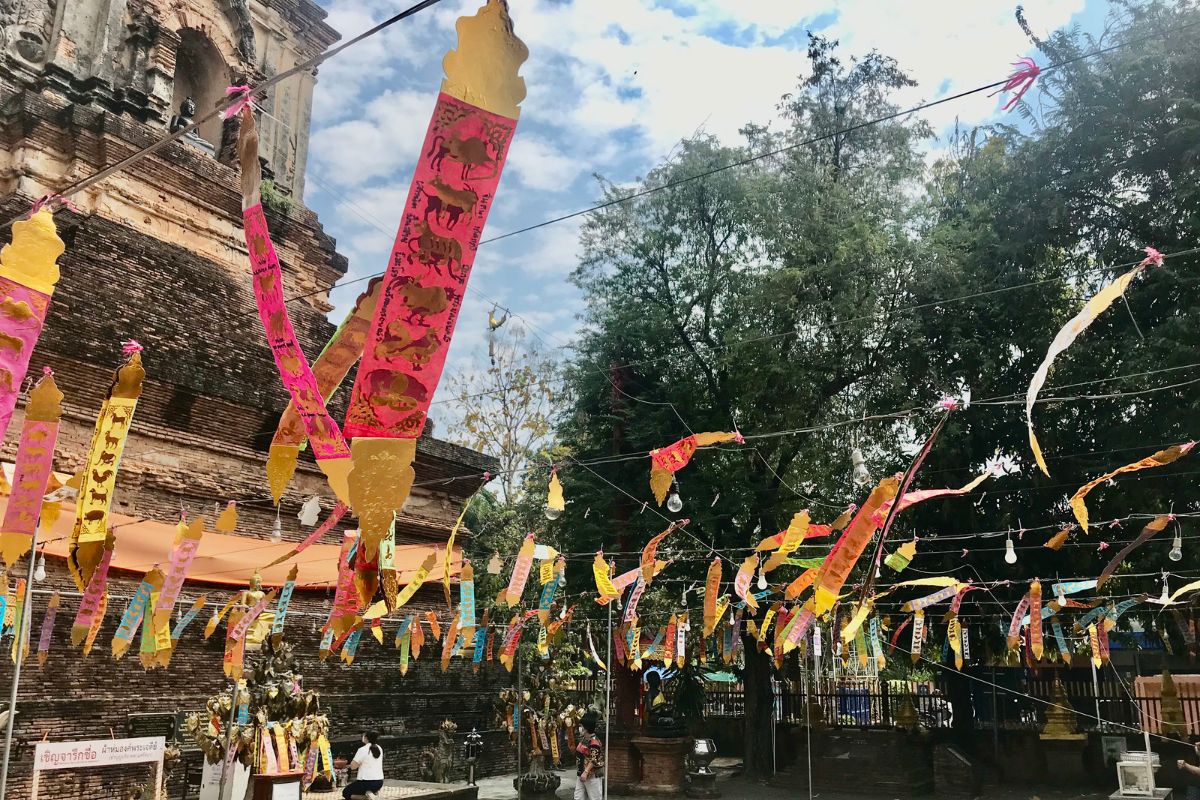
Conclusion: The best time to visit Chiang Mai
Hopefully, by now you have a good idea of the weather in Chaing Mai and worked out when the best time for you to plan your trip will be.
It varies with everyone depending on travel preferences but to summarise, the best time to visit Chiang Mai weather-wise is during the cool, dry season from November to February, with December and January being the best months due to low rainfall and comfortable temperatures.
The shoulder months of May to June and September to October offer a good compromise between crowds, price, and weather, but there are fewer festivals during this time.
The rainy season from July to October offers discounts and vibrant landscapes but also occasional downpours. The hot season, from March to May, should be avoided due to the extremely high temperatures.
For those interested in experiencing Chiang Mai’s top festivals, April and November are the months to visit for the Songkran and Yi Peng festivals.


