


Guadalupe Mountains National Park is one of the most underrated hiking destinations in the massive state of Texas! This National Park is home to a surprisingly diverse amount of ecosystems and environments, including mountain, high desert, forest, and canyon! The best way to experience the best that Guadalupe Mountains National Park has in store is to hike the best of its trails with your own two feet!
Exploring the best hikes in Guadalupe Mountains National Park is the perfect way to sample each of the unique characteristics of this unique environment, in a setting that is secluded, peaceful, and in stark contrast to some of the more populated National Parks in the country!
What To Know Before You Go
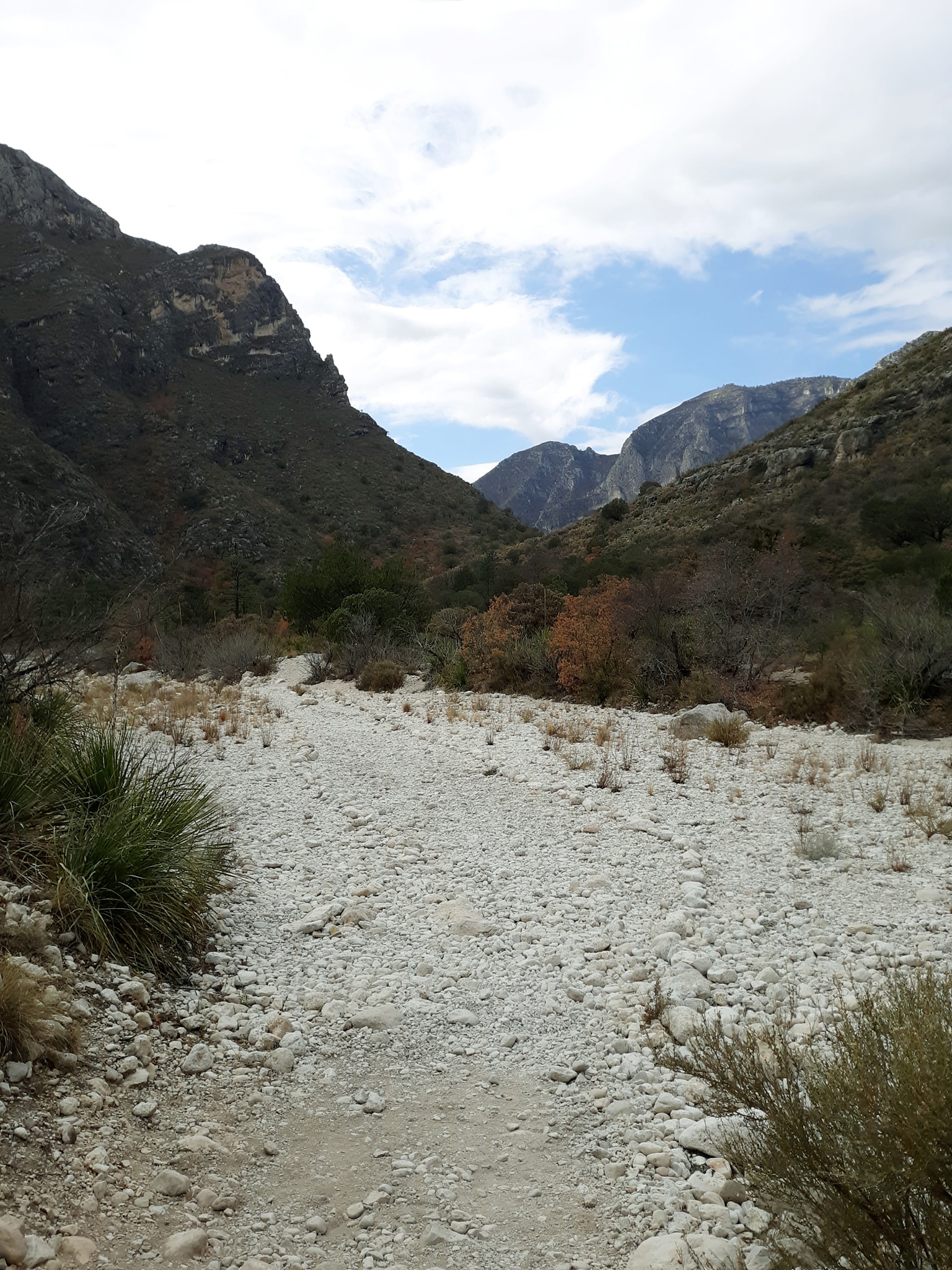
- Location: Guadalupe Mountains National Park is located in west Texas, about an hour from Carlsbad, New Mexico. The closest major cities are Dell City, Texas, and Carlsbad, New Mexico.
- Fees: Entrance fees to Guadalupe Mountains National Park are $10 per person, payable at the Visitors Center or self pay stations located at all trailheads.
- Pets: Pets are not allowed on the trails in Guadalupe Mountains National Park, except for the Pinery Nature Trail
- Fun Fact: Both Guadalupe Mountains National Park and neighboring Carlsbad Caverns National Park are part of the same mountain range, the Guadalupe Mountains! Their close proximity to each other set the stage for a National Parks road trip duo!
Best Hikes in Guadalupe Mountains National Park
#1: Guadalupe Peak Trail

The “top” of the list of best hikes in Guadalupe Mountains National Park has to naturally start with the hike to the highest point in Texas at Guadalupe Peak! This challenging trail offers hikers the chance to soak in a view unlike any other in the state! The stunning panoramic views from the highest point are the obvious highlight, but there is also the ponderosa pine forests and the cliff side views!
And you can see the neighboring peak of El Capitan from Guadalupe Peak’s summit, one of the most iconic symbols in the park. But this epic payoff requires work, as in 8 miles roundtrip with almost 3,000 feet of elevation gain! Plus, if you are up for a little extra adventure, you can primitive camp at the backcountry campsite just below the summit, and be in prime position to experience an epic sunset and sunrise from the peak!
Just be sure to snag a backcountry permit from the Pine Springs Visitor Center before camping on Guadalupe Peak.
Quick Facts on the Guadalupe Peak Trail:
- Length: 8 miles roundtrip out and back trail
- Elevation Gain: 2,949 feet
- Rating: Difficult
- Estimated Time to Complete: 5-6 hours
#2: The Tejas Trail

Guadalupe Mountains National Park also contains several more challenging, exposed, and high desert mountain hikes, the best of which is the Tejas Trail to “the Bowl” and Hunter Peak, another lofty Texas summit.
The Tejas Trail will test your grit as you traverse up its windy and exposed switchbacks, but then it welcomes you into a peaceful, forested, and shady “Bowl” and serene summit atop Hunter Peak.
Quick Facts on the Tejas Trail to “the Bowl” and Hunter Peak:
- Length: 12.5 miles roundtrip loop trail
- Elevation Gain: 3,293 feet
- Rating: Difficult
- Estimated Time to Complete: 5-7 hours
#3: El Capitan Trail
Another great high altitude hike is El Capitan! El Capitan is actually the monolith you can see the easiest when driving past the park, and it is the southernmost peak in the Guadalupe Mountains range. Its sheer rock face has become an iconic symbol of the Guadalupe Mountains. It is also the immediate neighbor to Guadalupe Peak!
El Capitan is a little “rougher” around the edges though, and it is recommended to wear pants to help protect against some of the sneaky cacti that line the very narrow trail! Be prepared for some rocky sections and steep inclines as well.
If you do not feel quite up for making it all the way to the summit, there is a nice turn around spot located at the Salt Basin Overlook, which is shy of the actual El Capitan summit. There are signs directing you to the overlook from the main El Capitan Trail, and from the railed overlook, you can see the Salt Flats in the distance!
Quick Facts on the El Capitan Trail:
- Length: 9 miles roundtrip out and back trail
- Elevation Gain: 1,6,56 feet
- Rating: Difficult
- Estimated Time to Complete: 3 – 4 hours
If you find yourself in the mood for a canyon hike, Guadalupe Mountains National Park has several standouts to offer, depending on whether you are looking for a short canyon hike or a longer canyon hike.
#4: McKittrick Canyon Trail

For an all day canyon adventure, or even an epic overnight backpacking trek, check out the 21 mile long McKittrick Canyon Trail.
McKittrick Canyon is beloved by hikers and visitors for several reasons. First, McKittrick Canyon is a surprisingly verdant home to a lush riparian oasis in the heart of the surrounding Chihuahuan Desert.
In the fall, the colors here rival that of anywhere in the Northeast! Rare native trees, like the Texas madrone, dot the canyon floor with their ruby red bark and evergreen leaves! Secondly, McKittrick Canyon has on full display several existing examples of early frontier life that can still be seen today, including the historic Pratt Cabin and the Hunter Line Cabin.
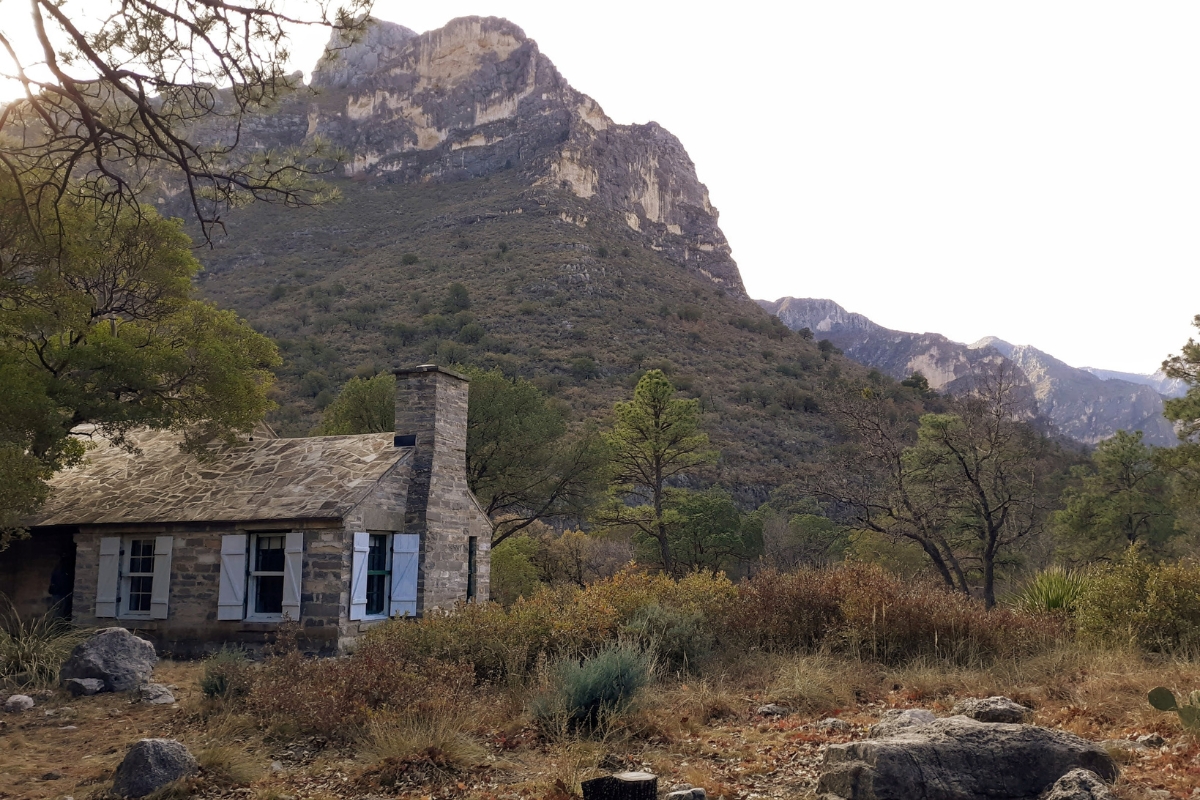
Third, McKittrick Canyon contains several unique geographical formations, including the mystical “Grotto”, and “the Notch”!
If you want to break the McKittrick Canyon Trail into an overnight backpacking trek, there are backcountry camping spots to accommodate those intrepid hikers!
Quick Facts on the McKittrick Canyon Trail:
- Length: 21.3 miles roundtrip out and back trail
- Elevation Gain: 4,074 feet
- Rating: Difficult
- Estimated Time to Complete: 10 – 12 hours
#5: Devil’s Hall Trail
If you are in the mood for a shorter but no less intriguing canyon hike in the Guadalupe Mountains, check out the 4 mile long Devil’s Hall Trail. This ominously named trail climbs up and through a narrow slot canyon and natural “staircase”. Get ready for some rockiness and moderate bouldering on this trail, which is all part of the fun!
Quick Facts on the Devil’s Hall Trail:
- Length: 3.8 miles roundtrip out and back trail
- Elevation Gain: 600 feet
- Rating: Difficult
- Estimated Time to Complete: 1.5 – 2 hours
#6: Pinery Nature Trail
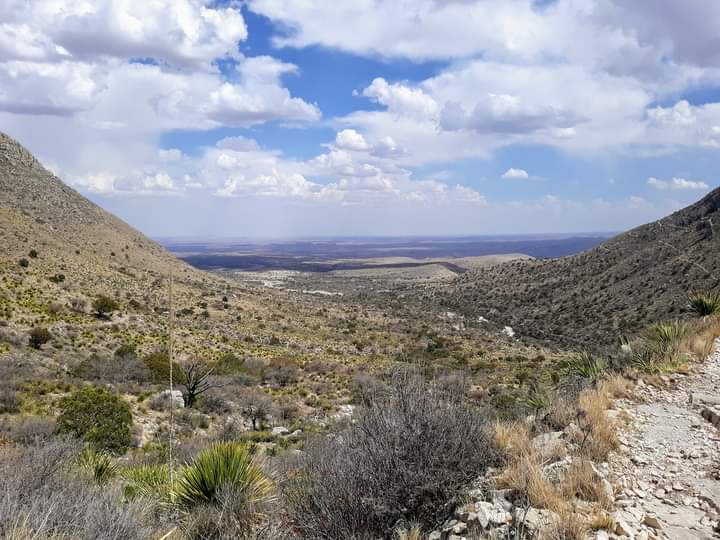
In addition to the chance to see early Texas frontier cabins on the McKittrick Canyon Trail, get ready for another little dose of history with your hike on the Pinery Nature Trail!
Check out this family friendly 1 mile long nature trail that contains not only a great sampling of the native flora and fauna of the region, but also the chance to view the remains of the historic stagecoach station ruins, part of the previous Butterfield Overland Mail stagecoach route that operated through the Guadalupe Mountains in the 1850’s.
Quick Facts on the Pinery Nature Trail:
- Length: 1 mile roundtrip out and back trail
- Elevation Gain: 82 feet
- Rating: Easy
- Estimated Time to Complete: 30 – 45 minutes
#7: Smith Spring and Manzanita Spring Loop Trail
The best hikes in the Guadalupe Mountains have one more surprise in store – a hike that contains not one, but two desert springs! On the Smith Spring and Manzanita Spring Loop Trail, you will be able to witness how this humble desert oasis supports both native plants and wildlife in the area.
Both of these gentle springs are beautiful, peaceful, and perfect examples of desert waterways! And the surrounding mountain views don’t hurt either!
Quick Facts on the Smith Spring and Manzanita Spring Loop Trail:
- Length: 2.5 miles roundtrip loop trail
- Elevation Gain: 393 feet
- Rating: Moderate
- Estimated Time to Complete: 1-2 hours
Best Time of Year to Hike in Guadalupe Mountains National Park

So when is the ideal time of year to enjoy these best hikes in Guadalupe Mountains National Park? For the most part, spring and fall are going to be the ideal times of year to hike in the park. Especially fall if you are planning to hike the McKittrick Canyon Trail.
Temperatures are ideal during these seasons. Winter can come with snowfall, storms, and ice, so while hiking in winter is possible, always check the weather and the Guadalupe Mountains National Park website for alerts and/or closures.
If you are planning a mountain hike in the park, like the hike to Guadalupe Peak, you can also check the specific weather for the higher elevation summits at weather-forecast.com. This tool is a great resource to have for mountain hiking and higher elevation hiking, because weather can sometimes be very different at the base of a mountain versus the summit.
And many of the mountain hikes in the Guadalupe Mountains hover near or above 8,000 feet in elevation.
Summer is the season to take extreme caution when hiking in Guadalupe Mountains National Park. Temperatures can be brutal, and it is not advised to hike past mid morning. So if you do plan to hike in the summer, it is imperative to bring plenty of water and sun protection, and start your hike early in the morning!


