
Whitefish just logged its busiest July on record. Visitor spending topped $15.6 million, and the average short-term rental hit $672 a night—26 percent higher than summer 2024, according to a Daily Inter Lake report. Demand for Glacier-area cabins has never been hotter, so you and I need a smart plan before we click “book.”
Over the next few minutes we’ll unpack seven hard-earned truths—realistic drive times, true costs, timed-entry rules, and the comforts that can make or break a family trip. If you’d rather skip the guesswork, explore SkyRun’s curated Whitefish vacation homes before the prime summer dates vanish.
Ready to choose your perfect base? Let’s dive in.
1. How far is too far? (Whitefish drive times vs. trailhead doorsteps)
Picture your alarm chiming at 5:30am in downtown Whitefish. After grabbing coffee and pointing the car east, you face about 40 minutes of pavement to the west entrance, then roughly one more hour to Logan Pass. Push on to Many Glacier and you rack up a three-hour commute (one way), according to a frequently cited TripAdvisor discussion on driving times.
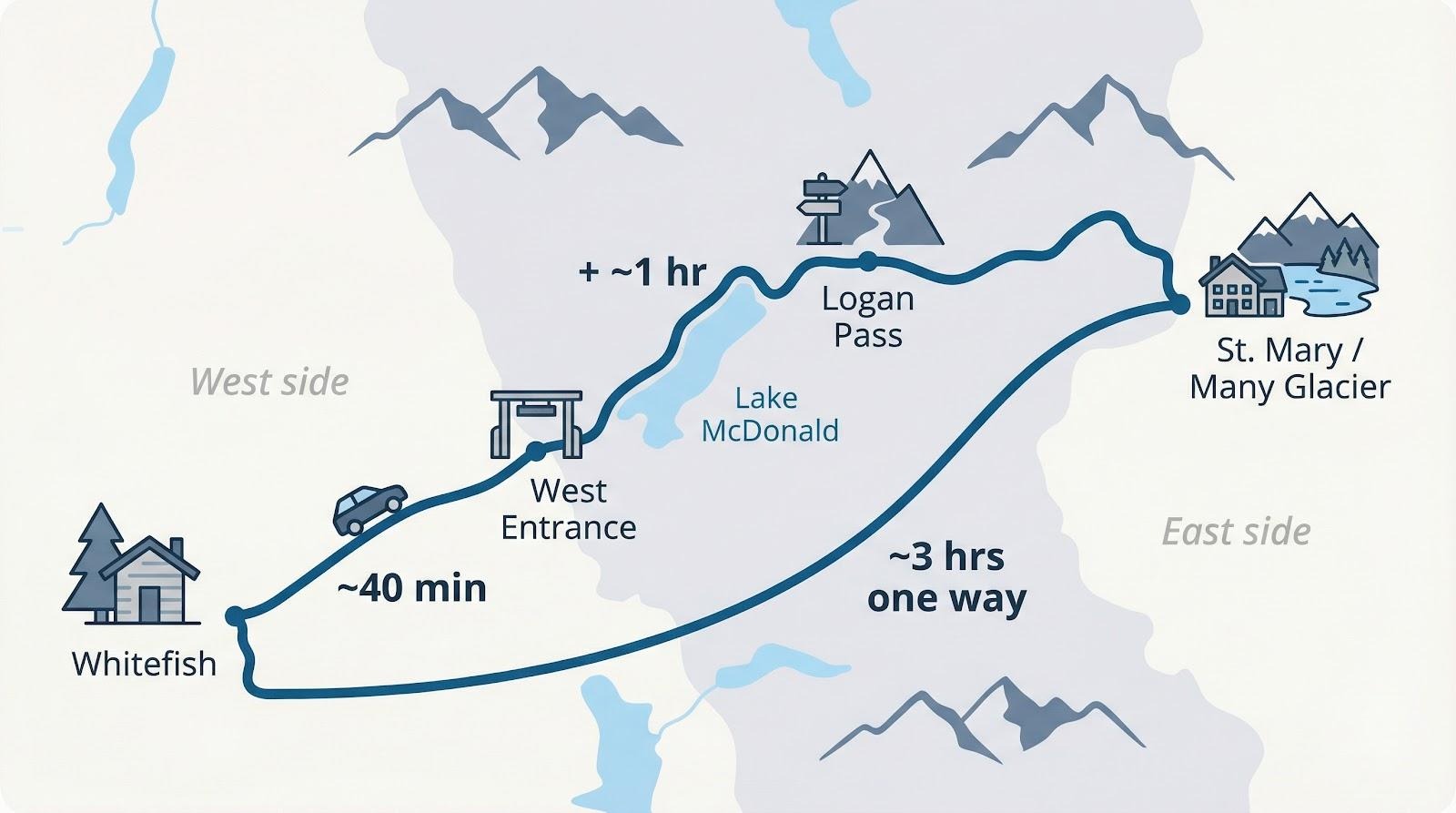
Those numbers matter. Glacier rewards early risers: parking lots at Avalanche and Logan Pass are often full by 8am. If you base in Whitefish, you race both sunrise and every other rental car on Highway 2. Sleep inside the park—or in tiny St. Mary or Babb—and the trailhead becomes your front yard. Roll out of bed, lace up boots, and chase alpenglow instead of taillights.
Convenience, of course, brings trade-offs. East-side lodges offer thin walls and spotty Wi-Fi, not flat-screen comforts. We tackle those details soon, but start by weighing your itinerary. A couple of scenic west-side drives? Whitefish feels luxurious and easy. Planning back-to-back hikes to Grinnell Glacier and Iceberg Lake? Every extra mile cuts into sleep.
There is a middle path. Many repeat visitors split the trip: two nights east for bucket-list hikes, three nights west for rafting and downtown dinners. One glorious traverse over Going-to-the-Sun Road ties it all together and saves you from living out of the driver’s seat.
Bottom line: decide how often you want to stare at your dashboard. The cabin choice flows from that single, honest answer.
2. Price check: what you really pay for location
Sticker shock is real. In July 2025 the average short-term rental around Whitefish cost $672 a night, 26 percent higher than summer 2024. Hotels were not exactly bargains at $364, yet they still trailed the vacation-home boom, according to a Daily Inter Lake report.
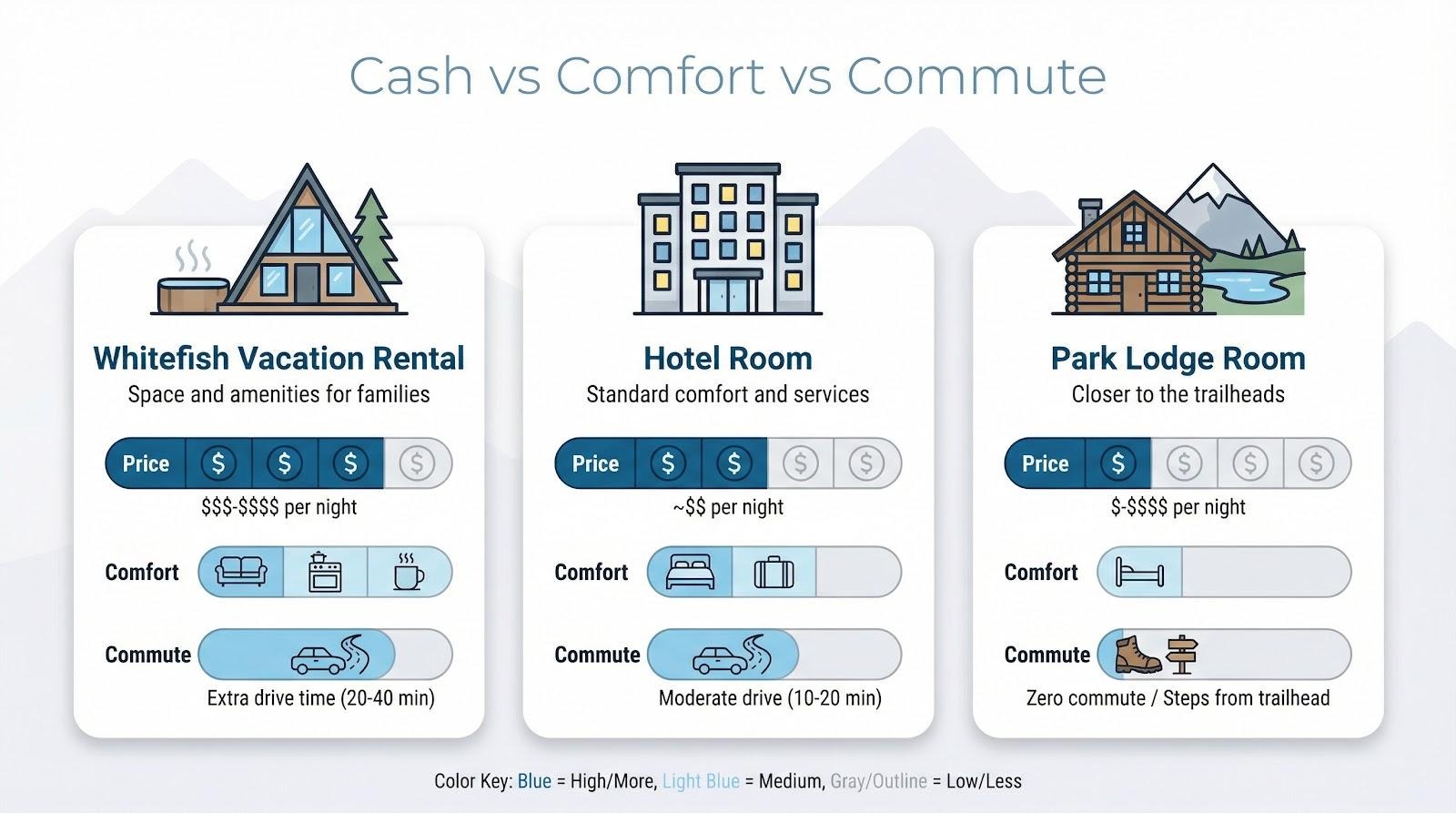
Inside Glacier, prices look gentler on paper. Standard lodge rooms hover between $230 and $300, while premium lake-view suites can reach $600. Factor in the square footage, full kitchen, and private hot tub found in many Whitefish cabins, and the math flips: a family of five often spends less per person in town than on two small park rooms with no air-conditioning.
Location shifts the ledger again. Stay outside the gate and you burn extra fuel and, more importantly, extra hours. That hidden cost matters if sunrise hikes top your list. Park lodges bundle convenience into the rate—zero commute, no timed-entry stress, and a front-row seat to alpenglow.
Think of it this way: you can trade dollars for daylight or comfort for convenience. Couples chasing romance might splurge on a lakefront balcony at Many Glacier. Multigenerational groups often stretch the budget by booking a large Whitefish chalet and cooking a few dinners in. Decide which currency—cash, time, or comfort—matters most, then choose the cabin that pays you back in memories.
3. Book early or bust: the 13-month scramble and timed-entry curveball
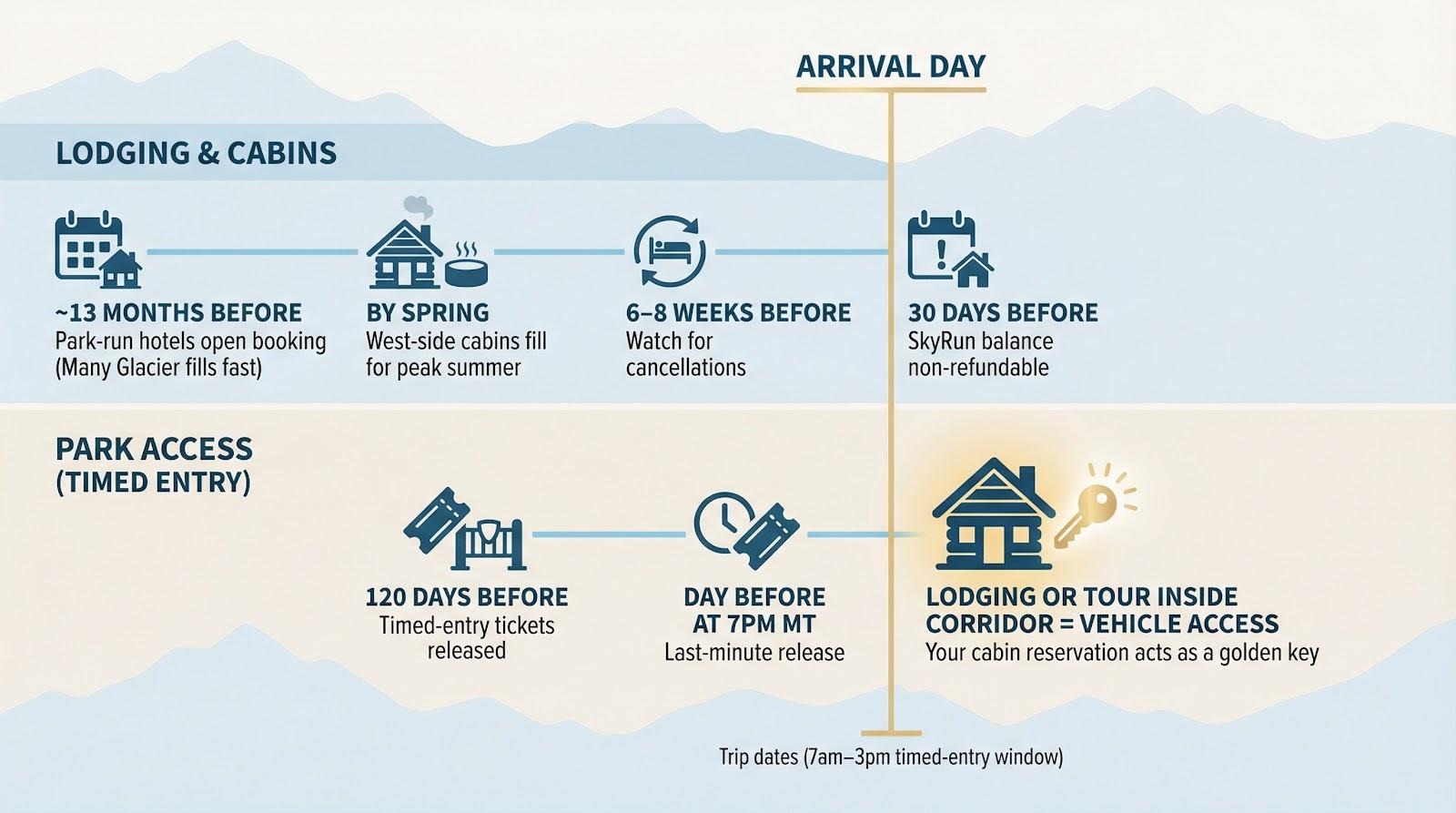
Glacier is not a place for spontaneous lodging plans. Park-run hotels open calendars about 13 months in advance, and summer rooms at Many Glacier often disappear that first morning. West-side cabins linger a little longer, yet by March most July hot-tub favorites in Whitefish are gone. The earlier you click, the wider your price and view choices.
Reservation fine print matters too.
SkyRun Whitefish asks for only a one-third deposit up front; you can learn more about their Whitefish rentals and see the full policy, but the remaining balance becomes non-refundable 30 days before arrival. Their optional travel insurance add-on, roughly 7 to 9.5 percent of the stay, is the only way to recoup costs if plans change.
Put that 30-day mark on your calendar because missing it can lock you into a bill even if weather or wildfire smoke forces a reroute.
Procrastinators do have one lifeline: cancellations. Watch reservation sites 6 to 8 weeks before travel, when guests who double-booked release backup rooms. A refreshed browser at 6am can feel like winning the lottery.
Booking strategy now ties directly to park access. Since 2024 Glacier has required a timed-entry ticket for the west entrance to Going-to-the-Sun Road between 7am and 3pm. The simplest workaround is to hold a lodging or activity reservation inside the restricted corridor. A confirmed night at Lake McDonald Lodge or a pre-booked boat tour automatically becomes your vehicle pass.
Stay outside and you must secure a ticket 120 days out, or gamble on the frantic day-before release at 7pm Mountain Time. Miss both windows and you drive before dawn, after three, or not at all.
Bottom line: lodging is more than a bed; it is your golden key to the park. Mark the booking dates, set calendar alerts, and treat that confirmation email like a backstage pass.
4. Creature comforts vs. rustic charm
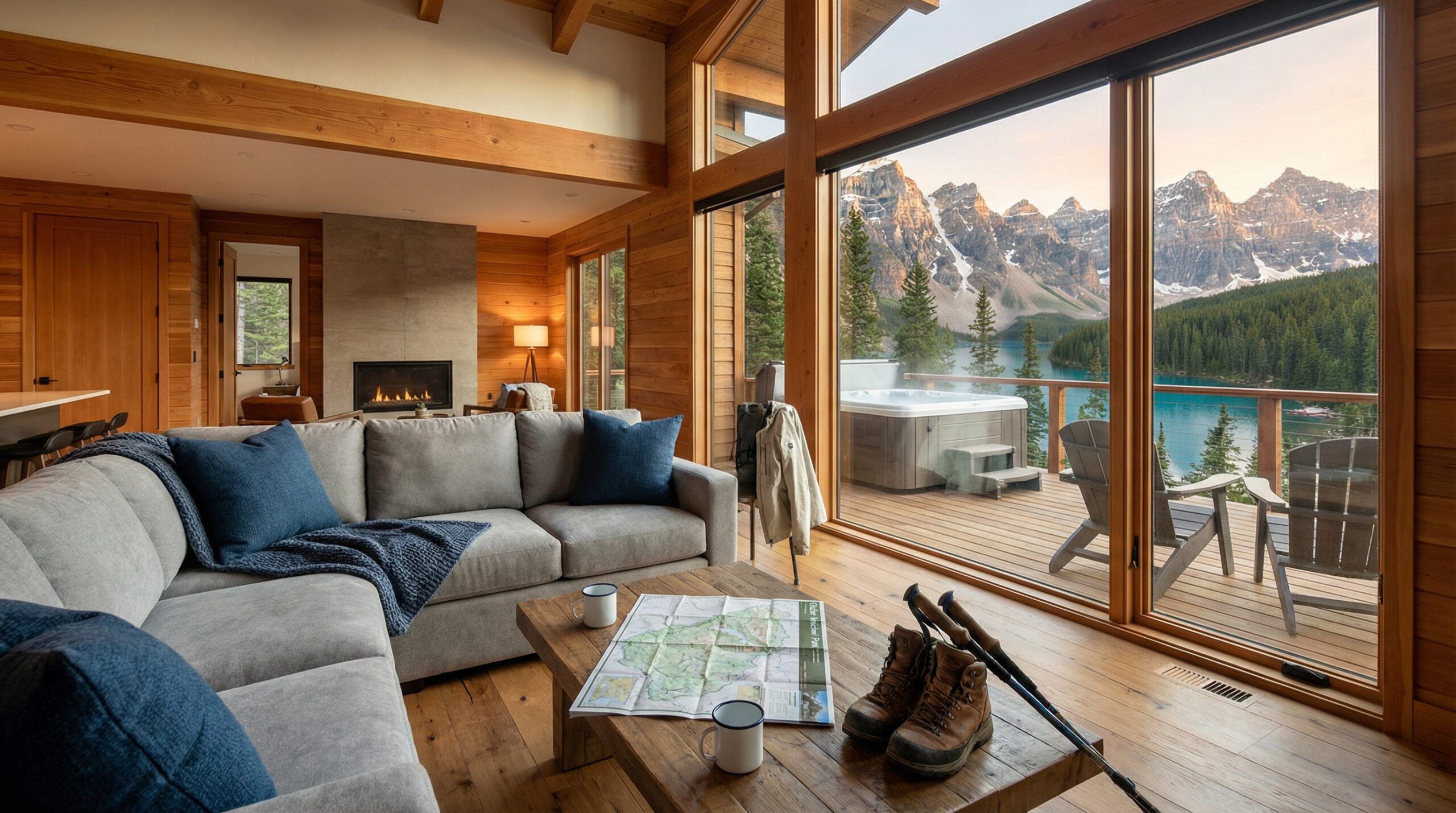
Slide open the door of a modern Whitefish cabin and cedar greets your nose. A thermostat glows at 68°F, Wi-Fi lights up your phone, and a full kitchen stands ready for that farmers-market haul. Many rentals add a private hot tub, a gas grill, and pet-friendly policies so the dog can nap on the deck after a lake swim.
Cross the park boundary and comforts shrink. Most Glacier lodges date to the pre-television era, long before anyone planned for air-conditioning. Expect creaky floors, compact rooms, and lobby-only internet that sputters when clouds roll in. Evening entertainment is a ranger talk or the Milky Way, spectacular yet missing the craft-beer flight.
Neither experience ranks as objectively better. One offers spa-like recovery after a ten-mile hike; the other lets you wake to loons on Swiftcurrent Lake. Ask yourself what refuels you. If it is a long soak and a streaming episode, stay west. If it is birdsong at dawn and zero notifications, lean east.
Pack earplugs either way. Glacier wind rattles lodge windows, while passing trains near Whitefish sound their horns deep into the night. Comfort wears many boots in Montana; choose the pair that fits your adventure.
5. Town life or wilderness nights? Dining, nightlife, and local culture
Whitefish pulses with après-everything energy. After a day in boots or on bikes we can wander downtown and choose among sushi, wood-fired pizza, or a bison burger paired with a local hazy IPA. Live music drifts onto the sidewalk, and the Tuesday farmers market turns the depot lawn into an open-air picnic with Big Mountain as the backdrop.
St. Mary tells a quieter story. Two cafés, one gas-station grocery, and lights out by ten if the generator cooperates. Many Glacier scales back even further: lodge dining room, Swiftcurrent snack shop, and a bar that swaps craft cocktails for glacier views. Conversation shifts toward tomorrow’s trail rather than last call.
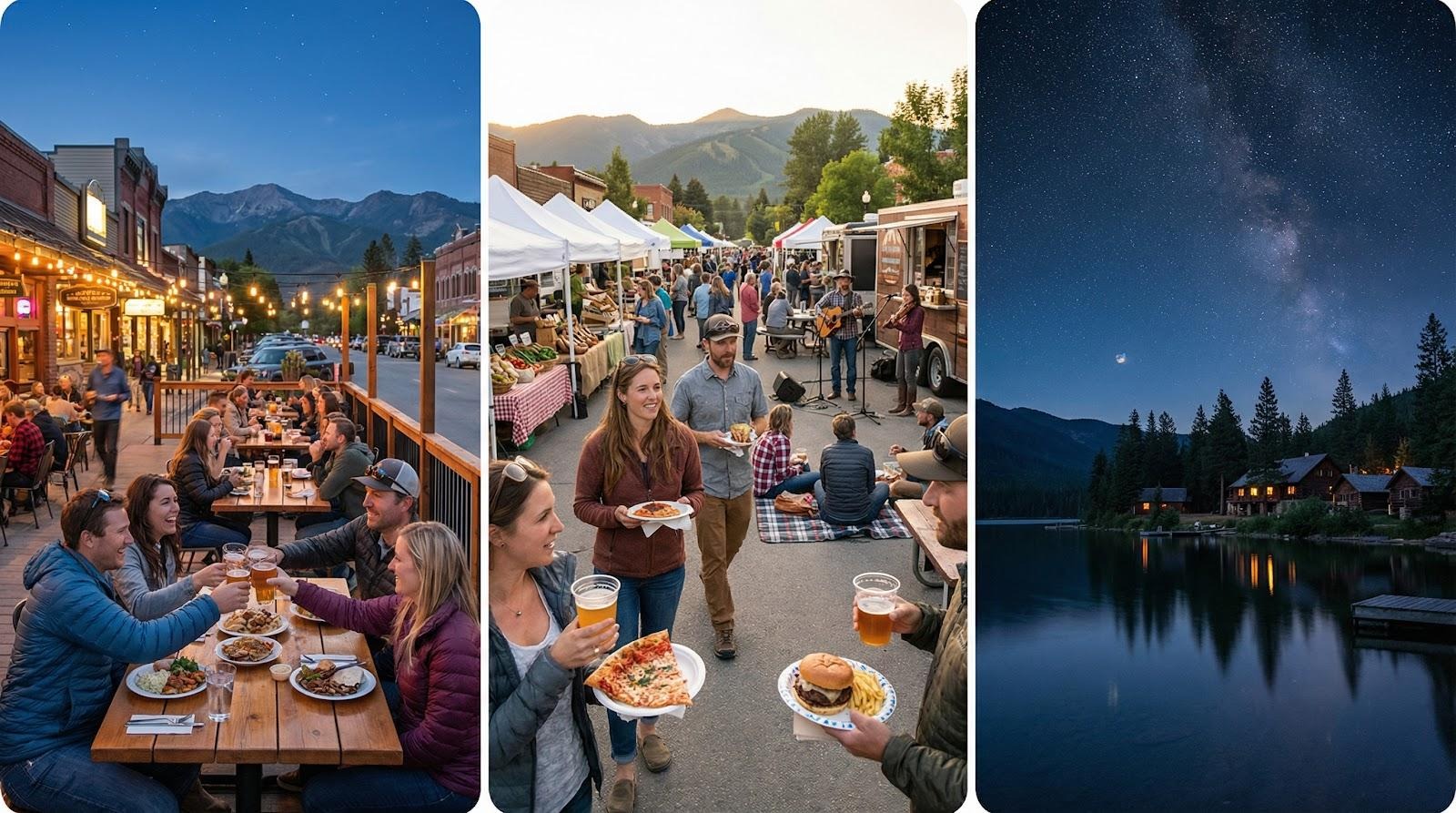
Neither rhythm feels inherently better. Whitefish fuels taste buds and social batteries, while the park’s east side feeds a craving for silence, starry skies, and the soft plunk of a loon.
If your crew craves a latte and late-night fries, stay on the west side. If you prefer letting circadian rhythm set bedtime, sleep where the trailhead begins. Or split the week: toast summit days with a downtown Whitefish brew, then retreat to the stillness of alpine dark. Your appetite—culinary or cosmic—guides the choice.
6. What can you do from each base? Adventures beyond the porch
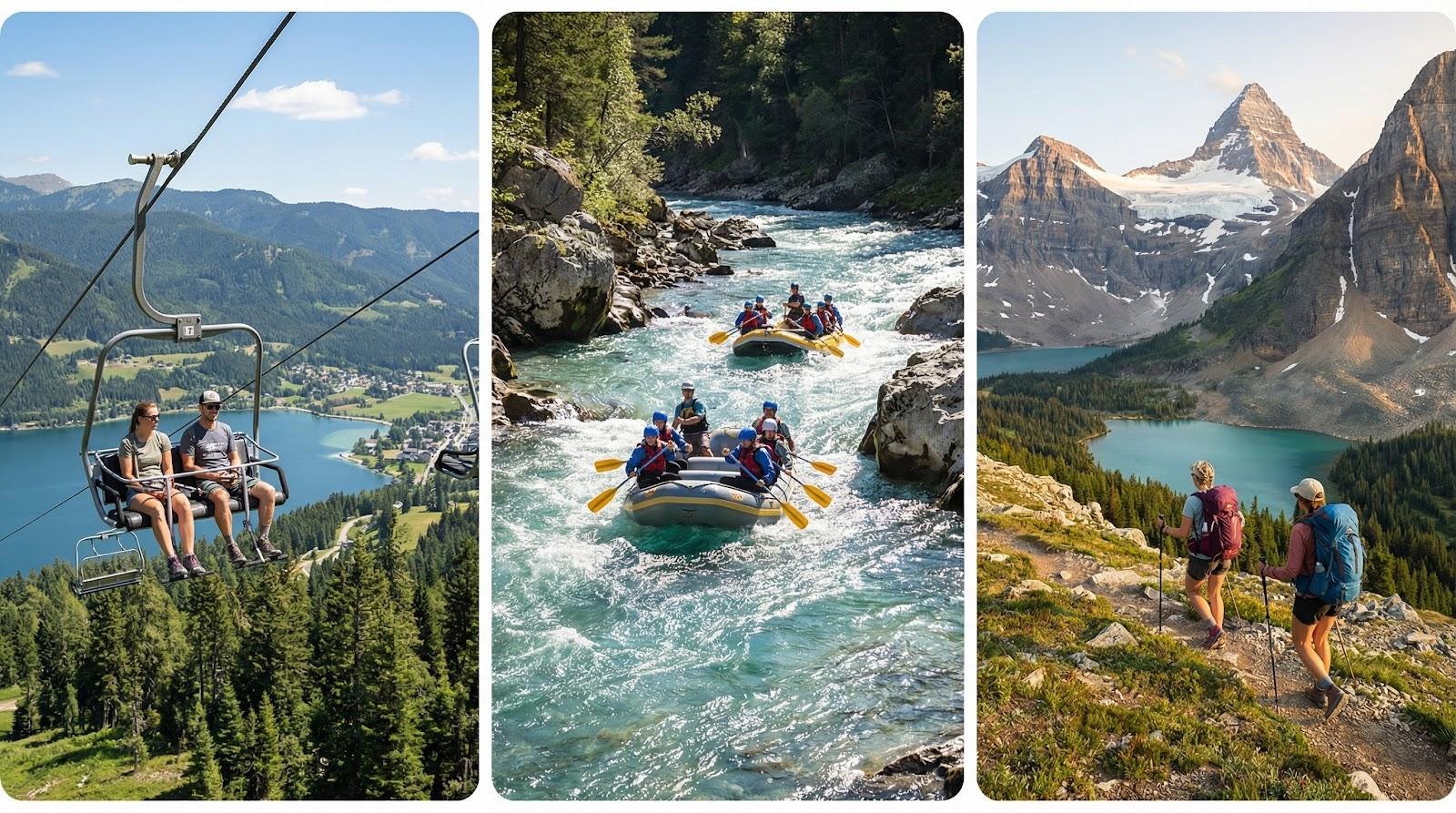
Basing in Whitefish unlocks a choose-your-own-Montana menu. One morning we can ride the chairlift to the 6,817-foot summit of Whitefish Mountain, zip down the lines, then cool off with paddleboards on City Beach. The next day we might join a guided raft down the Middle Fork of the Flathead, where the put-in sits about 15 minutes from downtown coffee. Bad weather? Kalispell museums and breweries turn a rainy spell into a culture crawl.
Stay inside the park and the vibe narrows to pure wilderness, but depth replaces breadth. From Many Glacier the trail to Grinnell Glacier starts steps from the lobby. Sunrise photos at Wild Goose Island need only a short roll out of the parking lot before the first magenta streak. Wildlife clusters near trailhead edges; dawn moose sightings can feel like a private documentary.
Conclusion
Both sides share marquee hits such as Logan Pass, yet access windows differ. A west-side cabin makes sunset at Lake McDonald feel effortless, while an east-side room turns sunset into an early bedtime and positions you for a dawn hike on Highline. Picture the park as two theaters. Pick your nightly address based on which show you refuse to miss, or reserve seats at both and applaud from every aisle.