

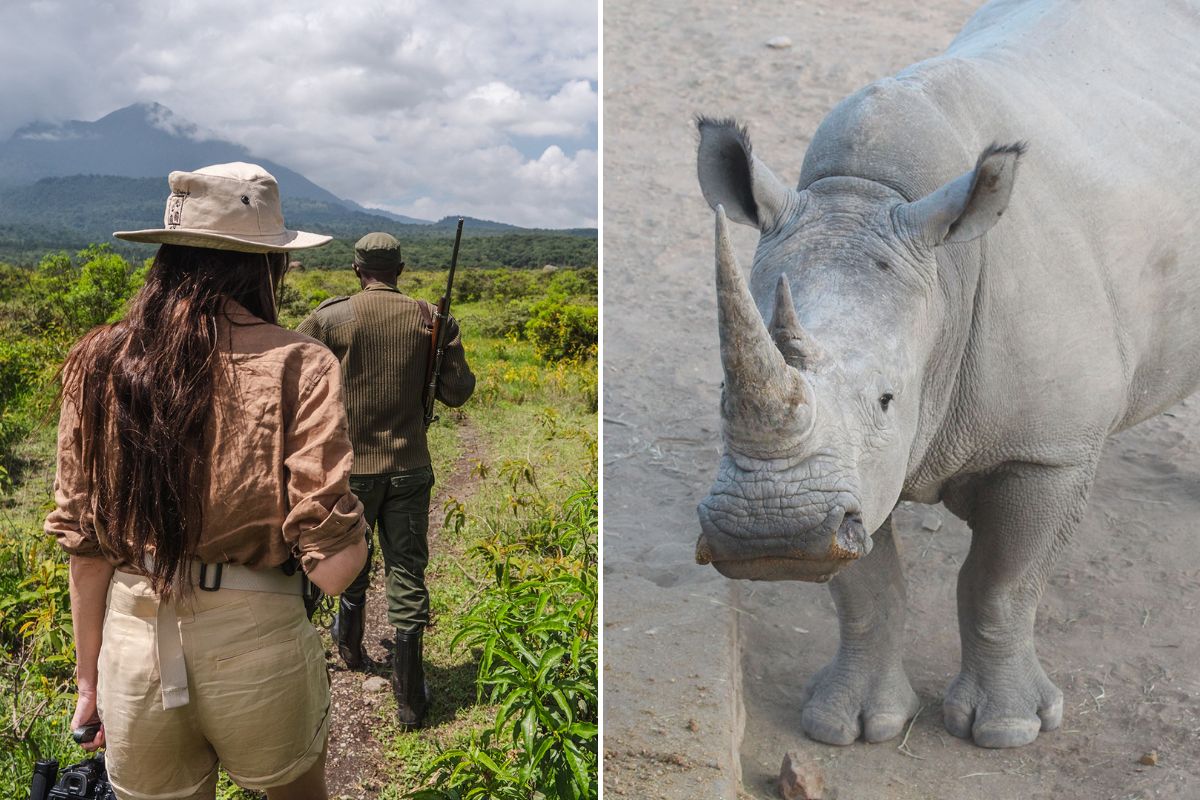
If you’re planning to visit Africa, then there’s a good chance you’d love to tick seeing rhinos off your bucket list. In this post, we’re going to round up some of the best places to see rhinos on an African safari so you have the best chance of viewing these magnificent animals.
I saw my first ever wild rhinos in South Africa over 10 years ago. The duo of white rhinos were accompanied by armed guards, a sobering reminder of the rhino’s plight.
Indeed on a recent trip to the Masai Mara in Kenya, my guide informed me that whilst rhinos are extremely rare to see there nowadays, a few decades ago you could see hundreds of them dotting the plains.
Unfortunately, rhinos have borne the brunt of poachers and trophy hunters for over 120 years. Sadly, they had to reach near-extinction levels before serious measures would be introduced. An estimated half a million rhinos once roamed the plains of Africa and Asia in the early 1900s, but today it is a totally different story.
Numbers of the white rhino at one stage reached a mere 50, while other subspecies became totally extinct. However, global efforts to stem the onslaught have paid off with the number of rhinos recovering to a present estimated total of 30,000 animals across the world.

By visiting these parks, not only will you have the opportunity to potentially see rhinos, but you’ll also be helping to support the reserves that keep them safe.
Kruger National Park, South Africa
With an estimated population of 2,600 white rhinos and 230 black rhinos, Kruger National Park has the highest number of rhinos among all the parks in Africa.
Among the best places to find them are in the southern regions between the Sabie and Crocodile Rivers. However, while Southern Kruger is a common place for white rhino sightings, particularly within the Pretoriuskop and Malelane areas, the smaller black rhino can be trickier to spot.
Black rhinos are solitary animals who prefer hiding in bushy areas and often require a guide to spot them. You can enquire with rangers or guides within private reserves, such as Sabi Sands or Manyeleti, to improve your chances of seeing rhinos in Kruger.

It was in a nearby private concession where I saw my first ever wild white rhinos. They were grazing nonchalantly on the vegetation, not seeming to care about being under the ever watchful eye of park rangers, who try their best to give the rhinos space.
Alongside rhinos, Kruger also has a healthy population of most animals found in Africa, including large numbers of the Big Five.
Etosha National Park, Namibia
The arid deserts of Namibia may not seem the likeliest places to find rhinos, but there are over 700 black and white rhinos in the Etosha National Park. Having adapted to the dry and dusty climate and landscape, they spend most of the daylight hours hiding in the sparse scrublands but are easily spotted after dark, usually around watering holes, especially during the dry winter months.
Many of these watering holes are flood-lit making night viewing an incredible experience.
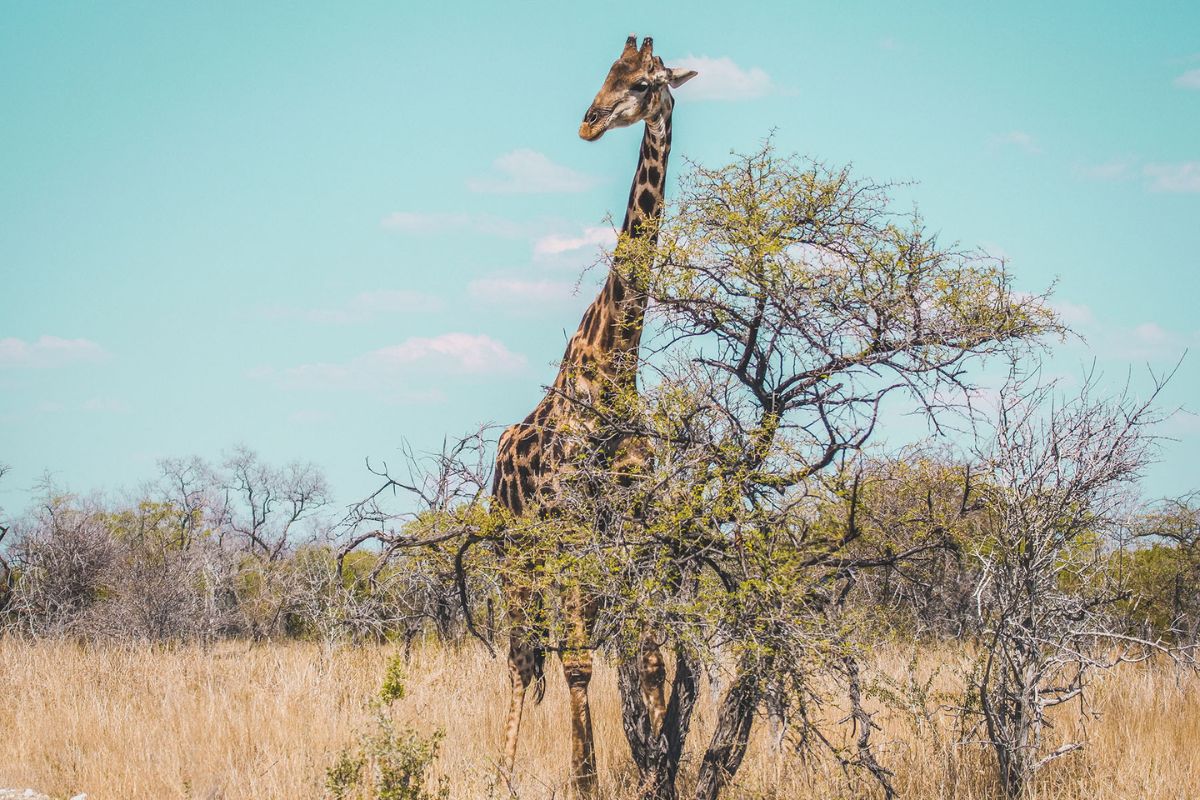
Whilst I may not have seen any rhinos on my visit (2 nights isn’t long enough for a visit to Etosha!) I did see plenty of other animals, including giraffes, ostriches, zebras, numerous species of antelope and lions. Elephants are also present in good numbers here. I’m confident that had I spent a little more time in Etosha, I would have had at least one encounter with one of its rhino residents.
The vast flat landscape makes it ideal for self-drive safaris and improves your chances of spotting wildlife here.
Nairobi National Park, Kenya
Conveniently situated on the outskirts of the city, Nairobi National Park is the only place in the world where you can see animals in the wild with skyscrapers as a backdrop. Having almost 100 black and white rhinos in a relatively small park, it’s also one of the few places where your chances of seeing these endangered creatures is pretty high throughout the year.
Its varied landscape of savannahs, woodlands and wetlands is also home to many other animals, including four of the Big Five, with elephants being the only exception. Cheetahs, giraffes, wildebeest, zebras, crocs, hippos and tons of other lesser-known wildlife, including many species of birds are also abundant and easily spotted.
The Nairobi Animal Orphanage and black rhino breeding sanctuary, play a crucial role in Kenya’s conservation programs, breeding, raising, and relocating rhinos and other species to the various parks around the country.
I don’t tend to recommend animal sanctuaries and orphanages as unfortunately too many of them do more harm than good and are breeding animals for touristic benefits. But in the case of the Sheldrick Wildlife Trust, they are truly doing marvelous work to decrease poaching across Kenya and protect the country’s endangered species.
Hluhluwe-imfolozi Game Reserve, South Africa
Situated a few hours north of the coastal city of Durban, this park gained world recognition for bringing rhino stocks back from the edge of extinction. But although today rhinos are a common sight here, the reserve still requires heavy protection from poachers.
Nevertheless, Hluhluwe-imfolosi Game Reserve remains one of the best places in the world to see both black and white rhinos.

It’s also home to numerous other species, including the Big Five, although sightings of big cats are infrequent. Elephants, buffaloes, giraffes, zebras and antelope are fairly common though.
Various hideouts nestled amongst bushes alongside watering holes throughout the park, provide excellent game viewing.
Mkhaya Game Reserve, Eswatini
This lesser-known park in Eswatini, formally Swaziland, is a really underrated reserve. Having saved the Nguni cattle from extinction in the 1970s, through the generous assistance of numerous donors, it continued its work becoming a crucial sanctuary for many endangered species, notably black and white rhinos.
Closely guarded by some of the finest anti-poaching units in Africa, Mkhaya provides some of the best opportunities to view rhinos and other wildlife up close, with animals having become accustomed to the presence of humans.
The lack of big predators, except for the odd leopard and a few hyenas, makes it a good choice for those looking to take a walking or hiking safari. Walking safaris are one of my favourite activities as they allow you to see the wildlife from a different perspective. Plus, nothing can quite rival the thrill of seeing a large animal such as a giraffe or elephant on foot.
Its small size and high density of rhinos, make Mkhaya a fantastic safari destination (and one of my personal favourites), for those wanting a more up-close and personal encounter with the wildlife.
Lake Nakuru National Park, Kenya
This park is a true gem of Kenya, not only for its breathtaking beauty, and density of wildlife, but also for its abundance of white and critically endangered black rhinos. Its small size makes it easier to find animals, with most of them congregating around the shores of Lake Nakuru, which takes up much of the park.

Lake Nakuru, as well as being a national park, is classed as a rhino sanctuary and is one of the best places in the country to see them. Unlike most national parks in Kenya, Lake Nakuru is fenced in order to protect its rhino inhabitants.
Lake Nakuru boasts a population of 25 black rhinos and 70 white rhinos.
This picturesque park is also home to lions, leopards, cheetahs, buffaloes, giraffes and various other animals as well as a wide range of birds, such as fish eagles, goliath herons, pelicans and huge colonies of flamingos. One of the most unique residents here is the Rothschild’s giraffe, an extremely rare giraffe that has been brought back from the brink of extinction due to a successful breeding program by the Giraffe Centre in Nairobi.
Game drives, walking and boating safaris are on offer here, taking you extremely close to the wildlife, with many picnic spots and rocky outcrops with panoramic views.
Ol Pejeta Conservancy, Kenya
Set below the foothills of Mount Kenya, Ol Pejeta is a relatively unknown private reserve that has done such sterling work in protecting endangered animal species, and more particularly black and white rhinos. Ol Pejeta is a non-profit, working exclusively to conserve kenya’s wildlife.
This conservancy has the highest population of black rhinos in East Africa with over 100 individuals.
Most notably, Ol Pejeta also houses the last two northern white rhinos left in the world, Najin and her daughter Fatu.

Apart from the Big Five, including over 200 rhinos, this park is also home to cheetahs, hippos, giraffes, zebras and other common animals as well as some rarer species like oryx, the distinctively striped Grevy’s zebras and packs of wild dogs.
As Ol Pejeta is a private conservancy, it has a vast array of activities that you can take part in, including lion tracking, horse riding safaris, walking safaris, night game drives and much more.
Matobo Hills, Zimbabwe
This rugged stretch of wilderness is another rhino hot spot in Africa, despite being hardly mentioned amongst the other more famous parks of the continent. It was only through my interest in rhinos that led me to discover this place…and what a find it was!
Having been restocked from Hluhluwe Game Reserve in South Africa in the 1960s, today both white and black rhinos are frequently seen roaming the scrublands and hills of Matobo just south of Bulawayo. Visitors are also likely to see loads of other wildlife, like giraffes, zebras, hyenas, hippos, crocs, baboons, warthogs, duiker and waterbuck.
Another surprise for me was to discover that Matobo Hills has one of the highest concentrations of leopards in Africa and the largest number of black eagles in the world!
Ngorongoro Crater, Tanzania
Dubbed the “Eden of Africa”, it’s not surprising that Ngorongoro features in almost all Tanzanian safari itineraries. This unique landscape consists of a circular crater floor stretching 19 km in diameter surrounded by a steep 610-metre rim, providing a sanctuary for the 25,000 animals that call it home and making it one of the best year-round safari destinations in Africa and one of my absolute favourite places!
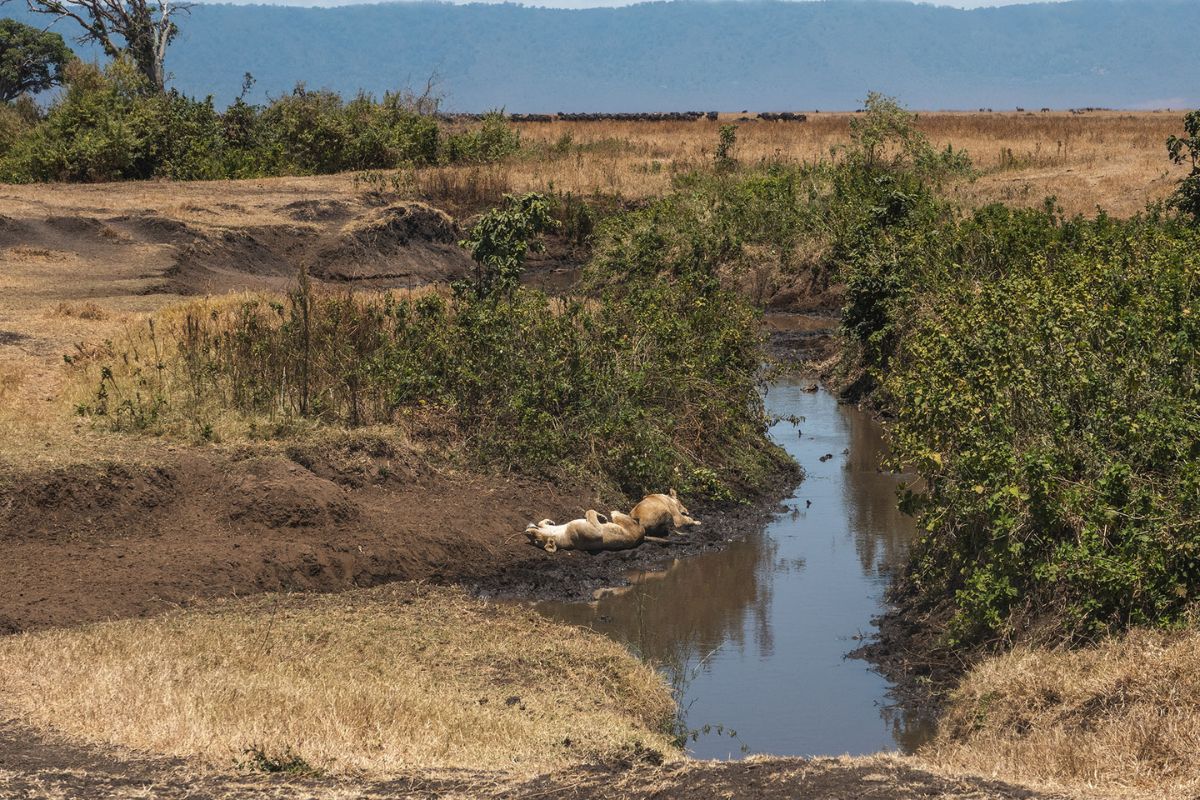
Virtually all Africa’s usual animals including the Big Five can be found here in abundance, except for giraffes and crocs. Ngorongoro also has a population of black rhinos and is in fact the best place in Tanzania to try to catch a glimpse of them.
The rhinos of Ngorongoro are most likely to be seen in the early hours of the morning, as the sun is starting to rise, as during the night they congregate together in the open plains. As the day starts to warm up, they disperse and head to the woodlands, where they graze throughout the day.
Ngorongoro’s rhinos are monitored at all times by rangers on the crater walls, to ensure their safety.
No wildlife sighting is ever guaranteed and I sadly didn’t see any black rhinos on my visit to Ngorongoro Crater. However it was hard to be disappointed as I did see lions, elephants, buffalos and even some rare serval cats.
Ziwa Rhino & Wildlife Ranch, Uganda
Situated three hours north of Kampala and just below the famous Murchison Falls National Park, this little-known ranch is the only place where you can see white rhinos in Uganda.
Starting with six rhinos donated from Kenya and Disney Animal Kingdom in America, today this tiny 180 km² park boasts 41 white rhinos, drawing rhino lovers from around the world.
Having no natural predators and having become accustomed to visitors ogling them, guided walking safaris provide the ultimate thrill of getting within a few metres from them, presenting wonderful photographic opportunities.
Conclusion
Whilst at one point rhinos dotted the African savannahs, a common sight for safari-goers, the same can’t be said today. The good news is that in several places, spurred by strenuous conservation efforts, they are starting to make a comeback and there are several parks and reserves across Africa where you stand a good chance of encountering one of these magnificent animals.
We hope this has helped you plan your trip to Africa, and that you can see a spectacular rhino (or several!) during your trip.


