


The best things to do in Havana are those that let you interact with the local people and immerse yourself in the history of this unique and extraordinary capital city of Cuba.
Havana is a magical city that grows on you slowly but inexorably. The best place to start exploring is in Old Havana. The entire area is a UNESCO World Heritage site.
These tips from a local will help you find the best things to do in Havana.
Visit all four of the major plazas
These four beautiful plazas appear frozen in time. Each one has a fascinating backstory and is rich in history and architecture.
Plaza Vieja
This plaza was recently renovated and is now bordered by restaurants, breweries, coffee shops, and itinerant musicians strolling the area. This is a far cry from its original purpose as a slave trading center.
Plaza de Armas
This is where the city was founded in 1519, one of the earliest settlements in the New World.
The bucolic, leafy plaza is the site of the Museum of the City of Havana.
On the weekends, vendors gather here, selling books, posters, old coins, and more.
Plaza de San Francisco
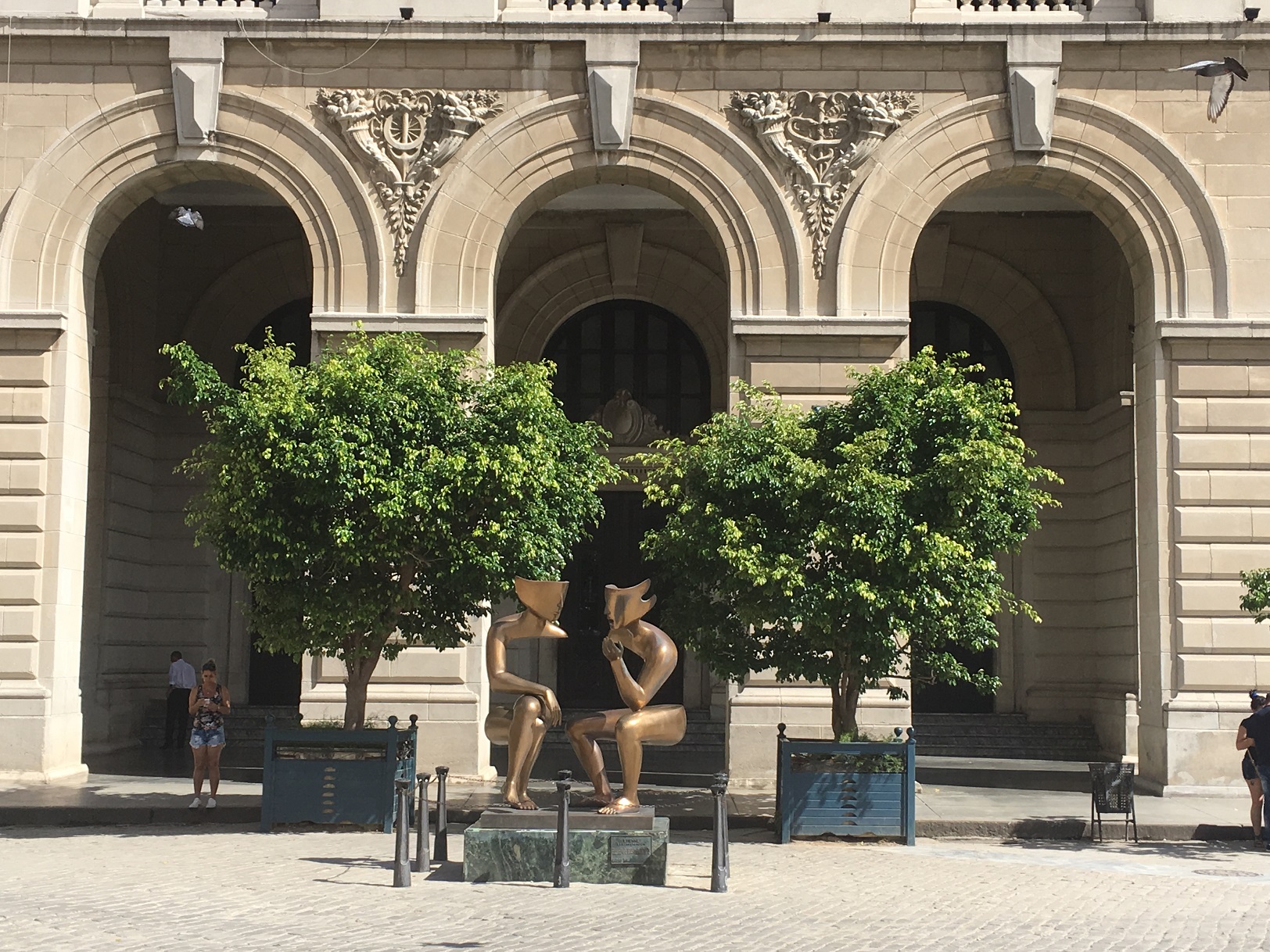
This plaza is considered so beautiful that it is where Cubans go to photograph themselves, celebrating family milestones like weddings and other important events.
In the center of Plaza San Francisco is an elegant marble fountain, one of the city’s symbols.
Plaza de La Catedral
This plaza is home to Havana’s cathedral. Completed in 1777 in the Baroque architectural style, the cathedral sits on the plaza’s north side. All around the plaza are colonial-style museums and arches.
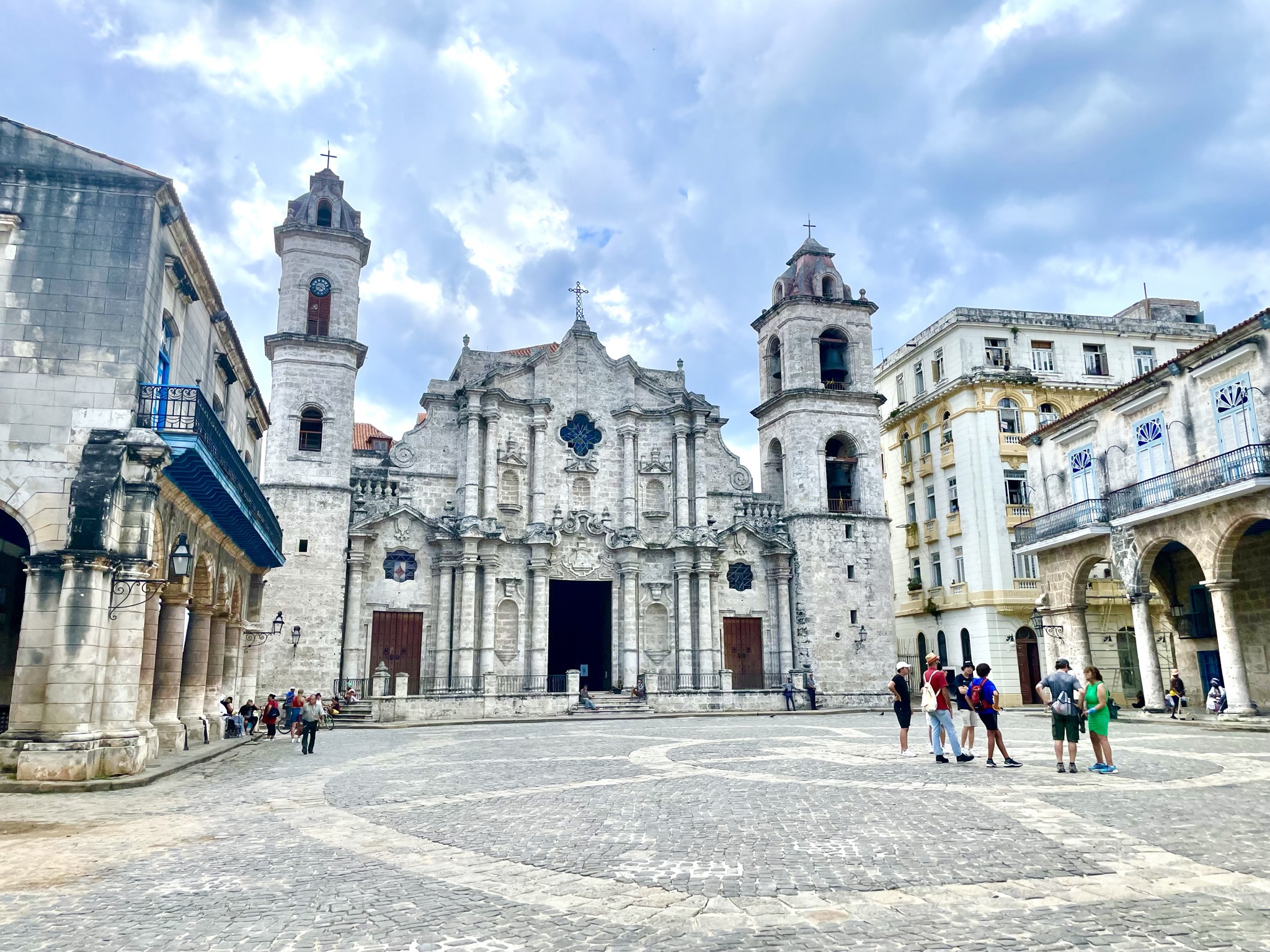
These four plazas are all connected. The streets that lead to them are the most interesting in the city and are colonial works of art themselves. These walks make for fascinating strolls through history with a self-guided Old Havana walking tour.
Experience the Cuban Art Factory (F.A.C)
The Cuban Art Factory (Fabrica de Arte Cubano, or F.A.C.) in Havana’s upscale Vedado neighborhood is a performance venue, unlike anything you have seen before.
The venue combines all types of performance art like galleries, classic dance, symphonies, cinema, disco, salsa, and much more all under one roof.
Sprinkled about the area are cute little restaurants, bars, and shops. All of this is in a refurbished cooking oil factory that has been transformed into this unique venue.
No money is exchanged at the F.A.C. Upon entering, visitors receive a stamped card depending on what is consumed inside.
At the end of the night, the card is turned in, and visitors pay whatever was recorded on the card.
The only place where cash is required is at the rooftop restaurant, a delightful spot with an eclectic menu and a killer view.
Even though the F.A.C. opens to the public at 8 PM, visitors should get there way before to beat the lines to get in.
There are always taxis outside the F.A.C. ready to return you to your accommodation but make sure to negotiate the taxi fare!
Take a break at a rooftop bar
Havana life is lived on the city’s rooftops. With very hot and humid weather much of the year, cooling off with a beverage on a Havana rooftop is a delightful experience.
The luxury hotels around Parque Central and the Malecon, Havana’s seawall, all have rooftop bars with amazing city views.
Among the best are the Iberostar Parque Central, The Packard, Kempinski, Hotel Inglaterra, and SO/ Paseo del Prado.
Some hotels even have rooftop pools that offer day passes for visitors to lounge by the pool and perhaps have a meal or drink.
Take the hop-on-hop-off bus
I think that hop-on-hop-off tourist buses are hard to beat as a means of getting your bearings in a new city. This transportation option is also perfect for Havana.
For just $10USD a visitor can take the hop-on-hop-off bus to most of the major sites around the city.
The route takes 2 hours to make the complete tour, but one can get off at any of the stops and hop back on when ready.
Visitors can take the bus at any one of its stops, like Revolution Square, the fortresses: Castillo de San Salvador de La Punta and Castillo de la Real Fuerza, as well as the fabulous beaches to the east of Havana.
One of my absolute favorite things to do in Havana is to take the tourist bus through the Vedado neighborhood, one of the most legendary in Havana.
This part of the city is where many of the wealthiest people lived before the revolution. Many of them had luxurious mansions you can still see today. The architecture is amazing. Even though some mansions are crumbling from lack of maintenance, you can see the grandeur of what they must have been like in their heyday.
Another one of the more interesting stops on Havana’s hop-on-hop-off bus is the University of Havana.
This elegant building has steps leading up to the statue of the Alma Mater, similar to what can be seen at Colombia University in New York City.
The university occasionally gives tours – ask at the sentry post at the bottom right of the stairs – that explain the history of the institution.
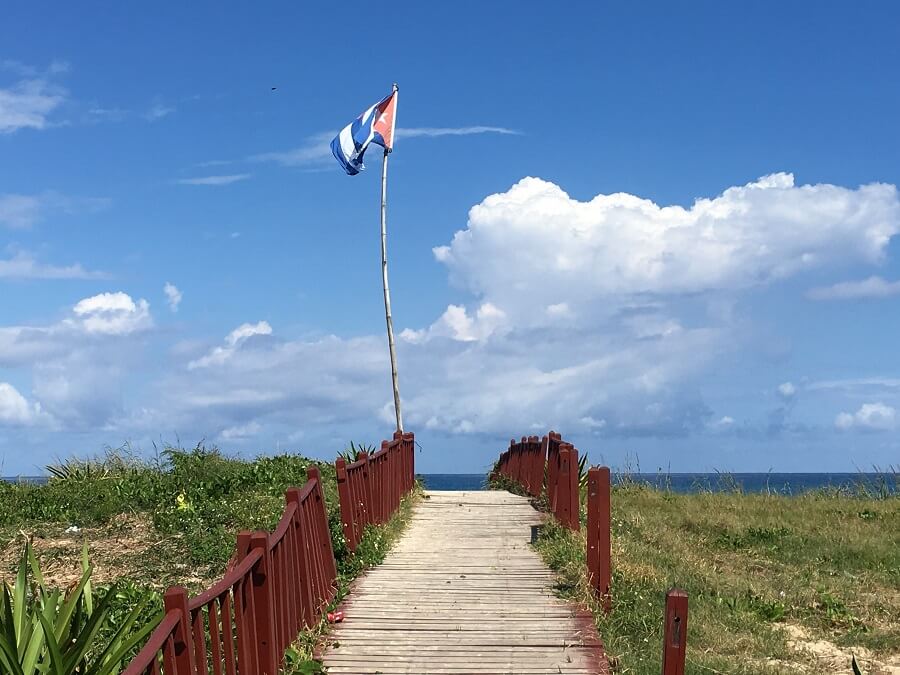
For a great day at the beach, just stay on the bus until the last stop. Spend the day by the impossibly blue ocean, have lunch at one of the seaside kiosks, and take the bus back to the city.
A day at the beach is a great escape from the hustle and bustle of Havana. And don’t forget to hold on to your bus ticket as it is good for the entire day.
Sightsee Havana in an antique American convertible
We’ve all seen photos of those classic American cars from the 1950s tooling around Havana.
These cars were originally imported from the United States in the 1950s before the revolution of 1959.
They are passed on from generation to generation and used as highly prized taxis to transport tourists around town.
Although many of these cars look new, they have been refurbished and cobbled together with parts from around the world.
Today the only thing that remains original is the body. Everything else is a “Frankenstein” car.
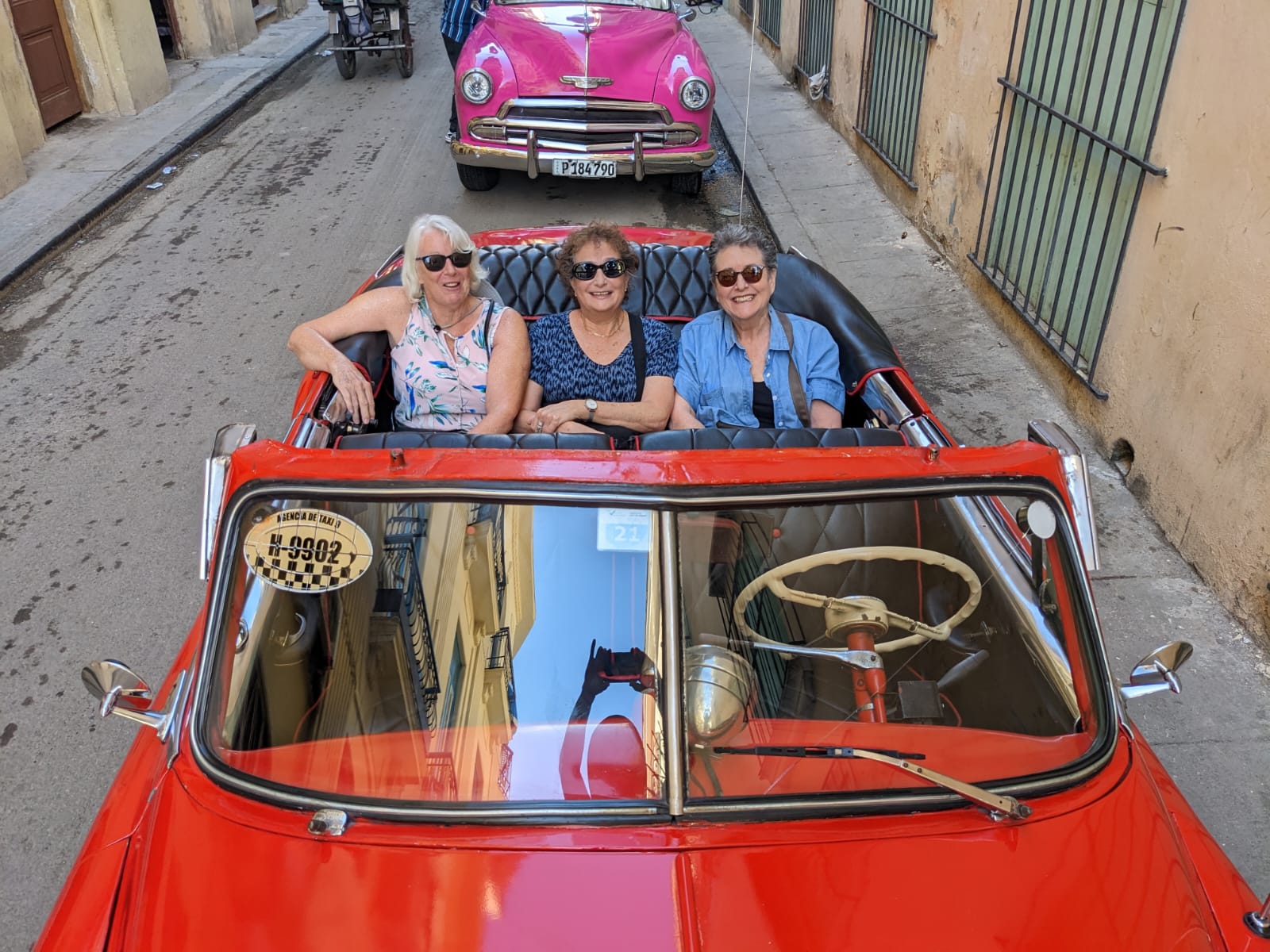
The cars can be hired throughout Havana, but the area around Parque Central is where many congregate.
The cost is anywhere from $30 to $50USD per hour, depending on your negotiation skills. Most visitors rent the car (with a driver) for one hour, but if rented for more time, the price is reduced.
This is a great way to see the city in a short amount of time. The fact that the cars are convertibles lets visitors see the city from an advantageous angle to appreciate Havana’s exceptional architecture.
The drivers are experts in showing off their city to the best advantage, and you’re sure to see the best sites. Get ready for some fabulous photo opportunities!
Join the locals at the Malecon, Havana’s seawall
The Malecon, Havana’s seawall, is frequently referred to as Havana’s living room. Many of the city’s apartments are small, crowded, and not air-conditioned, so on hot and humid nights, indeed any night, the locals head to the “Malecon.”
Here is where the “Habaneros,” Havana residents, can catch an ocean breeze, drink some of the best rum in the world, listen to music and dance, and chat the night away.
Visitors are always welcome to join the locals and make new friends, or they just sit on the seawall, listen to the music, and people watch.
Visit one of Havana’s many museums
When people think of Havana, they often think of colonial architecture, palm trees, candy-colored classic convertibles, music, rum, and cigars. All that is there in great abundance, but Havana is also a city of museums.
Havana boasts many fine museums like the splendid Museum of Fine Arts – both the Cuban and the Contemporary wing – and the Napoleonic Museum, the finest collection of Napoleonic memorabilia outside of France.
Some of the most interesting and intriguing museums in town include:
The Rum Museum. Learn about the history of rum and get free samples!
The Museum of Decorative Arts. The wealthy, landowning Gomez family once owned this beautiful mansion in the upscale Vedado neighborhood on 23rd street. It was built in 1927 by French architects in the French renaissance style.
Now the home is a museum housing period furniture and original works of art.
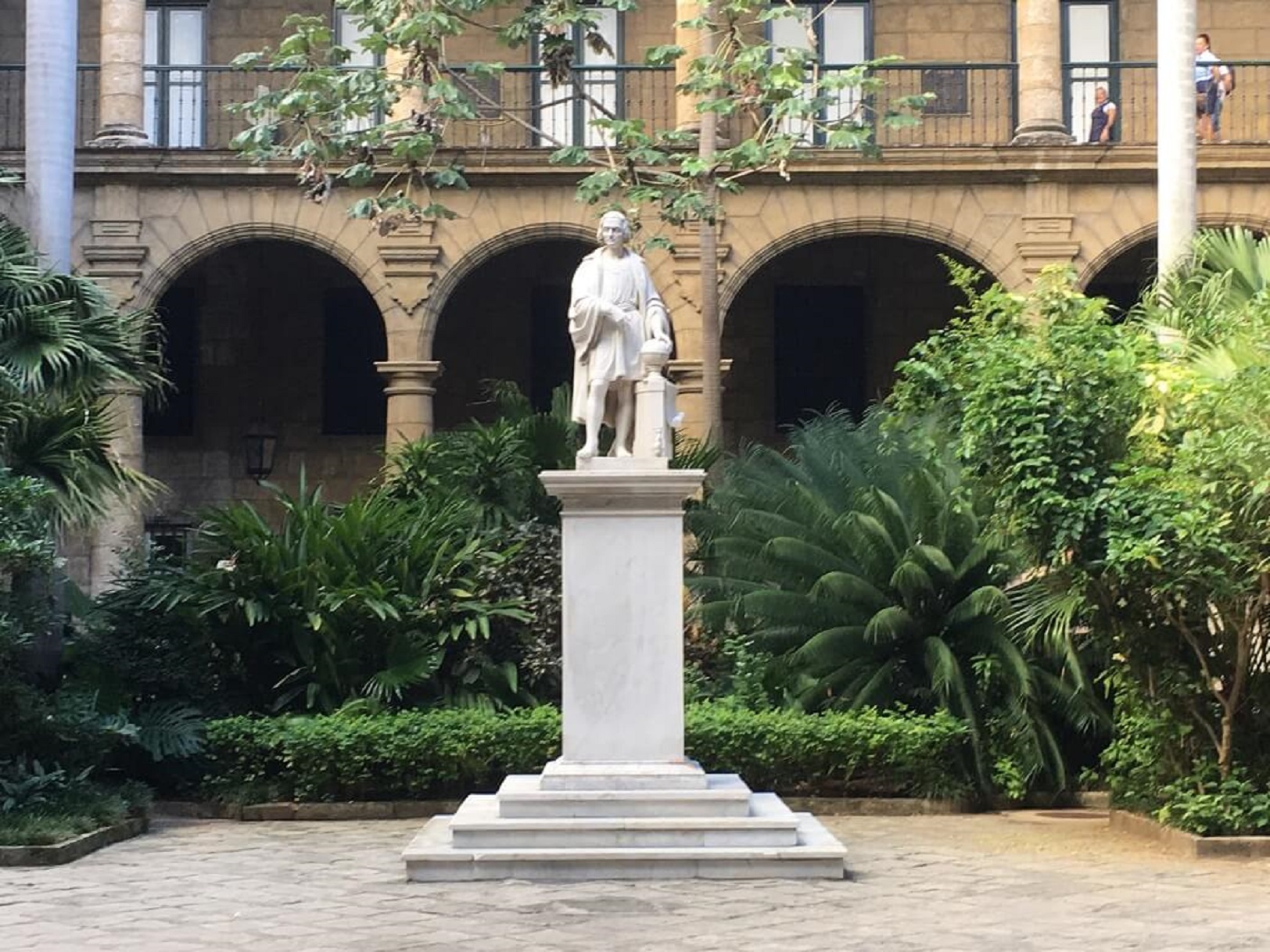
Visitors also enjoy the unusual fragrance museum and the chocolate museum that doubles as a chocolate-themed restaurant.
Lose yourself in the Colon Cemetery
This beautiful 122-acre necropolis, the Cementerio de Colon or Columbus Cemetery is situated on the west of Vedado neighborhood.
Named after the famed explorer and completed in 1886, the Columbus Cemetery is one of the most notable in the Americas.
The cemetery is the final resting place of many legendary notables, including presidents, world chess champions and local characters.
Another claim to fame is the exquisite funerary statuary and dazzling marble mausoleums decorated with stained glass windows and wrought iron.
The necropolis is laid out as if it were a little city with streets and avenues leading to a central domed church at its center.
It is worth hiring a guide to truly understand and enjoy all aspects of the cemetery. English-speaking guides are available for hire at the front gate.
A good guide will also share the stories of some of the cemetery’s more colorful legends and residents.
Visit a jazz club
Wherever you go in Havana, one word truly defines the city… music. You’ll hear music everywhere. Among the hundreds of venues where a visitor can enjoy music, a jazz club is a must.
Jazz is so popular that the world-famous Havana Jazz Festival takes place every January in Havana. This event attracts many of the world’s best-known musical artists.
One jazz club stands out in this city of music venues, La Zorra y El Cuervo, on 23rd street in the center of the Vedado neighborhood near some of the best hotels and restaurants in town.
Havana enchants and beckons the visitor with all it has to offer.
It is the kind of city a visitor will remember long after they leave.
Author Bio
Talek Nantes is an Amazon best-selling author and the founder of the travel blog www.travelswithtalek.com, where she shares travel tips, advice, and inspiration to help travelers create their own unique travel experiences. She also runs tours to Cuba, where her family is from, and other destinations. Talek has traveled to over 110 countries and believes that when it comes to travel, it’s all about the experience.
