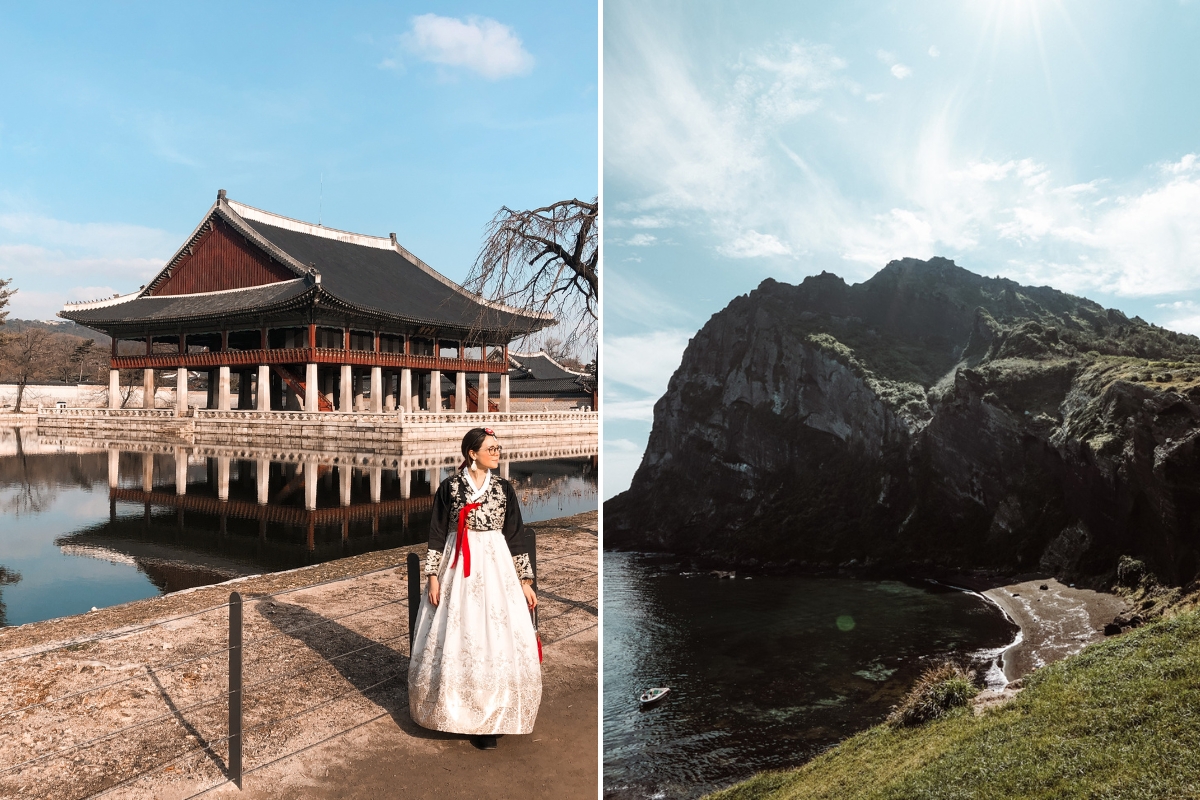


South Korea has a way of getting under your skin fast.
You land expecting palaces and street food and bibimbap, and you get all of that, sure, but then you also get a city that somehow feels ancient and aggressively modern at the same time, neighborhoods where a 600-year-old temple sits a five-minute walk from a neon-lit cosmetics strip, and locals who take their coffee, their skincare, and their weekend hikes with equal seriousness.
Seven days isn’t a long time. But if you plan it well, it’s enough to get a real feel for this country, not just the surface.
Most international flights land in Seoul, which makes it the natural starting point. Before you even think about what to do, sort out where you’re sleeping first, because the neighborhood you choose shapes everything from your morning routine to how far you’re walking after a late night out.
A good starting point for finding well-reviewed, well-priced hotels in Seoul is browsing by area, since the city has distinct districts that each have a genuinely different character. Hongdae, Myeongdong, Gangnam, Insadong, they’re not interchangeable, and your choice matters.
Days 1 – 3: Seoul
Give Seoul at least three full days. Honestly, you could spend a week here alone and still feel like you’d only scratched it.

Day 1: Arrive, Orient, Wander
Jet lag is real, so don’t overschedule day one. After checking into your hotel, pick one neighborhood and just walk. If you’re staying near Myeongdong, the street food alone will keep you occupied for hours: fish cake skewers, tornado potatoes, egg bread stuffed with a whole egg, vendors calling out prices in three languages. It’s a lot. Let it be a lot.
In the late afternoon, head to Gyeongbokgung Palace before it closes. Yes, it’s a tourist landmark, yes, it’ll be on every “top 10 Seoul” list you’ve ever seen, but the scale of the place still manages to surprise people who think they’ve already seen enough palace photos to be bored. The Joseon dynasty knew what it was doing architecturally. Rent a hanbok at one of the nearby rental shops, and you’ll get in free.
Day 2: Palaces, Markets, and a Little Breathing Room
Start early at Bukchon Hanok Village, ideally before 9 a.m., when the tour groups arrive. It’s a residential neighborhood of traditional Korean houses, narrow stone paths, tiled rooftops, and the occasional cat sitting in a doorway, and it feels genuinely lived-in rather than staged. Be respectful: people actually live here, and signs asking visitors to keep noise down are there for a reason.
From there, walk down to Insadong for lunch and browsing. This area is home to art galleries, tea houses, and shops selling everything from hanji (traditional Korean paper) to contemporary ceramics. Try the ssambap at one of the traditional restaurants; it’s simple food, shared in a way that feels unhurried.
In the evening, head to Dongdaemun Design Plaza (DDP) around sunset. The building itself is something, a swooping, futuristic structure designed by Zaha Hadid that looks like it landed from somewhere else entirely. The surrounding market area runs late into the night for those who feel like shopping.
Day 3: Han River, Coffee, and Gangnam
Seoul’s relationship with the Han River is something worth experiencing firsthand. On weekends especially, locals flood the riverbanks with bicycles, picnic mats, instant noodles from the convenience store, and a general contentment that’s genuinely infectious. Rent a bike and ride along the river path, it’s one of those low-cost, high-reward experiences that doesn’t show up in enough itineraries.
Spend the afternoon in Gangnam, less for the K-pop reference and more because the area around Garosugil (a tree-lined street full of independent cafés and boutiques) is one of Seoul’s genuinely pleasant places to spend a few hours. Korean café culture is worth participating in, not just observing. Find a multi-story place with floor-to-ceiling windows and order something with condensed milk or a signature drink you’d never find at a chain.
Days 4 – 5: Gyeongju and the South
On day four, take the KTX high-speed train south to Gyeongju. It takes about two hours from Seoul Station and arrives in what historians call the “museum without walls,” the former capital of the Silla Kingdom, which ruled for nearly a thousand years. This is where South Korea’s ancient history is most visible and tangible.
What makes Gyeongju different from Seoul is the pace. The city is smaller, quieter, and built around its own past in a way that doesn’t feel performative. Walk through the Tumuli Park burial mounds in the morning; these are actual royal tombs, grass-covered and enormous, sitting in the middle of a city park like natural hills. Then rent a bicycle and ride out to Bulguksa Temple, a UNESCO World Heritage site that dates to the eighth century and still functions as a working Buddhist temple.
Spend the night in Gyeongju rather than rushing back. The night market near the old town area is small but good, and waking up in a city with this much history feels different from rushing in and out in a day.
What to see in Gyeongju:
- Tumuli Park (Daereungwon) burial mounds
- Bulguksa Temple and Seokguram Grotto
- Anapji Pond (beautiful at night with reflections)
- Gyeongju National Museum
- Cheomseongdae Observatory, the oldest surviving astronomical structure in Asia
Day 6: Busan

From Gyeongju, it’s a short 30-minute train ride to Busan, South Korea’s second-largest city and a place with a personality completely its own. Where Seoul is all vertical ambition, Busan is sprawling, coastal, and slightly gritty in the best possible way.
Start at Gamcheon Culture Village, a hillside neighborhood of brightly painted houses that was once a shantytown and has been gradually transformed into an arts community. It’s photogenic without being fake; people still live there, small studios and cafés occupy the narrow lanes, and the views over the city and harbor are worth the walk uphill.
Spend the afternoon at Haeundae Beach. In summer, it’s packed wall-to-wall; in cooler months, it’s wide, windswept, and lovely for a long walk. The seafood market nearby is one of the best places in the country to eat raw fish. Order a platter at one of the second-floor restaurants overlooking the stalls and let the chaos of the market below work as entertainment.
Busan’s Jagalchi Fish Market is worth a visit even if you’re not buying anything, just to see the scale of it, ajummas in rubber aprons, tanks of live octopus and crab, the specific smell of seawater and commerce that you either love or strongly don’t.
Day 7: Back to Seoul, Last Looks
Take the morning train back to Seoul. You’ll likely have a few hours before your departure flight, so rather than rushing to squeeze in one more landmark, spend the time doing something small and specific.
A few good options for a final Seoul afternoon:
- Gwangjang Market for breakfast, bindaetteok (mung bean pancakes), bibimbap, or mayak gimbap (tiny rolls you’ll want to eat by the dozen)
- A final walk through Cheonggyecheon Stream, the urban waterway that runs through the city center, and is oddly calming
- One last coffee stop in whatever neighborhood made the biggest impression on you
When it comes to hotels in Seoul for your last night (or your first few nights at the start of the trip), it’s worth noting that staying centrally in Myeongdong or near Seoul Station keeps logistics simple, you’re near the airport rail link, easy access to major sights, and surrounded by food at all hours.
A Few Practical Notes Before You Go
South Korea is genuinely easy to travel. The public transit system is world-class, signage is in English throughout the subway, and T-money cards (loaded transit cards) work on buses and trains across multiple cities, including Busan and Gyeongju. Pick one up at any convenience store.
For currency: carry some Korean Won in cash, especially for markets and smaller restaurants, though card acceptance is increasingly widespread. And download the Naver Maps app, it’s significantly more accurate than Google Maps for public transit directions within Korea.
Seven days go quickly here. You’ll probably leave with a list of things you didn’t get to: the DMZ tour, Jeju Island, and a temple stay in the mountains. That’s not a failure of planning. That’s just what South Korea does. It gives you enough to feel satisfied and just enough left over to start thinking about coming back.